

1st Ashes Test Wrapped Up In 847 Deliveries: The first Ashes Test between Australia and England in Perth wrapped up on the second day, making it the second-shortest Test match ever completed in Australia based on balls bowled. The game finished in just 847 deliveries after Australia chased down the target of 205 inside 29 overs. This pushed past the 2022 Test between Australia and South Africa in Brisbane, which lasted 866 balls.
The shortest Test ever played on Australian soil goes all the way back to 1931–32, when Australia and South Africa finished their match in just 656 deliveries. This Perth Test also became the third-shortest Ashes match. The shortest Ashes Test with a result came in 1888, ending in just 788 balls.
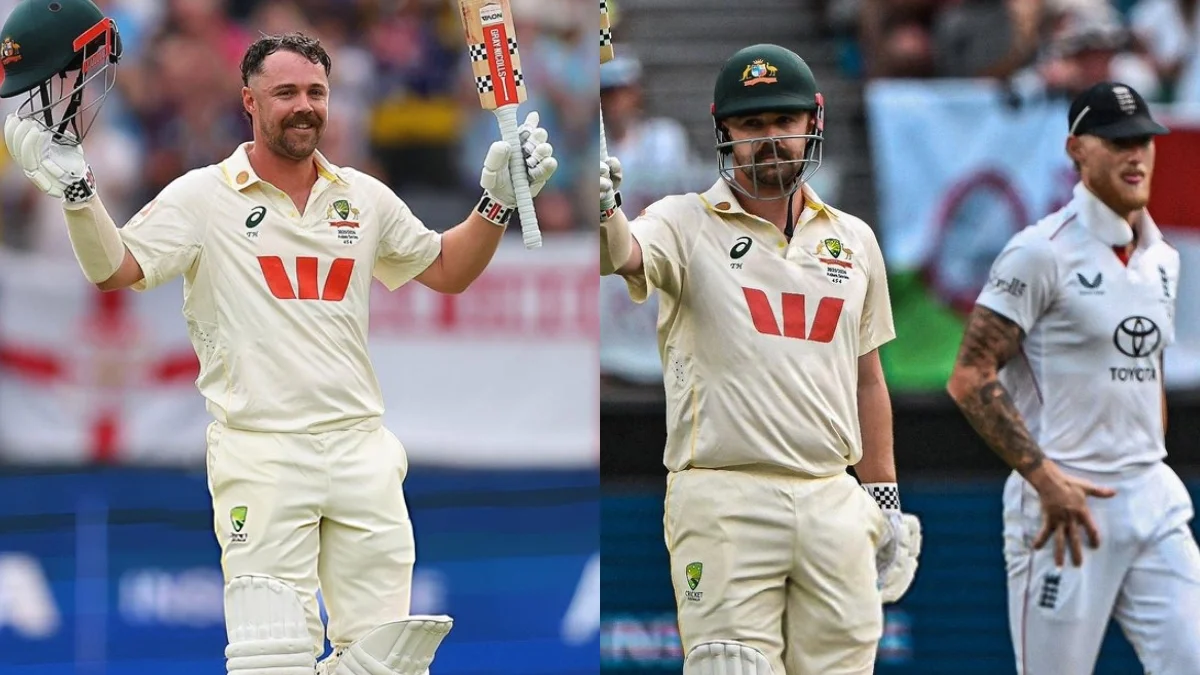

Travis Head’s Explosive Century Seals the Win
Stepping in as a temporary opener, Travis Head delivered a stunning 69-ball century that powered Australia to a dominant victory. England had no answers as the hosts cruised to an eight-wicket win on day two of the five-match series. Head smashed 123, while Marnus Labuschagne remained unbeaten on 51 and Steve Smith on two.
Head’s brilliance came right after a fiery spell from Scott Boland and Mitchell Starc, who tore through England’s batting lineup after lunch. England looked comfortable at 65 for one, building what seemed like a strong second-innings lead. But Boland and Starc changed everything with four wickets in four overs.
Read More


England Collapses as Boland and Starc Strike
Boland was ruthless, removing Ben Duckett (28), Ollie Pope (33), and Harry Brook (0) in just 11 balls. Two deliveries later, Starc dismissed Joe Root for eight. When Starc sent back England captain Ben Stokes for two, England were suddenly 88 for six. Starc had secured a 10-wicket haul in the match, only the third of his career, after taking seven for 58 in the first innings.
England managed a small recovery thanks to a 50-run stand between Gus Atkinson (37) and Brydon Carse (20), eventually reaching 164 before being bowled out at tea.
Australia’s Aggressive Chase
When Australia came out to bat again, Usman Khawaja was still unable to open due to back stiffness. The team made their intentions clear by promoting Head to start the innings.
Read More

Head, who had opened nine times previously in Tests, wasted no time getting into his attacking groove. He smashed boundaries all around the ground, including big sixes off Carse and Mark Wood. He looked completely at ease on a bouncy pitch where most batters had struggled, reaching his fifty in 36 balls and crossing 4,000 Test runs along the way.
Debutant Jake Weatherald tried to follow Head’s aggressive example but ended up miscuing a pull shot, falling for 23 to Ben Duckett off Carse’s bowling. Head continued attacking, hitting four boundaries in one Stokes over and launching a six back over Jofra Archer’s head on his way to his 10th Test hundred. He finally fell to Carse while attempting another big stroke.
Starc’s Early Breakthrough Sets the Tone
Earlier in the day, Australia resumed on 123 for nine in their first innings and could only add nine more runs before Carse dismissed Nathan Lyon for four. This gave England a 40-run lead. Stokes had been the standout bowler, taking 5 for 23 in just 36 deliveries, giving his team a real chance to claim their first Test win in Australia since 2010–11.
England had been bowled out for 172 on day one, largely due to Starc’s devastating spell.
The veteran pacer returned with the new ball and made an immediate impact, removing Zak Crawley in his first over with a brilliant diving caught-and-bowled effort, handing Crawley a pair for the match.
Duckett and Pope steadied things until lunch at 59 for one. But everything changed again once Boland found his rhythm, dismissing Duckett, Pope, and Brook in quick succession, all edging behind. Root, desperate for runs after a first-innings duck, couldn’t stop Starc from clipping his inside edge onto the stumps. Brendan Doggett then wrapped up the tail by dismissing Jamie Smith (15), Carse and Archer (5).

England Set a Target With Historical Implications
England’s total of 164 set Australia a target of 205. Had England defended it, it would have been the lowest successful defence in an Ashes Test in Australia since 1950, when Australia defended 193. Across all Ashes Tests played in Australia, the lowest defended total remains 111, achieved by England in Sydney in 1887. That also remains the lowest target successfully defended in any Test played in Australia.
Lowest Totals Defended in Ashes in Australia
- 111 by England in 1887 (Sydney)
- 153 by England in 1883 (Sydney)
- 154 by Australia in 1877 (Melbourne)
- 175 by England in 1998 (Melbourne)
- 179 by Australia in 1950 (Melbourne)
- 193 by Australia in 1950 (Brisbane)
- 205 by England in 1979 (Sydney)
- 209 by England in 1888 (Sydney)
- 211 by Australia in 1902 (Melbourne)
- 213 by Australia in 1892 (Melbourne)
ALSO READ: Travis Head Rewrites Record Books With Blistering 69-Ball Ashes Century