

Betting Exchange vs. Traditional Bookmaker: What’s the Difference?
The world of betting is entertaining and offers deals to suit every taste. This storied history goes back thousands of years and in recent history, individual bookmakers and contours were the only option. After that, a more sophisticated option has arisen – betting exchanges – akin to peer-to-peer exchanges in other industries. But how precisely does one differ from the other? Why might one choose to go and bet on a fancy online exchange platform as opposed to just calling a bookmaker?
Today, we are going to help give some clarity as to how each of these operates. By the end of it, you will have a clearer picture of which option satisfies your needs the best.
Bookmakers 101
What this individual or company does is set odds and accept bets on sporting events, essentially acting as the house in the betting equation. When you place a bet with a bookmaker, you’re wagering against them, not against another bettor – this is key. What they do is calculate the odds, take your bet, and are responsible for either paying out your winnings if you win or collecting your losses if you lose.
History
This practice has existed in this format for centuries, much of its earliest forms going back to 18th century Britain, the most popular locus of these bets being on horse racing. Bettors would stand at race tracks taking bets from the attendees. Countries had their own laws on this issue, but the precedent for the legal regulation of this activity was set in the United Kingdom’s Betting Act of 1853.
In the 20th century, high-street bookmakers (like Ladbrokes and William Hill) became a staple of British culture, offering odds on many more sports, like:


- soccer
- boxing
- tennis
- golf
- American football
In the U.S., traditional bookmakers were largely illegal outside of Nevada, but that didn’t stop people from betting, as an estimated 95% of bets were being placed illegally on the nation’s biggest sport, the NFL, all the way up until 2018, when the Supreme Court ruled to overturn PASPA, that other states could begin legalizing sportsbooks. Since then, the bookmaker model has expanded legally across regulated U.S. markets.
How Bookmakers Work
Bookmakers, for instance Dafasports, offer fixed odds, meaning that if you bet on Team A to win at 2.50 and the odds later drop to 2.10, you still receive your payout based on the original 2.50 if your bet wins. The bookmakers’ profit is based on a built-in profit margin known as the overround. They primarily operate today in the form of digital platforms.
The Basics of Betting Exchanges
In contrast to the bookies of old, betting exchanges operate as a middleman and allow bettors to bet against each other, rather than being an actual party to the bet. Their job is to match people who hold opposing predictions on a particular match’s outcome. Therefore, the platform doesn’t take on any risk. All it does is facilitate betting for other people.

How It Works
When using a betting exchange, you can back a bet, meaning you’re betting that something will happen, as in an old-fashioned bet. If you wish, you can instead lay a bet – that something won’t happen. When you lay a bet, you’re effectively acting like a bookmaker by accepting someone else’s back bet.
This creates a stock market-like dynamics driven by users – prices fluctuate based on supply and demand. Bettors offer and request odds in real time, and bets are only accepted if another user is willing to assume the opposite position. These exchanges make money by charging around 2-5%, depending on the platform and the user’s betting volume.
The betting exchange charges 5%, so if you win 100 bucks, you receive $95 and the platform keeps $5. If you lose, you pay nothing, since you won nothing.
Advantages of Traditional Bookmakers
A lot of people are quite intimidated by all of the technicalities and processes of setting up a bet on a betting exchange. Traditional bookmakers are more straightforward and casual, which is their biggest appeal. The user experience is highly polished. Especially, people who are older prefer not having to bother themselves with the complexities of P2P betting exchanges.
Here are some of the other draws that endear bookmakers to bettors:
- Variety of events to bet on: bookies allow people to bet on almost anything they want, as long as the bettors give the bookmaker good odds: darts, snooker, Gaelic games, political elections, or whether it rains on a certain day.
- Certainty with fixed odds: after you bet, your odds are locked in, so you know what you’re getting if you win.
- Promotions: these contours always offer generous incentives to attract and retain users. These include welcome bonuses, loyalty rewards, price boosts on selected events or teams, and partial cash-outs.
- Live streams: straight from the bookmaker to watch games.
Why One Might Opt for a Betting Exchange
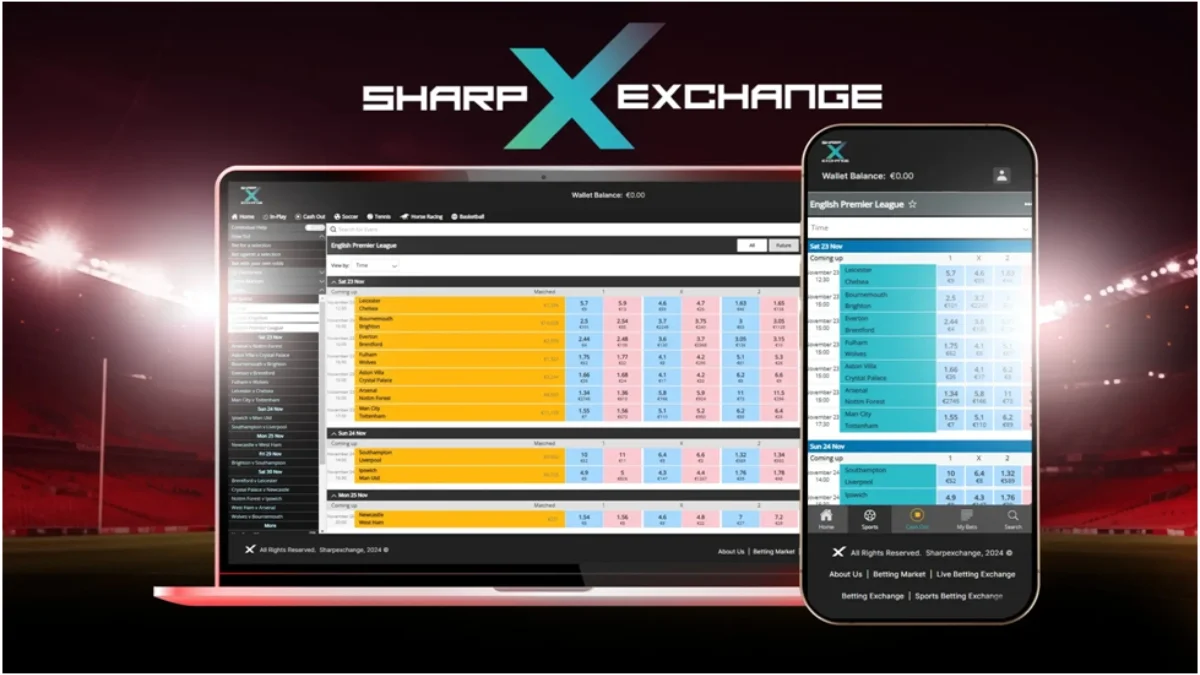


Betting exchanges offer a radically different model from traditional bookmakers — one that gives users more control, flexibility, and potentially higher returns. While the learning curve can be steeper, many experienced bettors are drawn to exchanges for the value they provide and the strategic opportunities they open up.
Better Odds through Market Competition
Bettors get superior odds in these exchanges because the exchange is not attempting to get a better edge on players. Instead, it is facilitating bets, so the spread and moneyline are set based on the ability to match bettors on both sides of the bet. The line then continues to move, the more weight that’s being put on one side of the bet versus the other.
A traditional bookmaker might offer 2.00 (even money) on a team to win, while an exchange may have back odds of 2.10 or higher, meaning a better payout for the same bet. Over time, even small differences like this can have a significant impact on long-term profitability, especially for high-volume bettors.
Greater transparency
Piggybacking off the previous point, you get a better understanding of the basis of the spread, money line, and other factors in real time. This transparency allows you to make more informed decisions, react to live trends, and spot opportunities in a way that simply isn’t possible on a closed bookmaker platform.
Ability to Both Back and Lay Bets
This feature opens up advanced strategies such as:
- Trading: Back at high odds, lay at lower odds to lock in a profit regardless of the outcome.
- Arbitrage: Exploit differences between bookmaker odds and exchange prices.
- Hedging: Reduce exposure on large bets or cover multiple outcomes.
Greater Control Over Odds and Stake
With a bookmaker, you’re limited to the odds and stake options they provide — take it or leave it. On an exchange, you have the freedom to set your own odds. If no one is offering a price you like, you can list your own and wait for someone to match it. You’re not bound by predefined increments either. You can place any amount (within liquidity limits), making the platform ideal for custom risk management.
This level of control is especially valuable to serious bettors who want to fine-tune their positions and take advantage of small price shifts in the market. Then again, if you don’t have somebody that is willing to bet against you at particular odds, you can’t place a bet.
ALSO READ: WATCH: Sai Sudharsan Receives His Test Cap From Cheteshwar Pujara