





How To Choose The Right Football Boots For Every Surface
Football boots are one of the most important pieces of equipment for any player. The right pair improves speed, balance, control, and confidence. The wrong pair increases injury risk and reduces performance. Yet many players still choose boots based on design, colour or player endorsements rather than what suits their playing surface.
This article explains in simple and detailed terms how to choose the correct football boots with the right stud type for your surface. It also shows how this decision directly affects safety, traction and injury prevention in the modern game.
Why Choosing the Right Football Boots Matters More Today
Modern football is faster than ever. Players accelerate more, stop quicker and turn sharply in tight spaces. These movements put immense pressure on the feet, ankles, knees and hips. Because of this, the surface you play on must match the boot’s stud pattern.
Earlier, most pitches were natural grass and boots had similar metal or plastic studs. Today, the game is played on different surfaces. Each one needs a specific stud type. The biggest reason is player safety. Using the wrong studs increases the risk of slipping, twisting and ligament injuries.
There is also a performance factor. The right stud type ensures proper grip, stable footing and smooth transition on the surface. This is why professional players switch boots depending on the pitch condition. The same approach now applies at every level of the game.
Read More


Firm Ground (FG): The Most Common Football Boot Type
Firm Ground boots are the most widely used in the world. They are designed for natural grass pitches that are neither too wet nor too dry.
FG boots have moulded studs made of plastic or rubber. These studs are usually conical or blade-shaped. They are placed in a pattern that allows both traction and easy release from the ground.


One advantage of FG boots is that they work on a variety of grass conditions. They give enough grip to accelerate confidently and enough flexibility to help players move in different directions quickly.

For amateur and academy players, FG boots are a safe option because they reduce the risk of studs getting stuck in the ground. This is helpful in preventing ankle twists and knee injuries. However, FG boots should not be used on artificial turf. Doing so increases strain on joints and reduces stability.
Soft Ground (SG): Best for Wet and Muddy Pitches
Soft Ground boots are made for pitches that are wet, muddy or soft. They use longer, often metal, studs that dig deeper into the ground. This prevents slipping in heavy conditions where FG studs fail to grip.
SG boots give a different type of traction. They allow players to push off strongly even when the foot sinks slightly into the surface. This makes SG boots essential in rainy climates or winter league matches.
However, SG boots should only be used on soft pitches. Using them on dry or firm surfaces is dangerous. The studs can get stuck, leading to knee injuries. They can also feel unstable because the longer studs do not sit properly on harder pitches.
Modern SG boots often feature a mixed stud configuration, combining metal and plastic studs. This gives more stability and reduces the risk of injuries. Many professionals switch to SG variations whenever the pitch looks heavy or slippery.
Artificial Ground (AG): Built Specifically for Turf and Synthetic Grass
Artificial Ground boots have become extremely important due to the rise of turf pitches. Turf surfaces are harder than natural grass and have different grip levels. Using FG or SG boots on turf increases the chance of ankle sprains and knee strain.
Read More

AG boots use shorter, more numerous rubber studs. They distribute pressure evenly, which reduces the impact on joints. The extra studs also prevent the boot from getting caught in the surface. This is important for preventing ACL injuries, which are more common on artificial turf.
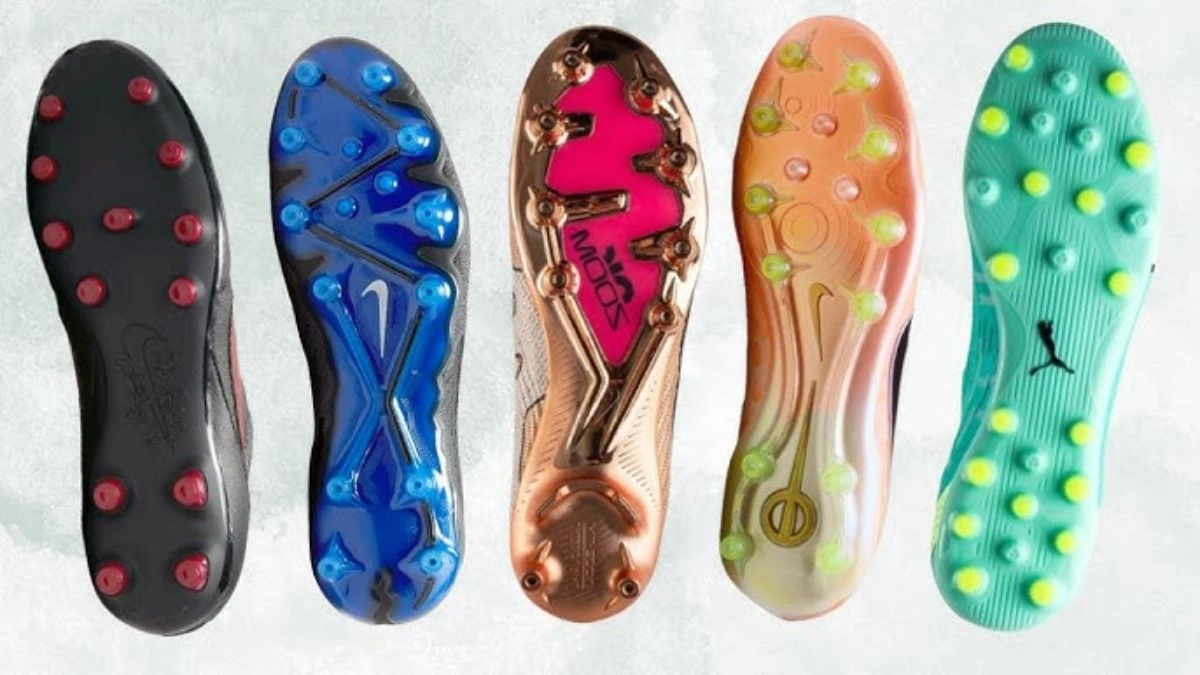
One major advantage of AG boots is durability. Turf surfaces wear down traditional studs quickly. AG studs are stronger and designed to withstand friction.
Players who regularly train on turf should always own an AG pair. It protects the body and improves movement on synthetic surfaces. Many injuries at amateur level come from using the wrong studs on artificial pitches.
Multi-Ground (MG): The Modern All-Round Option
Multi-Ground boots are a recent development. They are designed for both natural grass and artificial turf. MG boots use a combination of short conical studs placed to work on mixed surfaces.
These boots are ideal for players who switch between turf and grass often. They give good traction on both surfaces without causing excessive pressure on the foot. MG boots are becoming popular in academies and amateur leagues because they reduce the need to own multiple pairs.
However, MG boots are not perfect for extreme conditions. They do not replace SG boots on muddy pitches or pure AG boots on hard turf. They are best for players who need a safe, consistent boot across different environments.
How Stud Shape Affects Your Movement
Stud shape plays a major role in how players move on the field. There are two main types: conical studs and blade studs.
Conical studs offer easier rotation. They allow the foot to turn naturally during dribbling, passing or quick directional changes. They are safer for players with a history of knee or ankle injuries.
Blade studs offer more aggressive traction. They dig in more and provide stronger push-off power. This is helpful for wingers, full-backs and attacking players who sprint often. The drawback is that blade studs can sometimes get stuck during sharp turns.
Modern boots often combine both shapes to give the best balance of safety and performance.
How the Wrong Stud Type Leads to Injuries
One of the biggest hidden factors in football injuries is using the wrong boots for the surface. Trainers and physios have identified several common patterns.
First, players who use FG boots on turf often face ankle and knee strain. This happens because FG studs do not release from turf as easily. The foot gets locked, and sudden movements cause ligament stress.
Second, SG boots on firm pitches are dangerous. The long studs dig into the ground and do not release during rotation. This increases the risk of serious knee injuries, including ACL tears.
Third, SG boots can cause pressure injuries on the sole of the foot when used on hard surfaces. The studs push into the foot, leading to bruising and discomfort.
Finally, using AG boots on soft, muddy grass leads to slipping. Their shorter studs cannot grip properly, which affects stability.
Choosing boots based on the surface is one of the simplest ways to reduce injury risk. Every level of football now recognises this, from academies to professional teams.
How Position Affects Boot Choice
While surface type is the most important factor, a player’s position also influences the ideal boot choice.
Attackers often prefer lightweight boots with blade studs for quick acceleration. They need traction that helps in explosive movements and sharp cuts.
Midfielders usually choose a balance of stability, comfort and rotation ability. Conical studs provide smoother movement when turning frequently during passing.
Defenders prefer stability. Mixed stud patterns that offer strong grip and controlled rotation are effective. They help in tackling, blocking and tracking runs.
Goalkeepers need boots that support strong pushes and lateral movement. Stud patterns that prevent slipping during dives are important.
These preferences show how even small differences in studs affect specific roles on the pitch.
The Importance of Fit and Comfort
Even the best stud type will not help if the boot does not fit correctly. A good fit reduces blisters, improves touch and keeps movement natural.
Players should ensure the boot fits snugly without squeezing the toes. A small amount of space at the front is ideal. The heel should stay locked without slipping. Modern boots come in different widths to accommodate different foot shapes.
Materials also matter. Synthetic boots are lighter and more durable. Leather boots, especially kangaroo leather, offer more comfort and natural stretching. The choice depends on personal preference and comfort.
A comfortable boot reduces fatigue and allows players to move with confidence throughout the match.
Football boots are more than a style choice. They are a performance tool and an important part of injury prevention. The right stud type must match the surface, the playing conditions and the player’s style. As football evolves, understanding these details helps players stay safe and perform better.
Modern players have many options, from FG to SG, AG to MG. Choosing wisely ensures stability, traction and confidence. The wrong choice increases strain and reduces performance. The correct boots are a simple but powerful advantage for every player.
FAQs
Q1. Which football boots should beginners choose?
A. Firm Ground boots are the safest all-round choice for beginners who play mostly on natural grass.
Q2. Are SG boots dangerous on dry pitches?
A. Yes. SG studs can get stuck and increase the risk of serious knee injuries on firm or dry surfaces.
Q3. Can FG boots be used on artificial turf?
A. They can be used, but they are not ideal and increase the chance of joint strain. AG boots are safer for turf.
Q4. How do I know if a boot fits properly?
A. The boot should fit snugly, with slight toe space and no heel slippage.
Q5. Why do professionals switch boots often?
A. Professionals adjust boots based on pitch conditions to maximise traction and reduce injury risk.
Also Read- Dean Huijsen Injury Update: Latest Report And Return Timeline

