


The Evolution of FIFA World Cup Match Balls: From 1930 to Trionda 2026
The FIFA World Cup is not just about legendary players and unforgettable matches, it’s also about the football itself. From the first leather balls in 1930 to the high-tech Trionda for 2026, World Cup balls have evolved dramatically in design, technology, and performance.
This article takes you on a journey through every official World Cup ball ever used, highlighting how innovation has shaped football history while keeping players and fans at the heart of the game.
1. T-Model (1930 – Uruguay)
- Design: Traditional leather construction.
- Significance: The first official World Cup ball, marking the start of football history on the global stage.
2. Federale 102 (1934 – Italy)
- Design: Heavier and more durable, crafted by Italian manufacturer Federale.
- Significance: Adapted to challenging playing conditions of early tournaments.
3. Allen (1938 – France)
- Design: Produced by British company Allen, with high-quality craftsmanship.
- Significance: Standardized the ball for international competition.
4. Duplo T (1950 – Brazil)
- Design: T-shaped stitching pattern for better control.
- Significance: Enhanced visibility and precision during matches.
5. Swiss World Champion (1954 – Switzerland)
- Design: Advanced materials for consistent performance.
- Significance: Set new standards in ball quality and durability.
6. Top Star (1958 – Sweden)
- Design: Modern panel design for improved aerodynamics.
- Significance: Reflected the growing sophistication of football equipment.
7. Crack Top Star (1962 – Chile)
- Design: Upgraded durability over Top Star.
- Significance: Demonstrated evolving technology in footballs.
8. Challenge 4-Star (1966 – England)
- Design: Four-star panel design for better grip.
- Significance: Focused on improving player control and match consistency.
9. Telstar (1970 – Mexico)
- Design: Adidas’ first 32-panel black-and-white design.
- Significance: Improved visibility on TV and introduced the classic Buckminster pattern.
10. Telstar Durlast (1974 – West Germany)
- Design: More durable version of the original Telstar.
- Significance: Enhanced performance and longevity.
11. Tango Durlast (1978 – Argentina)
- Design: 20 panels with triads creating 12 circles optical illusion.
- Significance: Most expensive ball at the time, combining style and function.
12. Tango España (1982 – Spain)
- Design: 32-panel leather ball with water resistance.
- Significance: Last genuine leather World Cup ball.
13. Azteca (1986 – Mexico)
- Design: First fully synthetic World Cup ball, inspired by Aztec murals.
- Significance: Performed well in all weather conditions.
14. Etrusco Unico (1990 – Italy)
- Design: Inspired by Etruscan art.
- Significance: Merged aesthetics with functionality.
15. Questra (1994 – USA)
- Design: New panel structure for improved aerodynamics.
- Significance: Focused on speed and control for modern gameplay.
16. Tricolore (1998 – France)
- Design: First multi-colored official ball, featuring French flag colors.
- Significance: Celebrated diversity and international unity.
17. Fevernova (2002 – South Korea/Japan)
- Design: Refined syntactic foam for superior performance.
- Significance: Departed from traditional designs, embracing innovation.
18. Teamgeist (2006 – Germany)
- Design: Seamless thermally bonded panels.
- Significance: Enhanced accuracy and consistent ball behavior.
19. Jabulani (2010 – South Africa)
- Design: Eight spherically molded panels with textured surface.
- Significance: “Jabulani” means “to celebrate” in Zulu; notable for unpredictable flight.
20. Brazuca (2014 – Brazil)
- Design: Six polyurethane panels, named by fan vote.
- Significance: Praised for stability and control.
21. Telstar 18 (2018 – Russia)
- Design: Pixelated modern tribute to original Telstar.
- Significance: Blended tradition with modern technology.
22. Al Rihla (2022 – Qatar)
- Design: Vibrant design, water-based inks and glues.
- Significance: Name means “The Journey”; focused on sustainability.
23. Al Hilm (2022 – Qatar)
- Design: Burgundy and gold variant of Al Rihla.
- Significance: Used in finals; name means “The Dream.”
24. Trionda (2026 – USA, Canada, Mexico)

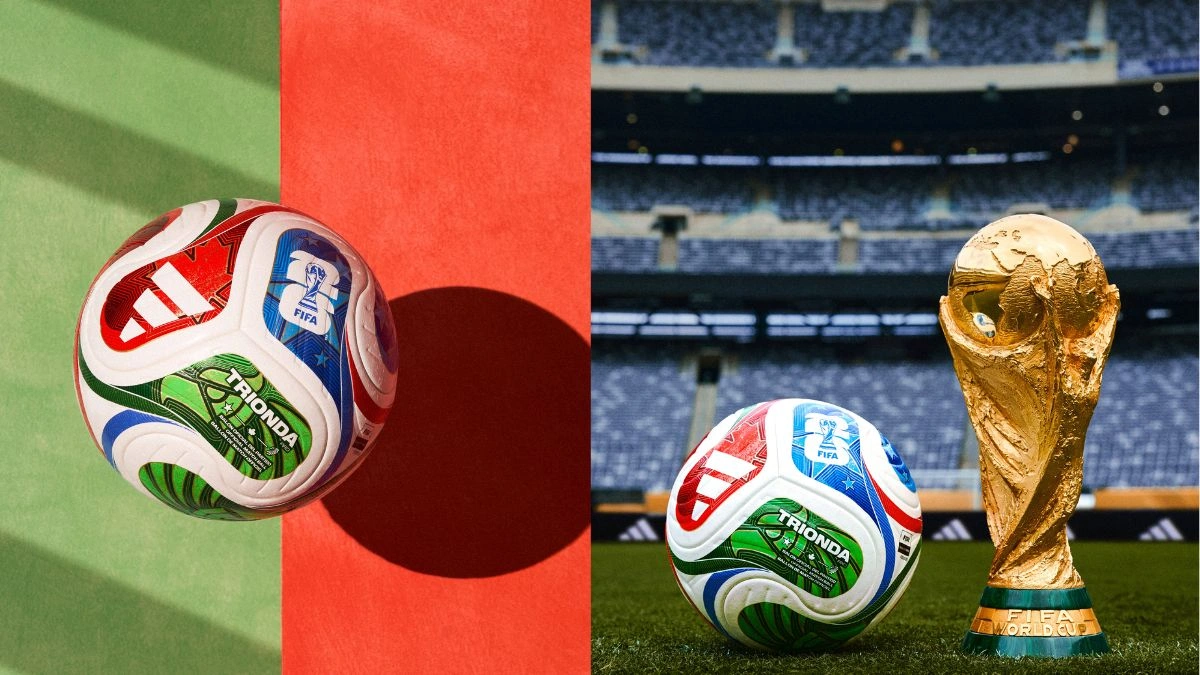
- Design: Tri-colored design representing the three host nations.
- Significance: Features connected ball technology for enhanced VAR decisions.
From the leather T-Model of 1930 to the high-tech Trionda of 2026, FIFA World Cup balls have evolved alongside the sport itself. Each ball reflects the era’s technology, culture, and creativity, making these footballs as iconic as the players who kick them.
The journey of World Cup footballs isn’t just about design, it’s about innovation, history, and the global passion for football.
FAQs
Q1. Which was the first synthetic World Cup ball?
A. The Azteca (1986) was the first fully synthetic ball used in the World Cup.
Read More


Q2. Which ball introduced the 32-panel design?
A. The Telstar (1970) by Adidas introduced the classic 32-panel black-and-white design.
Q3. What is the significance of the Trionda for 2026?
A. It represents the three host nations and includes connected technology for VAR.
Q4. Which ball was fan-named?
A. The Brazuca (2014) was named by football fans worldwide.

Q5. Which ball had a controversial flight pattern?
A. The Jabulani (2010) was criticized for its unpredictable movement in the air.
Also Read- Federico Valverde Set To Start Against Villarreal