

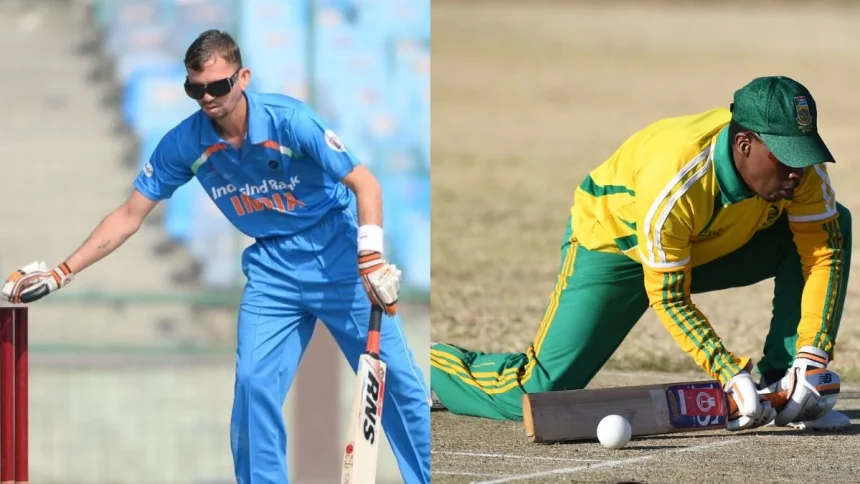
If you thought regular cricket was intense, wait till you hear about blind cricket. It’s a game that turns darkness into pure skill and sound into strategy. This version levels the field for visually impaired players, making every rattle of the ball a heartbeat of excitement. As a sport highlighting inclusion, blind cricket demands respect for its rules and spirit, so let’s break it down step by step.
Blind Cricket: Setup and Equipment
Blind cricket starts with a team of 11 players, mixed by sight levels: totally blind (B1, purple/black wristbands), low partials (yellow), mid partials (green), and high partials (red, max 2 per team). Totally blind players often wear approved blackout shades to ensure fairness.
The field uses a grass or artificial pitch, 22 yards long, with boundaries 40-50 yards from the stumps. Those stumps stand taller at 35 inches, wide at 10 inches, no bales needed, white or orange for visibility to partials. The star is the ball: a white size 3 football stuffed with a noise-maker, rattling loudly so everyone tracks it by sound, not sight.
How They Play Without Seeing the Ball
Blind cricket players rely on audio cues and teamwork. The bowler asks if the batter is ready, then shouts “Play!” loud and clear at release. No shout means no ball. The delivery must bounce twice before the popping crease for totally blind or low partial batters (once for mid partials or young high partials), and no more than three times or rolling.
Fielders stay out of exclusion zones near the batter to avoid no-balls. When hit, the ball’s rattle guides fielders to chase and return it; no kicking is allowed. Totally blind batters get runners (partials in bibs with bats) to call runs, while partials run themselves. Runs by totally blind batters count double, turning every sprint into a bonus. Boundaries score standard fours or sixes if they fly over.

Blind Cricket Key Rules and Dismissals
Umpires call decisions verbally and wear no white; neutral ones preferred. No high partial bats in the top four without balance, and totals must bowl at least 3 in 10 overs or face penalties. Wides come in two flavours: standard if it misses outside return creases without contact, or “safety wide” if it bounces early off-pitch, batters must not swing, or risk unfair play calls.
Dismissals adapt smartly: totally blind can’t be stumped (always in-ground), need two LBWs (first is “half-out”), or get run out via runner. Catches allow totals one bounce if by another total. Hit wicket? Totals ignore it, but lose run potential. Dead ball if the ball bursts. Matches run 40-60 overs typically, first innings declares after set overs, chasing in the rest, rain adjusts by time lost.
In the end, blind cricket delivers drama through sound and strategy, proving boundaries are for fields, not abilities. Next time you watch, cheer the rattle; it’s the sound of triumph. Stay tuned for more on adaptive sports that redefine limits.
Read More
Also read: Youngest Captains In International Cricket All Format: Featuring Rashid Khan