KKR vs CSK: For the second time this season, Chennai Super Kings collapsed dramatically while fielding a 190+ target, thus continuing the theme of their problematic pursuit of targets above 190.
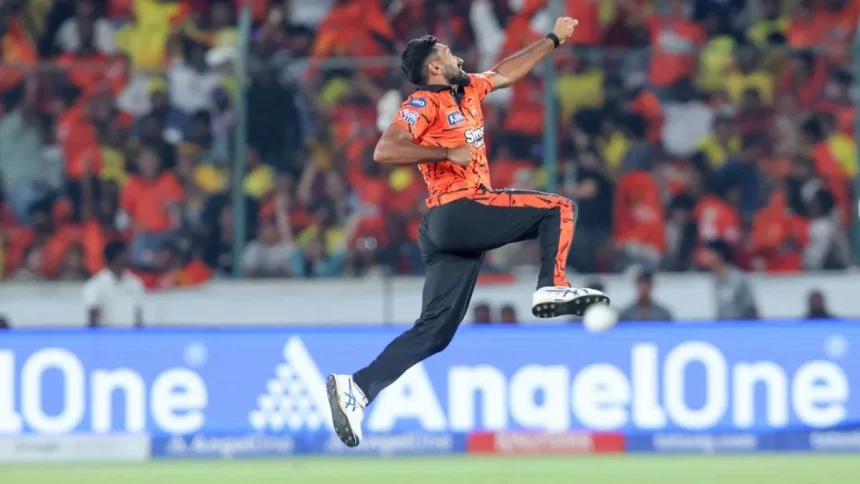
They haven’t completed such a chase since the 2018 season. At the halfway point of the innings, with just 84 runs required from 60 balls, it appeared that the CSK would win the match comfortably. But at last SRH won the match by 10 runs as Praful Hinge bowled a great last over while conceding just 7 runs.
KKR vs CSK: Early Momentum Broken by Injury Setback
The CSK innings started strongly and reached 62 runs at the end of 4.1 overs with Ayush Mhatre, who only 18 years old and batted aggressively and impressively, scoring 30 runs off 12 balls.
He had developed a positive rhythm until he sustained a hamstring injury while trying to run a second run quickly leaving him unable to run freely and subsequently getting out soon thereafter.
The injury ultimately became a turning point for CSK because CSK went from being in a commanding position to at the end of the first 12.1 overs they had successfully achieved 60 runs however they had only hit 5 boundaries.

KKR vs CSK: Tactical Errors in Middle Overs Hurt CSK
CSK seems to have been very speculative in their approach to the middle portion of matches. They could have selected Shivam Dube (a well-known aggressor against spin bowling) to bat on 2 occasions but instead selected other players to bat.
This implies that CSK is having some strategic issues. Previously, CSK had used Dube in a middle-order run-accumulating role to score runs off of skilled spin bowlers.
A position in which he had a major impact during CSK’s championship runs. Recently, however, he has been primarily utilized in a finishing position and could not produce the desired runs.

The change to using Shivam Dube as a finisher illustrates some of the deficiencies in team composition and strategy from the auction.
KKR vs CSK: Key Wickets Trigger Collapse
The game unraveled swiftly, with some key dismissals:
- Sarfaraz perished while trying a rash shot towards deep midwicket
- Brevis could not anticipate a googly and was out without scoring any runs
- Short, who had hit a fine score of 34 runs in just 30 deliveries, was caught after a good shot
- Dube was dispatched wonderfully, and CSK were left with 41 runs from 19 balls
Bowlers Shine but Batting Falters
Whereas the batting team did not live up to expectations, the bowling team put in a fantastic performance in the earlier stages of the game.
The last three overs went extremely well with just 17 runs conceded during the last overs or death overs. Yorkers and slower balls were critical to keeping the batsmen from making runs. Still, the batting team was unable to take advantage of the situation.
Opposition Batting: Explosive Yet Contained
The performance of the opposition for the first innings was extremely strong and they produced a lot of runs in the Powerplay which included several boundaries, as they produced an impressive 75 runs.
One of the highlights of the batting line-up was Abhishek Sharma, who was able to score a 50 runs from 15 balls by showing his T20 intent.
Read More

Despite the quick scoring, several wickets fell at critical moments during the innings and added with some very disciplined death over bowling, they were not able to put up a very large total.
Another key player for the innings was Heinrich Klaasen who scored a fifty and got through the innings with a combination of powerful hitting and smart shot selection.
Pitch Conditions and Match Dynamics
At first, the pitch was very good for hitting, supported by a high number of boundaries during the powerplay. Still, it slowed down as the innings progressed and became much more challenging to time the ball around the middle of the innings. This resulted in a major part of CSK’s downfall as their batters were unable to adjust to the change in conditions.
Strategic Concerns for CSK Moving Forward
The Chennai Super Kings failure to finish matches means they have bigger issues operationally:
- Not managing Shivam Dube and others who were needed when they played poorly.
- Quickly bringing in players who have either little experience or have to change positions.
- Tactical errors continuously made during critical points of games.
These systemic issues seem focused around their mega auction plan, thus causing ongoing problems with team balance.
ALSO READ: Top 4 Bowlers With Most Wickets in a Single IPL Season