

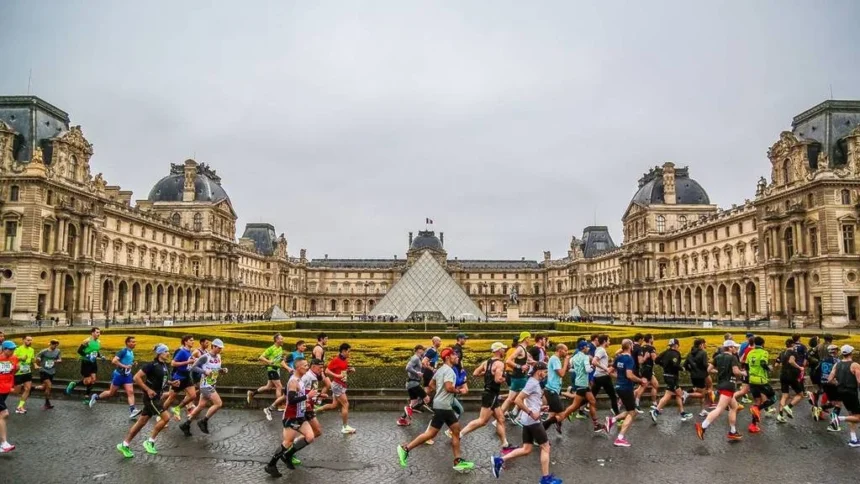
The Paris Marathon is an annual marathon hosted by the city of Paris, France. It is the largest running event in France in terms of finishers and is typically among the five largest marathons in the world.
The marathon begins along the Champs-Élysées, runs southeast through the city to the Bois de Vincennes, heads back through the city along the River Seine, and finishes on Avenue Foch.
Only three runners in history have won two marathon gold medals, with Abebe Bikila from Ethiopia (Rome 1960, Tokyo 1964), Waldemar Cierpinski from East Germany (Montreal 1976, Moscow 1980) and Eliud Kipchoge from Kenya (Rio 2016, Tokyo 2020) the only double Olympic champions.
Kenya is the most successful nation in the history of the Paris Marathon. It has a total of 24 titles- 14 men and 10 women. It is followed by France which has 10 men’s titles and that of five in women. Ethiopia is in the top three in the all time standings with eight men’s titles and seven in women’s.
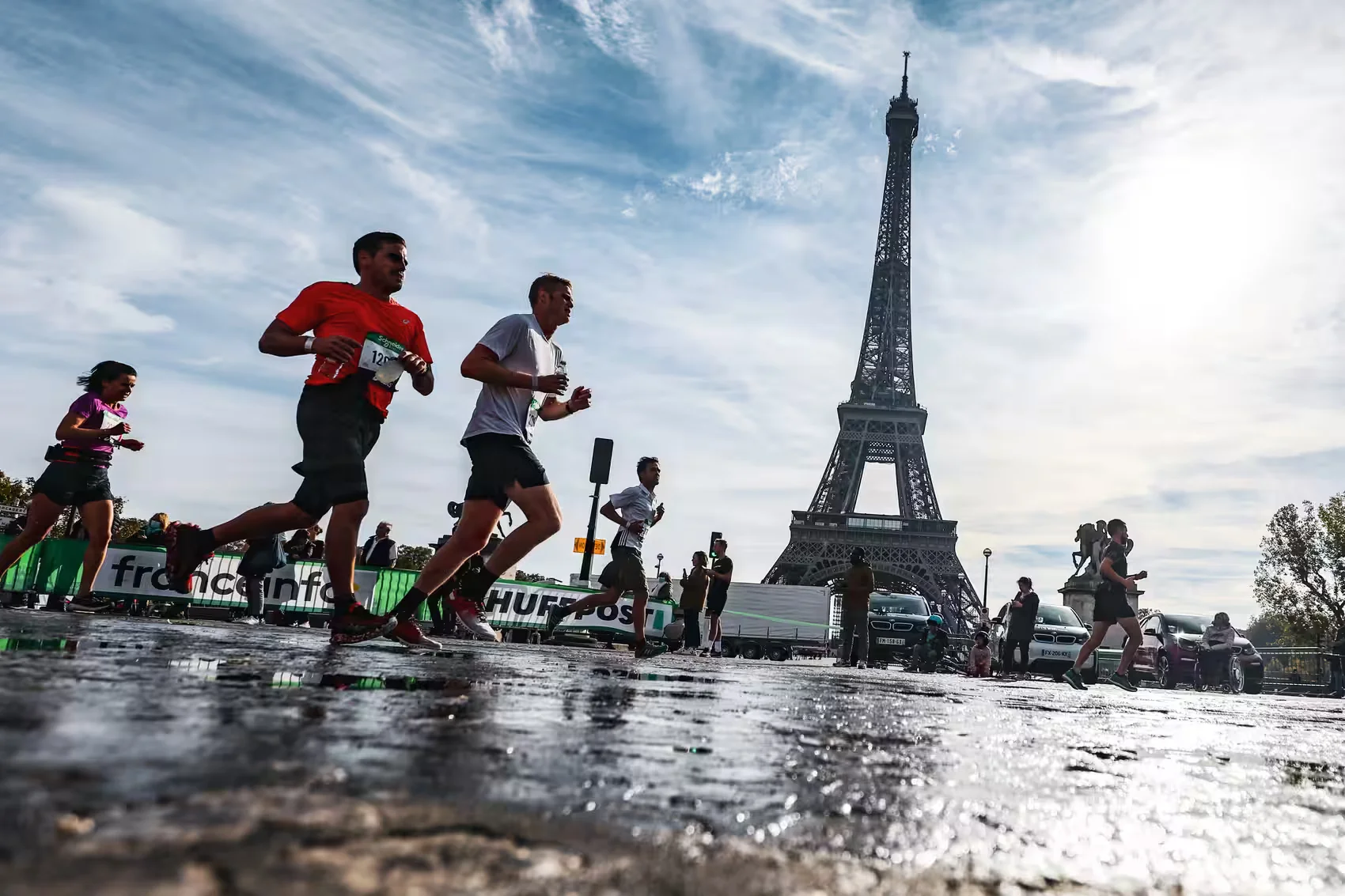



Also Read: Paris Marathon 2025: Benard Biwott, Bedatu Hirpa Lead The Charts
Most successful country in Paris Marathon
| Country | Men | Women | Total |
| Kenya | 14 | 10 | 24 |
| France | 10 | 5 | 15 |
| Ethiopia | 8 | 7 | 15 |
| United Kingdom | 4 | 3 | 7 |
| Portugal | 3 | 1 | 4 |
| Japan | 0 | 4 | 4 |
| Russia | 0 | 4 | 4 |
| Hungary | 0 | 1 | 1 |
| Djibouti | 2 | 0 | 2 |
| United States | 1 | 1 | 2 |
| Belgium | 0 | 2 | 2 |
| Romania | 0 | 2 | 2 |
| Qatar | 1 | 0 | 1 |
| Poland | 1 | 0 | 1 |
| Australia | 0 | 1 | 1 |
| Morocco | 1 | 0 | 1 |
| New Zealand | 0 | 1 | 1 |
| Spain | 0 | 1 | 1 |
| Switzerland | 0 | 1 | 1 |
List of Olympic marathon champions
Men
- 1896 – Spiridon Louis (GRE) – 2:58:50
- 1900 – Michel Théato (LUX) – 2:59:45
- 1904 – Thomas Hicks (USA) – 3:28:53
- 1906 – William Sherring (CAN) – 2:51:23.6
- 1908 – John Hayes (USA) – 2:55:18.4
- 1912 – Kenneth McArthur (RSA) – 2:36:54.8
- 1920 – Hannes Kolehmainen (FIN) – 2:32:35.8
- 1924 – Albin Stenroos (FIN) – 2:41:22.6
- 1928 – Boughera El Ouafi (FRA) – 2:32:57.0
- 1932 – Juan Carlos Zabala (ARG) – 2:31:36.0
- 1936 – Kee-Chung Sohn (JPN) – 2:29:19.2
- 1948 – Delfo Cabrera (ARG) – 2:34:51.6
- 1952 – Emil Zátopek (TCH) – 2:23:03.2
- 1956 – Alain Mimoun (FRA) – 2:25:00.0
- 1960 – Abebe Bikila (ETH) – 2:15:16.2
- 1964 – Abebe Bikila (ETH) – 2:12:11.2
- 1968 – Mamo Wolde (ETH) – 2:20:26.4
- 1972 – Frank Shorter (USA) – 2:12:19.8
- 1976 – Waldemar Cierpinski (GDR) – 2:09:55
- 1980 – Waldemar Cierpinski (GDR) – 2:11:03
- 1984 – Carlos Lopes (POR) – 2:09:21
- 1988 – Gelindo Bordin (ITA) – 2:10:32
- 1992 – Hwang Yeong-Jo (KOR) – 2:13:23
- 1996 – Josia Thugwane (RSA) – 2:12:36
- 2000 – Gezahegne Abera (ETH) – 2:10:11
- 2004 – Stefano Baldini (ITA) – 2:10:55
- 2008 – Samuel Kamau Wansiru (KEN) – 2:06.32
- 2012 – Stephen Kiprotich (UGA) – 2:08:01
- 2016 – Eliud Kipchoge (KEN) – 2:08:44
- 2020 (in 2021) – Eliud Kipchoge (KEN) – 2:08:38
- 2024 – Tamirat Tola (ETH) – 2:06:26
Women
- 1984 – Joan Benoit (USA) – 2:24:52
- 1988 – Rosa Mota (POR) – 2:25:40
- 1992 – Valentina Yegorova (EUN) – 2:32:41
- 1996 – Fatuma Roba (ETH) – 2:26.05
- 2000 – Naoko Takahashi (JPN) – 2:23:14
- 2004 – Mizuki Noguchi (JPN) – 2:26:20
- 2008 – Constantina Tomescu (ROU) – 2:26.44
- 2012 – Tiki Gelana (ETH) – 2:23:07
- 2016 – Jemima Sumgong (KEN) – 2:24:04
- 2020 (in 2021) – Peres Jepchirchir (KEN) – 2:27:20
- 2024 – Sifan Hassan (NED) – 2:22:55