



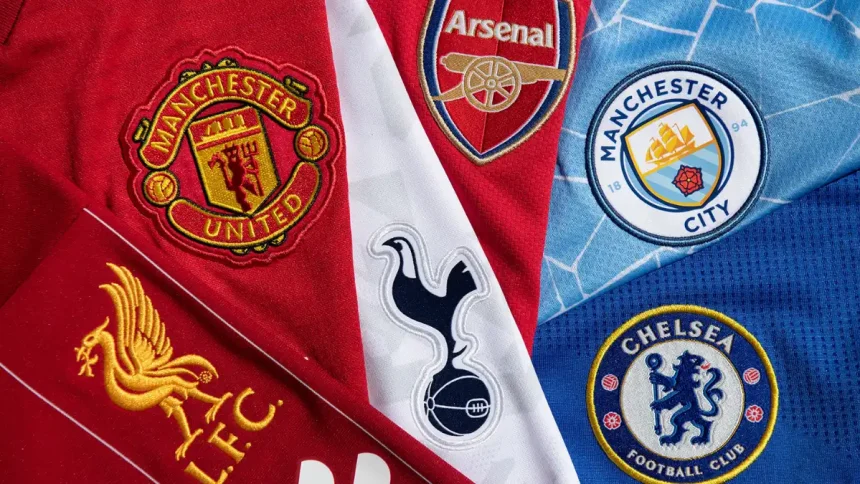
The business of football has never been bigger. From billion-dollar stadium redevelopments to global sponsorship ecosystems, the Most Valuable Football Clubs today are not just sporting institutions but fully evolved commercial powerhouses. The latest financial rankings reveal a familiar elite dominating the landscape, driven by revenue diversification, global fanbases, and consistent performance in competitions like the UEFA Champions League.
- Most Valuable Football Clubs in 2025: The Global Power Rankings
- Why These Most Valuable Football Clubs Dominate Financially
- Premier League’s Stronghold Among Most Valuable Football Clubs
- European Giants Outside England Holding Their Ground
- The Rise of Emerging Markets in Most Valuable Football Clubs
- Revenue vs Valuation: Understanding the Financial Metrics
- The Expanding Billion-Dollar Club Ecosystem
Most Valuable Football Clubs in 2025: The Global Power Rankings
At the summit of the Most Valuable Football Clubs, Real Madrid continue to set the benchmark. Valued at approximately $6.75 billion, the Spanish giants have held top spot for multiple years, powered by over $1.1 billion in annual revenue and a modernized Santiago Bernabéu that enhances matchday income streams.
Close behind are Manchester United, valued at $6.6 billion, and FC Barcelona, at $5.65 billion. These clubs maintain elite status due to historic success, massive global followings, and commercial dominance.
The top five is rounded out by Liverpool and Manchester City, both exceeding the $5 billion mark, reflecting the Premier League’s financial muscle and global broadcasting reach.
Why These Most Valuable Football Clubs Dominate Financially
The dominance of the Most Valuable Football Clubs is rooted in three key revenue pillars: broadcasting, commercial partnerships, and matchday income. Clubs like Real Madrid and Manchester City benefit heavily from deep runs in European competitions, where prize money alone can exceed $150 million per campaign.
Read More

Commercial revenue has become the real differentiator. Shirt sponsorships, global partnerships, and merchandising strategies allow clubs to monetize their brand worldwide. Real Madrid’s commercial growth, for instance, continues to outpace rivals due to its international appeal and strategic partnerships.
Stadium infrastructure is another decisive factor. Renovated arenas such as the Bernabeu or Tottenham Hotspur Stadium are engineered to maximize year-round revenue through events, hospitality, and premium ticketing models.
Premier League’s Stronghold Among Most Valuable Football Clubs
A striking trend within the Most Valuable Football Clubs rankings is the Premier League’s overwhelming presence. Clubs like Manchester City, Liverpool, Arsenal, Chelsea, and Tottenham Hotspur dominate the top 10, underlining the league’s unmatched commercial ecosystem.

The league’s global broadcasting deals and competitive balance ensure consistent revenue inflows across multiple clubs, not just a select few. This financial depth allows even clubs outside the traditional elite to climb valuation charts rapidly, as seen with Arsenal’s significant valuation jump in recent years.
European Giants Outside England Holding Their Ground
While England leads in volume, continental heavyweights remain central to the Most Valuable Football Clubs conversation. Bayern Munich, valued above $5 billion, exemplifies financial stability through sustainable management and consistent Champions League performances.
Paris Saint-Germain leverage star power and state-backed investment to maintain a valuation of around $4.6 billion, while clubs like Juventus, AC Milan, and Atlético Madrid continue to feature in the top 15 due to their historical pedigree and loyal fanbases.
These clubs may not match the Premier League’s broadcasting revenues, but their brand equity and continental success keep them firmly among the global elite.
The Rise of Emerging Markets in Most Valuable Football Clubs
Another notable shift in the Most Valuable Football Clubs landscape is the emergence of Major League Soccer franchises. Clubs like LAFC and Inter Miami have crossed the $1 billion valuation mark, reflecting football’s expanding commercial footprint in North America.
This growth is driven by strategic investments, celebrity ownership models, and increasing global interest in the league. While still trailing Europe’s elite, MLS clubs are rapidly closing the gap in terms of commercial valuation.
Read More

Revenue vs Valuation: Understanding the Financial Metrics
It is important to distinguish between revenue rankings and overall valuation when analyzing the Most Valuable Football Clubs. Deloitte’s Football Money League focuses purely on revenue, where Real Madrid again leads, followed by clubs like Manchester City and Paris Saint-Germain.
Valuation, however, incorporates broader factors such as brand strength, future growth potential, and market dynamics. This is why clubs like Manchester United retain exceptionally high valuations despite fluctuating on-field performance.
The Expanding Billion-Dollar Club Ecosystem
The collective value of the top 30 Most Valuable Football Clubs now exceeds $72 billion, highlighting the sport’s exponential financial growth.
More clubs are entering the billion-dollar bracket each year, driven by globalization, digital fan engagement, and evolving commercial strategies. Football is no longer just a sport; it is a global entertainment industry where financial power increasingly shapes competitive success.
Also Read: Highest-Paid Athletes Of All Time: Where Do Ronaldo And Messi Rank?