

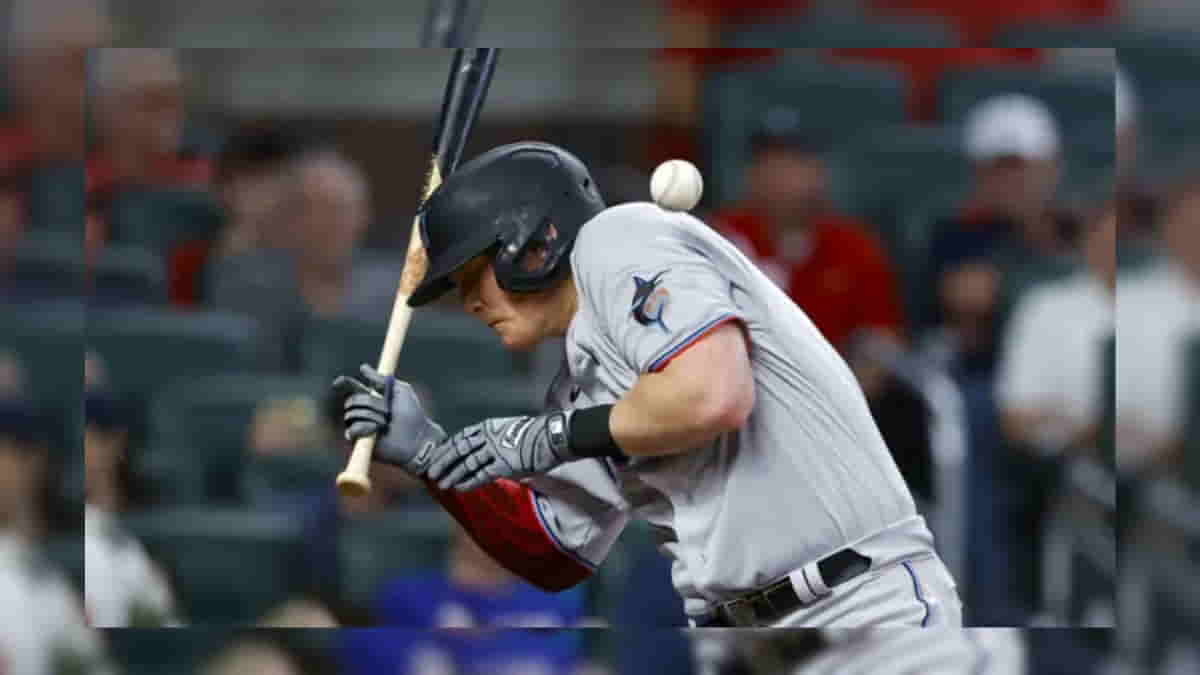
There are various possible outcomes for an at-bat. A batter may strike out, walk, make it to second base on an error, or get hit occasionally. A Hit By Pitch (HBP) is, to put it simply, when the pitcher’s pitch strikes the hitter. Despite a few exceptions, this rule usually leads to a batter reaching first base. In this article, we will take a look at the consequences of a pitcher striking a batter in the body during a baseball game.
The term “hit by pitch” (HBP) in baseball refers to a situation where a pitcher’s pitch directly strikes a hitter, the batter’s clothing, or other equipment (other than his bat). This happens when a batter is called a hit batsman (HB). If the hit batter made an honest attempt to dodge the pitch, according to the plate umpire’s assessment, he is given first base; however, failure to do so is rarely called by an umpire. A batter who is “crowding” home plate, or standing too near to it, is frequently the cause of getting hit by a pitch.
Also Read: The New Rules of Major League Baseball
What happens if a baseball hitter is hit by a pitch?
When a hitter is struck by a pitch, the play is instantly declared a dead ball play, which means that all play is suspended. The first base is given to the batter, and they are not allowed to go any farther during this dead-ball play. Only when they are compelled to move forward can runners move. For instance, if a batter is hit by a pitch while a runner is on first base, the runner at first base would move to second base. In a second situation, if the batter was hit while there was a runner on second base, the runner would not advance when the batter was given first base.
The umpire might issue warnings to both benches depending on the circumstances. The umpire may warn both sides to prevent any form of retaliation if they believe that the pitcher may have hit the batter on purpose. Umpires will carry out this action to preserve the game’s order. The umpire has the option of dismissing the pitcher from the game right away if they consider that a pitch was deliberately thrown; they have previously issued warnings to both benches, or both. You can even witness the ejection of a manager if they have received warnings from the umpire. Although it is uncommon, managers can be dismissed from games, particularly if the umpire believes the coach gave the pitcher the command to hit the batter.


Also Read: Five Most Cheerful Moments in Baseball History
Sometimes, when a pitch hits a hitter, you may watch the batter assault the mound. The batter may assault the mound if they believe the pitch is harmful, specifically if it was intended to harm them and was directed at their head, behind their head, or at a joint. Charges at the mound are forbidden and will get you ejected from the game right away. A pitcher who hits a hitter may also be dismissed due to their actions following the play. As a hitter approaches first base, you’ll see that some pitchers may shout at or insult them. In certain instances, the pitcher provokes the hitter to the point where a fight breaks out. Some umpires will eject the pitcher and the hitter in these situations.
Finally, based on a variety of factors (such as where the batter was hit, why they were hit, the score, and more), the benches may be empty. The benches may be vacant and the players may fight if the HBP was malicious or was seen to be malicious. Umpires attempt to control the game in order to prevent out-of-control emotions, and for this crucial purpose.