

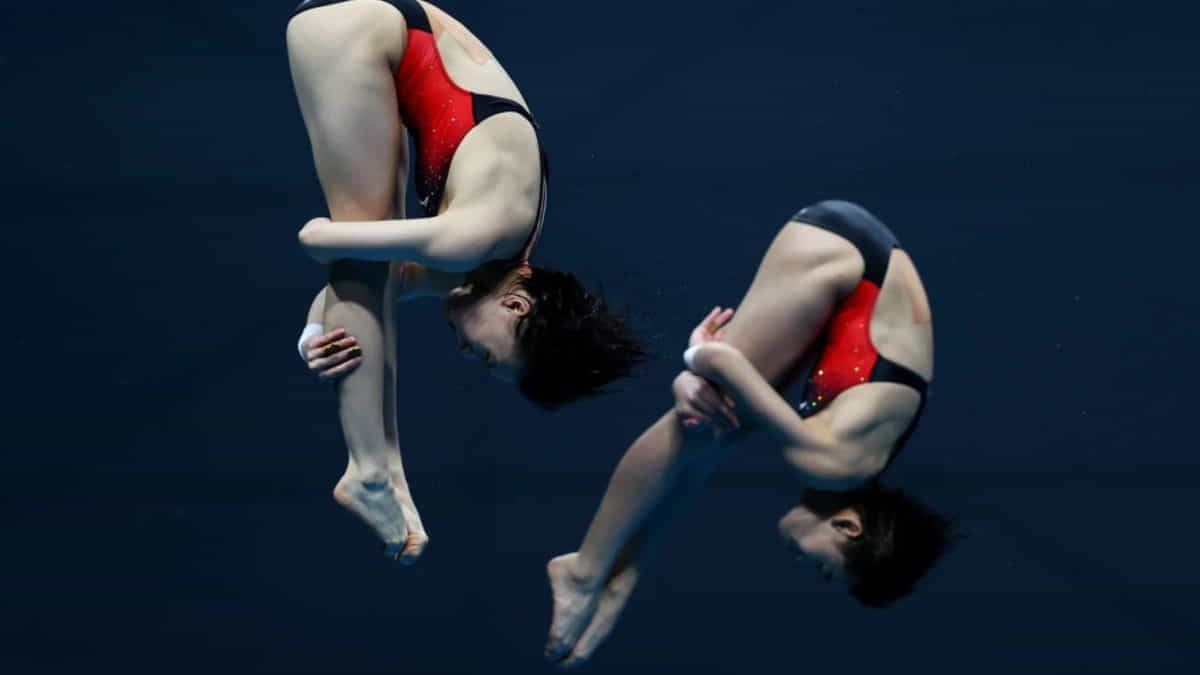
Diving is a water sport where participants make acrobatic jumps from a tall platform into a pool of water below. The idea is to get into the water with as little splash as possible. In addition to being an Olympic sport, competitive diving is also a well-liked recreational activity. Olympic diving is regarded as a collision sport due to the force of the water’s impact. The impact of the water can make the sport dangerous sometimes and can even cause injuries.
Is Olympic diving dangerous?
The 10-meter event is comparable to leaping from a three-story building or a 33-foot platform. Furthermore, you are plunging headfirst at 35 mph. You’ll have very little room for error after that. It’s riskier because athletes, in particular, are approaching the water with multiple flips and twists. There is very little room for error—you could overrotate and strike the water back or belly first, or you could hit the platform. There are still failures, even at the greatest level. Even though you are falling with great speed, the force of your fall is enough to break bones and dislocate joints, even though you are hitting the water.
Divers who compete are very likely to suffer injuries to their backs, shoulders, wrists, elbows, and more. There is always a chance of getting hurt, even with flawless execution of a dive. Even after reaching the age of 13, a study indicated that there is a 45% chance of experiencing back pain within a year of competitive diving.
All things considered, diving carries a lot of risks, but as long as safety measures are followed, there shouldn’t be any cause for concern. To ensure that everyone is aware of their responsibilities in the event of an injury, teams should create and rehearse an emergency plan. A written copy should be distributed to every member so they are aware of what to do in an emergency.
Injuries caused by diving
Elbow Injuries
Elbow pain can happen when athletes hyperextend their elbows when they go into the water. Stretching the ulnar nerve, also known as the “funny bone,” may result in burning, numbness, or pain down the arm and through the fingers. In addition, elbow pain, instability, and weakness may result from a stretched elbow ligament. Divers may have osteochondritis dissecans if they experience pain on the outside of the elbow. People may need to receive physical therapy in order to help treat this injury. Braces, physical therapy, icing the area, and resting are a few treatment options.


Knee Injuries
Knee injuries are common in diving because the athlete’s kneecap may be compressed during the jumping motion, causing pain. Patellar tendonitis, another name for ‘jumper’s knee’, is a painful condition beneath the kneecap. Finding the source of the pain is necessary in order to assist with treatment. Strength imbalances, a lack of flexibility, and misalignment of the knees, hips, and feet are additional factors contributing to knee pain. Physical therapy, training modifications, and patellar taping are a few methods of treating knee pain.
Shoulder Injuries
When diving, shoulder injuries are highly common. They typically happen as the diver extends their arms overhead to enter the water. The athlete will usually feel the shoulder pop out of the joint if it is dislocated. Should this occur and it is a partial dislocation, the shoulder will naturally realign with the joint. If, however, it’s a dislocation, medical care will be necessary to help the athlete realign it. Exercises that strengthen the shoulders, braces, and occasionally surgery are some methods of preventing shoulder injuries.
Neck Injuries
Because divers repeatedly extend their necks to enter the water, diving can result in neck injuries. This may cause irritation to the neck joints, which may subsequently result in stiffness and spasms when the neck is moved or rotated. Divers should seek medical attention if they experience any burning or tingling down their arms, as this could indicate a cervical disc herniation. Since the 10-meter platform diving has a higher force of impact, tower divers typically report more neck issues. Maintaining proper posture on a daily basis and getting professional assistance if the injury does not heal on its own are two strategies to help treat neck injuries.

Wrist/Hand Injuries
Knee injuries are common in diving because the athlete’s kneecap may be compressed during the jumping motion, causing pain. Patellar tendonitis, another name for ‘jumper’s knee’, is a painful condition beneath the kneecap. Finding the source of the pain is necessary in order to assist with treatment. Strength imbalances, a lack of flexibility, and misalignment of the knees, hips, and feet are additional factors contributing to knee pain. Physical therapy, training modifications, and patellar taping are a few methods of treating knee pain.
Conclusion
In conclusion, while Olympic diving is a captivating sport that showcases extraordinary athleticism and skill, it is not without its dangers. The intense impact of hitting the water, especially in the 10-meter event, poses significant risks, including the potential for serious injuries to the back, shoulders, wrists, elbows, and neck. Even with flawless execution, the inherent nature of diving leaves athletes vulnerable to various ailments. However, with proper safety measures and adherence to protocols, the risks associated with diving can be mitigated. It is crucial for teams to establish and rehearse emergency plans, ensuring that every member is well-informed about the appropriate actions in case of an injury. The prevalence of injuries, from elbow and knee issues to shoulder, neck, and wrist/hand injuries, underscores the importance of proactive measures and medical attention to safeguard the well-being of competitive divers.