
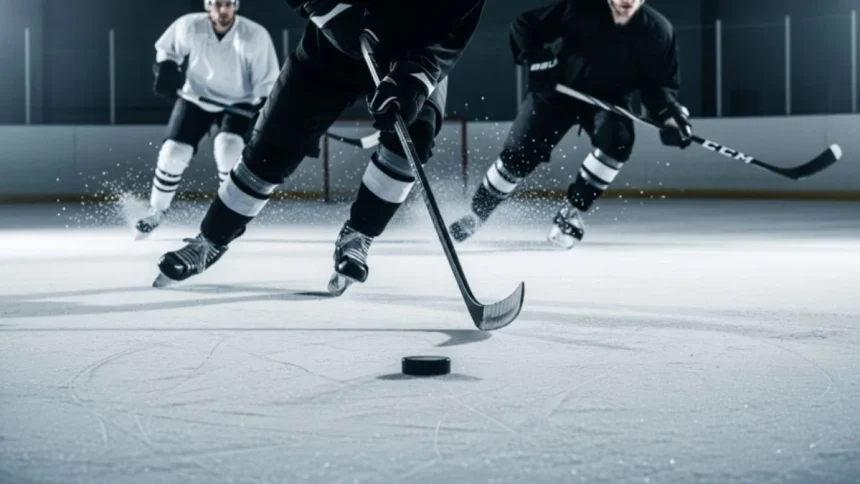
Ice hockey feels fast because the sport compresses space, decision-making, and contact into a few violent seconds. A winger has no time to admire a pass. A defenseman has no time to correct a bad gap. Finnish fans know this rhythm well because hockey culture here is not built only on passion. It is built on systems, skating lanes, puck support, goalie reads, and the cold patience of people who have watched enough tight games to know when speed becomes panic.
- The rink gives players less air than viewers think
- Skating changes the speed equation
- The puck is faster than every skater
- Line changes keep the sport overheated
- Goalies live in a different clock
- What Finnish fans notice before others do
- Speed is tactical, not just physical
- Tracking data made speed measurable
That speed also explains why betting analysis around hockey has become more statistical. Shot attempts, expected goals, penalty-kill structure, goalie confirmation, travel fatigue, and third-period score effects all matter before puck drop. A reader studying ice hockey betting should treat odds movement as information, not instruction. Prices can shift after lineup news, but bankroll control still matters more than one attractive number. Deflections, empty-net goals, overtime formats, and goalie variance make hockey a poor sport for emotional staking.
The rink gives players less air than viewers think
The NHL rink is officially 200 feet by 85 feet. The current IIHF rulebook lists the official rink size as 60 meters long and 26-30 meters wide. That difference sounds technical, but it changes how quickly pressure arrives.
On narrower ice, forecheckers reach defensemen faster. On wider ice, lateral passing lanes can stretch coverage, but mistakes still happen quickly once the puck moves below the circles. Finnish viewers are used to reading both styles because domestic, international, and NHL hockey all shape the local hockey conversation.
Skating changes the speed equation
Running sports punish every stop. Hockey gives players glide, which keeps speed alive even during turns, pivots, and backward movement. That is why the game can look calm for half a second, then suddenly explode into a two-on-one.
Read More


Elite skating is not just straight-line speed. It is edge control, hip rotation, acceleration from a crossover, and the ability to receive contact without losing the puck. A player who appears “slow” on television may still be quick enough if his first three steps and body angle are right.
The puck is faster than every skater
The puck does not need recovery time. A diagonal pass can beat three defenders before a winger finishes turning his shoulders. A screened wrist shot can reach the net before the goalie has a clear look.
This is why hockey rewards anticipation more than reaction. The smartest players defend the next pass, not the current touch. The same principle shapes good analysis: raw shot totals say less than shot quality, traffic, rebound danger, and whether the puck crossed the slot before release.

Line changes keep the sport overheated
Typical NHL shifts often sit around 35-45 seconds of game-clock time. That short rhythm matters. Hockey players do not pace themselves like footballers or basketball guards; they burn energy in repeated bursts, then change before fatigue turns one late stride into a scoring chance.
A tired line becomes vulnerable in small ways. A winger fails to clear the zone. A center loses inside position. A defenseman reaches instead of skating. Suddenly the fastest sport on ice becomes the most punishing.
Goalies live in a different clock
Goalies experience hockey speed differently from skaters. They must read screens, tips, rebounds, lateral passes, and broken plays from a fixed territory around the crease. A clean perimeter shot may be simple. A slower shot through traffic can be poison.
Modern goalie evaluation looks at more than save percentage. Rebound control, post integration, lateral recovery, and workload quality reveal why two goalies facing 30 shots can have completely different nights.
What Finnish fans notice before others do
Hockey-literate viewers tend to watch details casual fans miss:
- Gap control at the blue line
- First pass quality from defensemen
- Whether forwards support low in the zone
- Goalie rebound direction after point shots
- Power-play entries, not just power-play goals
- Shift length during long defensive-zone pressure
- Faceoff deployment after icings
Speed is tactical, not just physical
| Speed Factor | What It Changes | Why It Matters |
| Rink width | Passing lanes and pressure timing | Wider ice can create more lateral reads |
| Short shifts | Energy level | Fresh legs keep forechecks aggressive |
| Puck movement | Defensive rotation | Passes beat skating speed |
| Goalie traffic | Shot visibility | Screens change save difficulty |
| Board contact | Risk under pressure | Small mistakes become turnovers |
| Line matching | Tempo control | Coaches attack tired opponents |
Tracking data made speed measurable
NHL EDGE brought public attention to puck and player tracking, with data points around skating speed, puck movement, and location. That does not replace the eye test. It gives sharper language to things good hockey people already noticed.
Read More
The fastest hockey is not always the game with the most rushes. Sometimes it is the game where every player arrives half a step early, closes the next lane, and makes the puck carrier feel alone.