

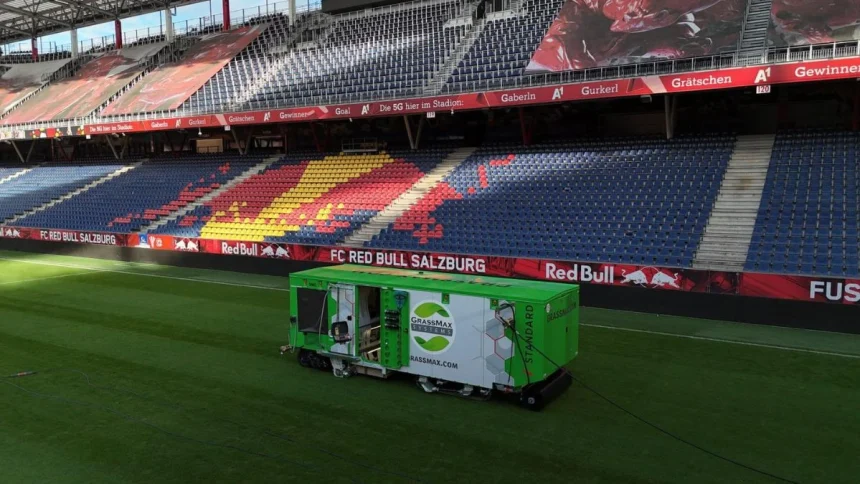
Why Modern Stadiums Use Hybrid Grass Systems
Modern football stadiums are demanding environments. With increased fixture loads, concerts, events and global broadcasting pressures, the playing surface cannot be a weak link. Stadiums must balance aesthetics, performance, player safety and maintenance cost. This mounting pressure has led to an accelerated adoption of hybrid grass systems, pitches that combine natural grass with synthetic reinforcement.
This article explores why stadiums increasingly prefer hybrid grass systems, how they work, what benefits they deliver and what this means for the future of football turf technology.
What Are Hybrid Grass Systems?
Hybrid grass systems, also known as reinforced natural turf, represent a middle ground between natural grass and full synthetic turf. In these systems, natural grass is sown or grown on a base that includes synthetic fibres. These fibres may be stitched into the natural turf’s root zone, laid as a synthetic carpet or mat on which grass is sown, or mixed directly into the root-zone substrate.
The core goal is to retain the authentic look and playing characteristics of natural grass while adding extra durability, stability and resilience through synthetic reinforcement.
Why Stadiums Are Switching to Hybrid Grass Systems
1. Increased Usage and Durability
Stadiums today host far more than just football matches. Concerts, multi-sport events, and high-fixture schedules demand surfaces that can handle significantly more wear. Hybrid grass systems offer far more playing hours than standard natural grass pitches. They remain stable even after repeated intensive use throughout a season.


2. Better Surface Stability and Player Safety
Natural grass pitches can suffer from divots, patches, uneven surfaces and soft zones. These issues can affect the speed of play, ball movement and player footing. Hybrid systems reinforce the turf structure from below, increasing stability, reducing surface displacement, and maintaining consistent firmness. This helps create better match quality and supports player safety during high-speed actions.
3. Performance Under Adverse Conditions
Stadium micro-climates can be extremely challenging. Many modern stadiums have deep stands or roofs that limit sunlight. Some regions face heavy rainfall, humidity or extreme cold. Hybrid systems perform more reliably in these conditions. They hold their structure better, stay firmer for longer, and recover faster after matches or bad weather.
4. Longer Lifespan and Long-Term Cost Benefits
Although hybrid pitches are more expensive to install, they often last longer and resist severe wear better than pure natural grass. With proper maintenance, hybrid systems maintain consistent quality over many seasons. The reduced need for complete replacement or re-sodding helps lower long-term expenses for stadium operators.
Read More

5. Aesthetic and Broadcast Standards
Professional football demands pristine visual quality. Broadcast partners expect uniform colour, sharp line markings, and immaculate surfaces throughout the season. Hybrid grass systems help maintain consistent aesthetic standards. Stadiums can present smooth, even, green playing fields across an entire year, regardless of usage intensity.
How Hybrid Grass Systems Are Constructed
Stitched Fibre Systems
One of the most common approaches involves stitching synthetic fibres directly into the soil at controlled depths and spacing. The natural grass roots grow around these fibres, creating a stronger root harness. This design increases strength, improves drainage channels and promotes healthier, deeper root growth.
Carpet or Mat-Based Systems
Another method uses a synthetic carpet or mat installed over the base layer. Grass seeds are planted through the openings or grown over the surface. This creates a reinforced base layer that supports the natural grass above. These systems are often chosen for stadiums that need quick installation or seasonal refurbishment.
Maintenance and Renovation
Even with reinforcement, hybrid grass systems require disciplined maintenance. Groundskeepers must irrigate, fertilise, mow, aerate and top-dress regularly. Annual renovation is also essential. This includes removing built-up organic layers, refreshing the root zone, reseeding, and ensuring the fibres remain fully integrated into the turf.
Real-World Examples and Implementation
Many major football stadiums have already adopted hybrid grass systems. These venues rely on reinforced turf to handle intense match calendars, international tournaments and multi-use demands. Whether used in domestic leagues or global competitions, hybrid systems have become a trusted solution for elite-level stadiums that cannot risk surface degradation during key fixtures.
Challenges and Considerations
Hybrid grass systems deliver significant benefits, but stadium operators must still consider several factors:

- Installation cost is higher than natural grass.
- Maintenance expertise is required to manage the reinforced structure.
- Design alignment with stadium climate, shade, and usage patterns is essential.
- Player and staff familiarity is needed, as some prefer traditional natural turf.
Even with these considerations, the advantages of hybrid grass outweigh the challenges in most top-level stadium environments.
Future Outlook
Hybrid grass systems are positioned to become the dominant choice for professional football venues. As scheduling becomes more demanding and stadiums diversify their event workloads, the need for highly durable and high-performance surfaces will continue to grow.
Technology is also evolving. Future hybrid systems may include more sustainable materials, improved drainage, enhanced fibre durability, and faster recovery cycles. The next generation of hybrid pitches is expected to offer even stronger performance while reducing environmental impact.
Hybrid grass systems are a direct response to the increasing demands placed on modern football stadiums. By reinforcing natural turf with synthetic fibres or mat-based structures, stadiums gain the durability, stability and visual consistency required for elite competition.
From handling intense match schedules to ensuring broadcast-ready pitches and supporting player safety, hybrid grass systems deliver a comprehensive solution. As football evolves, these reinforced natural surfaces are set to remain a key part of the sport’s infrastructure.
FAQs
Q1. What is a hybrid grass pitch?
A. A hybrid grass pitch is a natural grass surface reinforced with synthetic fibres or a supportive mat to improve durability and stability.
Q2. Why do stadiums use hybrid grass instead of natural turf?
A. Hybrid grass systems support more playing hours, maintain better surface consistency and perform more reliably in difficult weather or multi-use situations.
Q3. Do hybrid pitches feel different from natural grass?
A. They are designed to feel the same as natural grass, offering similar ball movement, player traction and match flow.
Q5. Does a hybrid pitch require special maintenance?
A. It requires similar maintenance to natural turf, but with careful attention to annual renovation and fibre integration.
Q5. Are hybrid pitches used in top professional stadiums?
A. Yes, many major stadiums rely on hybrid grass to meet the demands of modern football calendars and multi-event scheduling.
Also Read- Curacao Make History As Smallest Nation To Qualify For The FIFA World Cup