



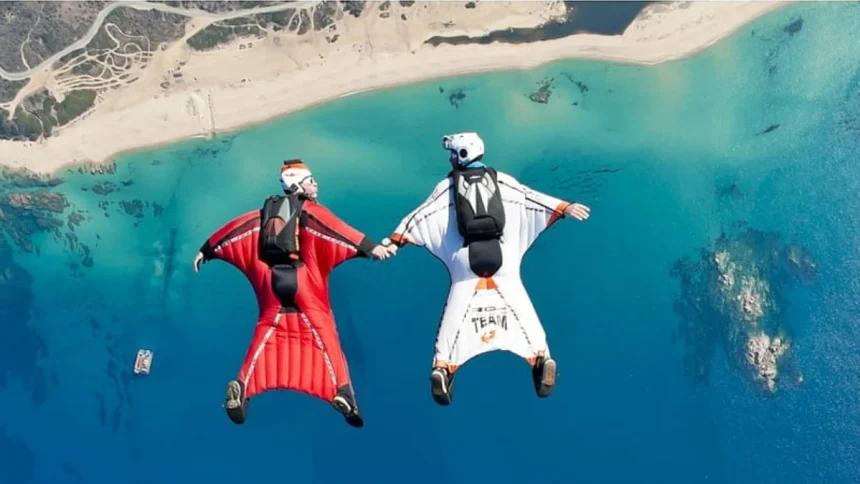
Wingsuit flying is a sport where a person glides through the air using a special jumpsuit called a wingsuit. The suit has fabric stretched between the arms and legs so the body can lift and fly forward instead of just falling. This idea started a long time ago, but modern wingsuits were developed in the late 1990s.
Before that, people had tried early versions since the 1930s. Wingsuit flying usually ends with the person opening a parachute to land safely. People can jump from planes or high cliffs and steer by changing their body position.
Wingsuit Suit Design: How the Special Flying Suit Works
A wingsuit is a special suit that lets a person glide through the air. It has fabric between the arms and legs that opens like wings when air fills it. This makes the lift so the flier moves forward, not just down. The suit is made of materials like ripstop nylon and has inside ribs to keep its shape. Small wings are easier for beginners, and big wings help advanced fliers glide farther.
Wingsuit Flying Laws: Where It Is Allowed and Regulated
Many countries let people fly in wingsuits with light rules. Brazil, Italy, Norway, Switzerland, New Zealand, Iceland, India, Russia, Georgia, Mexico, and Venezuela allow wingsuit flying with basic safety practices. Most places just require training and good planning before flying. In Chamonix, France, wingsuit flying was once stopped after deadly accidents, but that ban was later removed, and now flying is allowed again under local safety conditions.
Wingsuit BASE Jump Records That Changed Extreme Flying
Wingsuit BASE jumping has seen some historic records over the years. On 23 May 2006, Heather Swan and Glenn Singleman made a famous jump from Meru Peak at about 6604 meters, showing how high wingsuit jumps could be done. On 5 May 2013, Valery Rozov set a new record by jumping from Changtse at 7220 meters.

He broke his own record again on 5 October 2016 by jumping from Cho Oyu at nearly 7700 meters. Another major moment came on 2 November 2011, when Dean Potter completed the longest wingsuit BASE flight, covering about 7.5 kilometers and flying for more than three minutes. These records show how the sport keeps pushing human limits.
Wingsuit Flying Death Risk
Wingsuit flying is one of the most dangerous extreme sports in the world. The risk is highest in wingsuit BASE jumping, where people jump from cliffs or mountains. Studies show the death rate is about 1 in 500 to 1 in 1,000 jumps. This is much riskier than normal skydiving from a plane. Since 1981, more than 400 deaths have been recorded.
Around 97 percent of these deaths happen during cliff jumps, usually because of hitting rocks or the ground. Flying very close to mountains, called proximity flying, increases danger. Experts say a person should do at least 200 normal skydives before trying wingsuit flying.

ALSO READ: Why Red Bull Stayed Away From Formula E?