
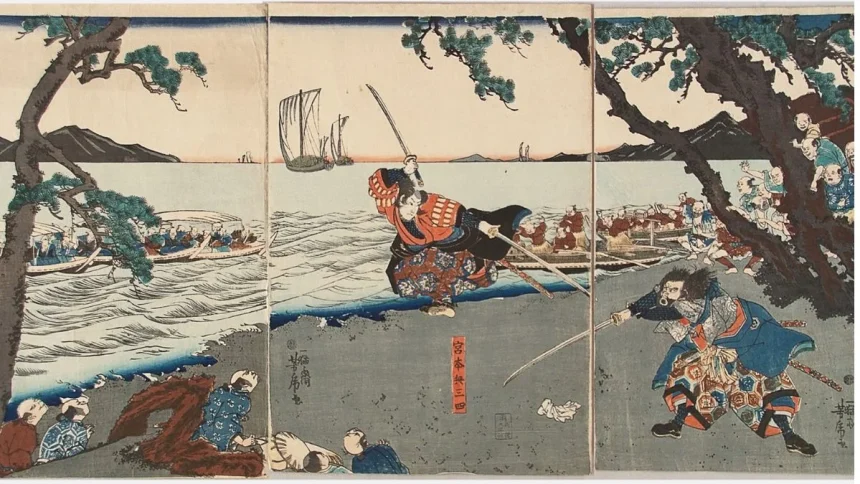
5 Rules Of Self-Disciplines For Athletes Growth: Miyamoto Musashi, one of Japan’s greatest Samurai warriors, won over 60 life-or-death duels before he retired to write his book, The Book of Five Rings.
Musashi’s philosophy of Self-Discipline was not based on motivation, harsh routines, or being pushed to achieve things rather, Musashi’s philosophy was rooted in something he called Internal Mastery, the belief that success will come naturally when your mind is disciplined.
Unlike modern-day discipline (which typically consists of short-lived motivation), Musashi believes true discipline comes from clarity, detachment, and constant self-awareness. These five Samurai principles will help you to achieve mastery of any skill, whether it be in business, trading, academics, athletics or personal growth, and are a timeless framework for success.
The 5 Rules Of Self-Disciplines For Athletes Growth and Development
1. Master Yourself Before Mastering the World
The starting point of Self-Disciplines is inner control. Musashi’s philosophy states that “no external skill can ever replace the lack of emotional stability.” A person dominated by ego, fear, anger, or impatience will not be able to perform under pressure even if he or she is talented.

Real discipline is achieved when you are able to watch your emotions without acting on them. This does not mean that you have to repress your emotions it means that you have to understand them without being controlled by them.
When emotional neutrality is attained:
- Fear does not cloud judgment
- Ego does not distort reality
- Impulses do not override logic
Internal perfection leads to external perfection. Before attempting to conquer goals, habits, or systems, you have to conquer yourself.

2. Commit Fully to the Path You Choose
Half-measures do not exist in Musashi’s worldview. He taught that self-disciplines require undivided commitment to the single goal of mastering the discipline. It takes longer to make progress to the extent that attention is divided among many different goals, safety nets or distractions. Not being serious will not help you become a master, only mastery develops; only mastery will help you become a master.
Many individuals appear to be busy but don’t make progress because they have:
- A number of different projects they are pursuing at once
- A number of emotional exit strategies they keep available to themselves
- Not fully committing themselves to any one direction or objective.
As you fully commit yourself, you will begin to accelerate your learning, increase your focus and gain greater insight into the material. Half-commitment means you’ll experience comfort; full commitment means you will experience mastery.
3. Train Relentlessly, Especially in Private
Consistency without recognition is one of the most solid foundations of Self-Disciplines. Musashi’s philosophy is that the best training occurs when nobody is watching. There is no applause, no reward, no recognition. Most people only train when they feel like it or when they can see the results. Experts train regardless of their feelings or visibility.

Private performance equals public results.
Examples of this are:
- Training every day without results
- Working on skills when the pace is slow
- Going when the motivation is gone
Invisible effort is where greatness is made. Greatness is not created in the moments of inspiration but in the invisible repetition of effort.
4. Detach from Comfort and Fear of Loss
Musashi’s selection of guidance demonstrated that simplicity maintained clarity for him. Attachment to security, image, results has caused self-discipline to erode. Once comfort takes precedence in your life, you can no longer grow forward. Likewise, if you let your thoughts be driven by losing something, then there will be no bold decision-making. Detachment does not equate to indifference, it is freedom.
When you do not get caught up in the comfort of your life, you will:
- Take calculated risks
- Act boldly and decisively in times of stress
- Face failure with integrity
Fear interferes with your ability to perceive accurately. Comfort interferes with your ability to achieve great success. By regularly challenging what makes you feel comfortable, you will grow your ability to stay disciplined. Growth occurs where comfort is absent.
5. See Reality Exactly as It Is
The ultimate form of Self-Disciplines is brutal honesty. Musashi’s point was to recognize reality without the coloring of emotions to see it without excuses, without denial, without comforting lies. The reason most people don’t change is that they don’t want the truth. They mistake activity for progress and excuses for results.
Perception is a function of tough questions:
- Am I getting better or just keeping busy?
- Is this plan working or just familiar?
- Are my weaknesses being fixed or ignored?
Truth must precede change.
Seeing reality clearly will help your decisions, your actions, your progress. Discipline will be at its strongest when honesty is present.
The Samurai Path to Self-Disciplines
Musashi’s teachings identify that true self-discipline is not a function of power, but rather a function of maturity. Mastering one’s mind, hearing one’s heart correctly, relinquishing one’s comforts and exposing and accepting truth creates an opportunity for self-discipline to be an exciting experience rather than painful such as:
1) Mastering thy self,
2) Completely committing to tasks without question,
3) Consistently learning new body movements and muscle development (through proper training),
4) Separating self from comfort,
5) Being completely honest with reality.
Regardless of how one uses the five samurai principles for career development, business success, building muscle strength, or developing oneself as a person, these same five rules will allow us to create strength rather than struggle with self-discipline. Self-discipline cannot be used as a source of external motivation rather, it is a source of developing mastery.
ALSO READ: Batters Who Never Hit A Six In ODI Cricket: 5 Surprising Names