Gujarat Titans had a remarkable journey to the title in 2022 and came agonizingly close to defending their crown in 2023. However, the current season has been disappointing for them. Despite dominating the group stages in the previous years, they find themselves knocked out before the final game.
Factors contributing to Gujarat Titans’ Struggle
Several factors have contributed to their slump. The departure of their captain, Hardik Pandya, could have played a role in destabilizing the team. Additionally, the absence of Mohammed Shami may have been felt in their bowling lineup. Furthermore, the inconsistency in the form of Shubman Gill, who was a standout performer last year, has magnified their struggles this season.
Inconsistent Openers
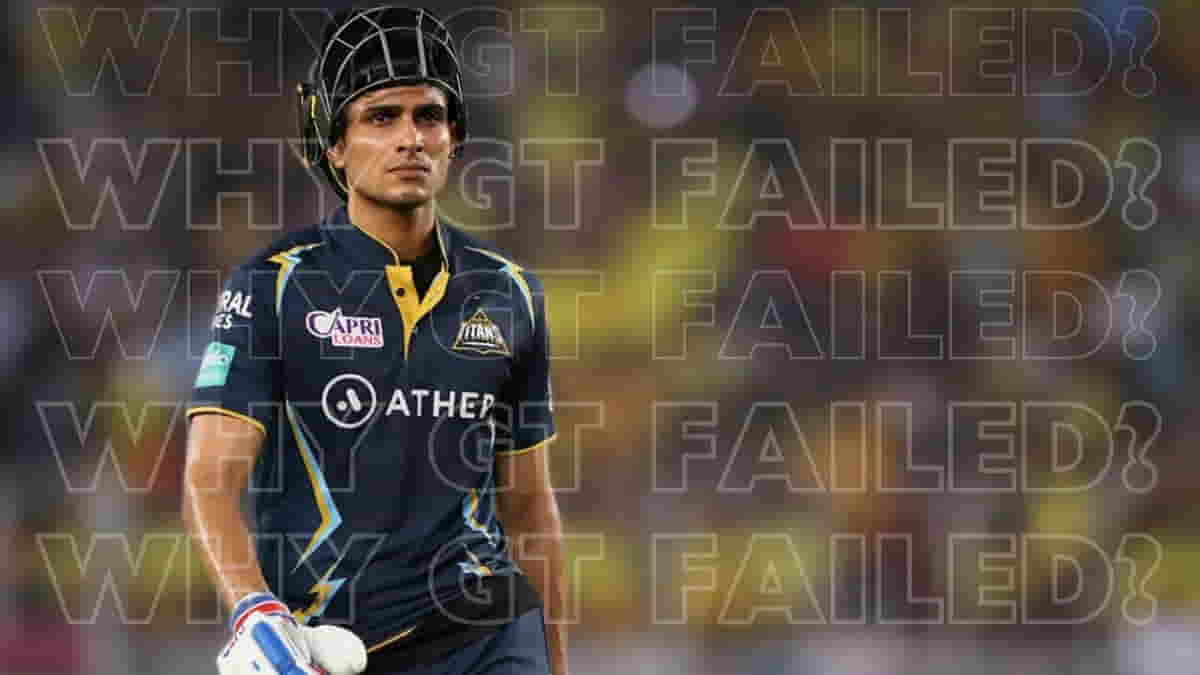
Gill’s performance last year, highlighted by his remarkable century against Chennai Super Kings, set high expectations for him. While he began this season promisingly, with 255 runs in his first six games at an impressive strike rate, his form declined thereafter. In contrast to his stellar performance last year, where he amassed 890 runs and three centuries, Gill’s contributions this season have been inconsistent.
His mixed returns have had a ripple effect on Gujarat Titans’ top order, resulting in them being the weakest team in the powerplay, with a run rate of 7.23. Additionally, the dip in form of Wriddhiman Saha, who was a key contributor with the bat last year, has further compounded their batting woes.
This season, Shubman Gill’s average of 15.11 is the lowest among all openers who have played at least nine innings in the powerplay. During the CSK game, Wriddhiman Saha’s absence led to Sai Sudharsan opening the innings instead of playing at No. 3.
While Sudharsan has consistently been among the top run-scorers this season, he has faced challenges in the powerplay, particularly against pace. His strike rate of 114 during this phase was the lowest among batters with nine innings.
However, Sudharsan showcased a remarkable improvement in their victory over CSK, scoring 103 off 51 balls. Despite a slow start of 28 off 23 in the powerplay, he displayed sensational acceleration during the middle overs, addressing another concern for GT, who were previously the slowest in that phase.
Although Sudharsan has surpassed 500 runs this season, there will be discussions regarding his performance in the powerplay, which he admitted is a work in progress, during GT’s post-mortem analysis.
In the absence of Hardik Pandya, who played a crucial role in the middle-order in previous seasons, GT faced difficulties in finding the right balance. Hardik’s contributions as a batter, often batting at No. 4 to handle pressure and facilitate the finishing role for David Miller, Rahul Tewatia, and Rashid Khan, were significant. His absence left a void in the middle-order, contributing to GT’s struggles this season.
Last year, Vijay Shankar played ten innings in the middle order for GT, scoring 301 runs. However, he struggled for form this season and lost his place in the team midway through. Shahrukh Khan, a significant auction acquisition, only entered the team when they were already facing a downturn in their performance.
Azmatullah Omarzai, recruited to provide balance as an allrounder, failed to make the desired batting impact, managing just 42 runs in four innings.
Despite being given an expanded role in the middle order, David Miller could only muster one half-century this season. His struggles, particularly in the middle overs where he struck at just 123, were evident. Similarly, Rahul Tewatia found it increasingly difficult to accelerate, with a strike rate of 77 in the middle phase.
Also Read: Delhi Capitals’ Win Shakes Up IPL Playoff Race
Hardik Pandya’s Absence: A Void in the Middle Order
However, the accumulation of runs in the middle overs didn’t translate into a strong finish for GT, as they found themselves ranked ninth in the death overs. This shortfall across all batting phases placed excessive pressure on their bowlers.
Injuries also played a role in the team’s imbalance. The absence of Robin Minz, a powerful wicketkeeper-batter, forced GT to persist with Saha as an opener. Additionally, BR Sharath, who replaced Minz due to injury, only played one game. In total, GT utilized 23 players, the most by any team this season.
Missing Mohammed Shami’s hard length deliveries
The absence of Mohammed Shami, who was instrumental last year with his hard length deliveries and seam movement, was keenly felt. Shami’s 17 powerplay wickets at an average of 19.41 and an economy rate of 7.5 posed a significant threat. However, a prolonged recovery period from an ankle injury ruled him out for this season.
As a result, GT had to experiment with their bowling options, including deploying Mohit Sharma, their designated death-overs specialist, in the powerplay. Sandeep Warrier, Shami’s replacement, showed flashes of promise, while Umesh Yadav experienced a mixed season. Spencer Johnson, one of their high-priced auction signings, struggled to find swing and leaked runs.
Also Read: Sports Calendar: Upcoming Cricket Matches This Week
Mohit Sharma’s decline in effectiveness
Overall, Mohit Sharma’s decline in effectiveness during the death overs proved to be a significant setback for Gujarat Titans. The team, which boasted the best economy rate in the death overs last year largely due to Mohit’s contributions, now struggled to contain runs during this crucial phase.
Initially, Mohit made a strong impact with eight wickets in his first six games at an economy rate of 9.39. He delivered match-winning performances against Mumbai Indians and Sunrisers Hyderabad. However, he experienced a dip in form midway through the season, culminating in a costly spell of 73 runs in four wicketless overs against Delhi Capitals – the most expensive figures in the IPL. Although he bounced back with a notable performance of 3 for 31 against CSK, by then, Gujarat Titans’ chances of making the playoffs were slim.
Rashid Khan Performance
Meanwhile, Rashid Khan, known for his bowling prowess, hasn’t been as prolific in picking up wickets this season. Despite playing ten matches, he has managed only 12 wickets so far. This could be attributed to teams adopting a more aggressive approach against him, especially with the Impact Player rule allowing them to strengthen their batting line-up. Consequently, Rashid’s economy rate of 8.30 in the last two seasons is notably higher than his economy rate of 6.59 during Gujarat Titans’ title-winning campaign in 2022.
Rashid Khan has faced challenges this season, experiencing his highest number of matches with an economy rate of ten or more in his IPL career – a total of four times. Additionally, for the first time since his IPL debut in 2017, Rashid has gone wicketless in three consecutive games. He attributed these struggles to lingering effects from a back surgery he underwent before the season.
In an interview with the Cricket Monthly, Rashid acknowledged the impact of his surgery, particularly on his wrong’un delivery. He explained that using his back more for the wrong’un led to doubts and fear, especially if he felt any stiffness in his back.
These ongoing injury concerns have affected Rashid’s performance on the field, which became evident when he conceded 29 runs, including four sixes, in an over to Will Jacks, ultimately leading to an easy win for RCB in Ahmedabad.