
What Is the Offside Rule in Football?
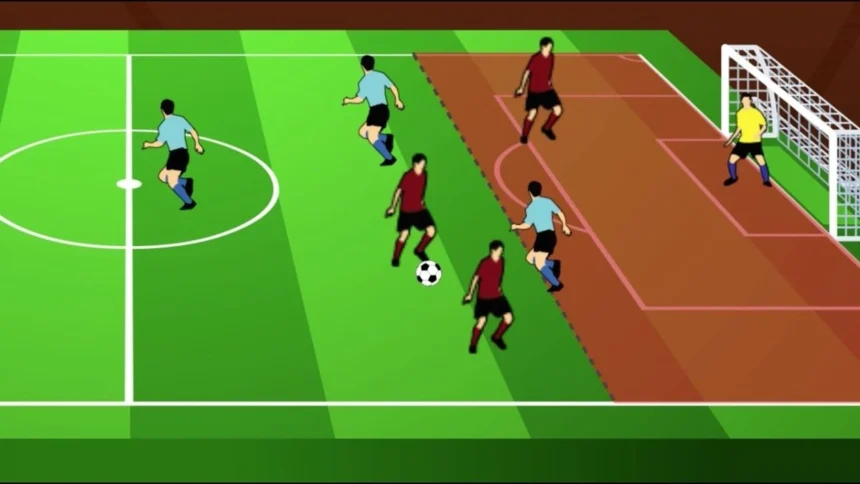
The offside rule in football (soccer) is one of the most fundamental and misunderstood regulations of the game. According to Law 11 of the Laws of the Game, a player is in an offside position if:
- They are nearer to the opponent’s goal line than both the ball and the second-last defender at the moment the ball is played to them, and
- They are involved in active play by interfering with play, interfering with an opponent, or gaining an advantage from being in that position.
A player is not in an offside position if they are:
- In their own half of the field of play
- Level with the second-last opponent
- Level with or behind the ball
The key aspect of the rule lies in timing and positioning, requiring split-second analysis, often facilitated by VAR (Video Assistant Referee) in modern games.
When Is a Player Penalized for Being Offside?
Merely being in an offside position is not an offense. A player is only penalized for offside if, at the moment the ball is played by a teammate, they:
- Interfere with play by playing or touching the ball
- Interfere with an opponent by obstructing their line of sight or movement
- Gain an advantage by being in that position, such as playing a ball that rebounds to them from a post, crossbar, or defender
The assistant referee signals offside by raising the flag, and the attacking team loses possession through an indirect free kick for the defending side.
Read More

Exceptions to the Offside Rule
There are specific scenarios where the offside rule does not apply, including:
- Goal kicks
- Corner kicks
- Throw-ins
In these cases, the attacking player may receive the ball in any position, even behind the last defender.
Offside Positioning: Visualizing the Rule
Understanding the offside rule is easier with a mental image:

Imagine a line drawn from the second-last defender across the pitch. If an attacking player is beyond this line and closer to the goal than both the ball and this defender at the time the pass is made, they are in an offside position.
With the introduction of VAR technology, referees now use detailed frame-by-frame analysis to assess the exact moment the ball is played and the player’s position, often drawing digital lines to determine the outcome.
The History of the Offside Rule
Origins in the 19th Century
The roots of the offside rule trace back to the mid-19th century, when football was evolving from various forms of folk football and rugby-style games played in British public schools.
The Cambridge Rules (1848) and Sheffield Rules (1858) had early versions of the offside law, heavily influenced by rugby, where any player ahead of the ball was deemed offside. This meant forward passing was almost impossible.
In 1863, the Football Association (FA) codified the first standardized version of the game. The offside rule initially required three defenders to be between the attacker and the goal, further restricting forward play.
Evolution in the 20th Century
The rule was modified in 1925, changing the requirement to two defenders (usually the last outfield player and the goalkeeper). This dramatic alteration led to a surge in goal-scoring and changed the game’s attacking dynamics.

Later amendments addressed interference in play, clarifying what “active involvement” meant. The 2005 FIFA revision and subsequent updates focused on refining player intent and influence in offside situations.
Modern Reinterpretations
In recent years, IFAB (International Football Association Board) has issued clarifications to further improve fairness and reduce controversy. The use of semi-automated offside technology, introduced in top tournaments like the FIFA World Cup, now assists referees with pinpoint accuracy.
The Role of VAR in Offside Decisions
Introduced widely in 2018, VAR (Video Assistant Referee) was developed to ensure fair and accurate decisions, particularly for tight offside calls.

Using high-resolution cameras and advanced software, VAR:
- Captures the exact frame the ball is played
- Draws precise lines to determine player positions
- Confirms or overturns the assistant referee’s on-field decision
Although VAR adds a layer of scrutiny, it has faced criticism for slowing down the game and for marginal decisions, where a player may be offside by mere millimeters.
Controversies and Debates
The offside rule, despite its clear definition, has sparked endless debate in the football community. Common points of contention include:
- The spirit vs. the letter of the law – Should marginal offsides be judged so harshly?
- Timing of the pass vs. positioning – Milliseconds often change the outcome
- Intentional vs. accidental involvement – Gray areas remain around passive involvement
Some experts argue for rule changes, such as allowing an attacker to be onside if any part of their body is level with the defender, promoting more attacking play.
Offside Traps and Tactical Applications
Defensive teams often use the offside trap, a coordinated tactic where defenders move forward simultaneously to catch attackers offside. This requires:
- Perfect timing
- Clear communication
- Understanding of opponent positioning
While effective, it’s risky; one mistimed step can leave an attacker free on goal.
Famous Offside Incidents in Football History
- 2010 World Cup- England vs. Germany: A controversial offside call overshadowed Frank Lampard’s disallowed goal, prompting the push for goal-line and video technology.
- Champions League 2019- Tottenham vs. Man City: A dramatic VAR offside call denied Sterling a late winner, illustrating the razor-thin margins involved.
These incidents show how offside decisions can shape tournaments, fuel rivalries, and influence careers.
Teaching the Offside Rule to Beginners
To explain the offside rule simply:
- The attacker must be behind or level with the second-last defender when the ball is played.
- If they’re ahead and involved in play, it’s offside.
- If they’re not interfering or receiving the ball, play continues.
Training tools like cones, animations, and interactive videos are used by coaches to teach young players and fans.
Conclusion
The offside rule is more than a technical regulation. It’s a pillar of football’s strategic complexity. From its rugby roots to VAR-enhanced enforcement, it has shaped how the game is played and watched. Understanding its nuances not only helps players avoid errors but enriches the experience for fans around the world.