
Biggest Fitness Transformations In Football History: Football has always been about skill, speed, and tactical brilliance. However, in the modern game, physical fitness has become just as important. Players today are expected to maintain peak conditioning throughout long seasons, competing at the highest level in both domestic and international tournaments.
Over the years, many footballers have undergone incredible fitness transformations. Some returned stronger after injuries, while others completely reshaped their bodies to adapt to new playing styles and career demands. These stories highlight the importance of dedication, nutrition, and training in shaping successful football careers.
Cristiano Ronaldo

Cristiano Ronaldo is perhaps the most famous example of a fitness transformation in football. When he joined Manchester United as a teenager in 2003, he was skinny and lacked physical strength. Over the years, Ronaldo built his body into one of the most athletic in the sport.
Through disciplined training, strict nutrition, and relentless dedication, he transformed into a powerhouse. His speed, explosive jumping ability, and muscular physique have set new standards in football fitness. Ronaldo’s transformation has not only prolonged his career but also made him a role model for athletes around the world.
Adama Traoré
Adama Traoré’s transformation is one of the most visually striking in football. Starting as a slim academy product at Barcelona, he later developed into one of the strongest and fastest players in the Premier League.

What makes his case unique is that Traoré reportedly does not lift heavy weights. Instead, his training relies heavily on resistance work and functional exercises. His muscular frame, combined with natural pace, makes him nearly impossible to stop in one-on-one situations.
Gareth Bale
Gareth Bale began his career as a promising left-back at Southampton. Back then, he had a slim frame and was more focused on his technical ability. But during his time at Tottenham Hotspur, Bale transformed his body to match his attacking role.
He developed explosive pace, strength, and stamina, becoming one of the most dangerous wingers in world football. His transformation into a muscular, athletic forward was key to his success at Real Madrid, where he won multiple Champions League titles.
Read More

Robert Lewandowski
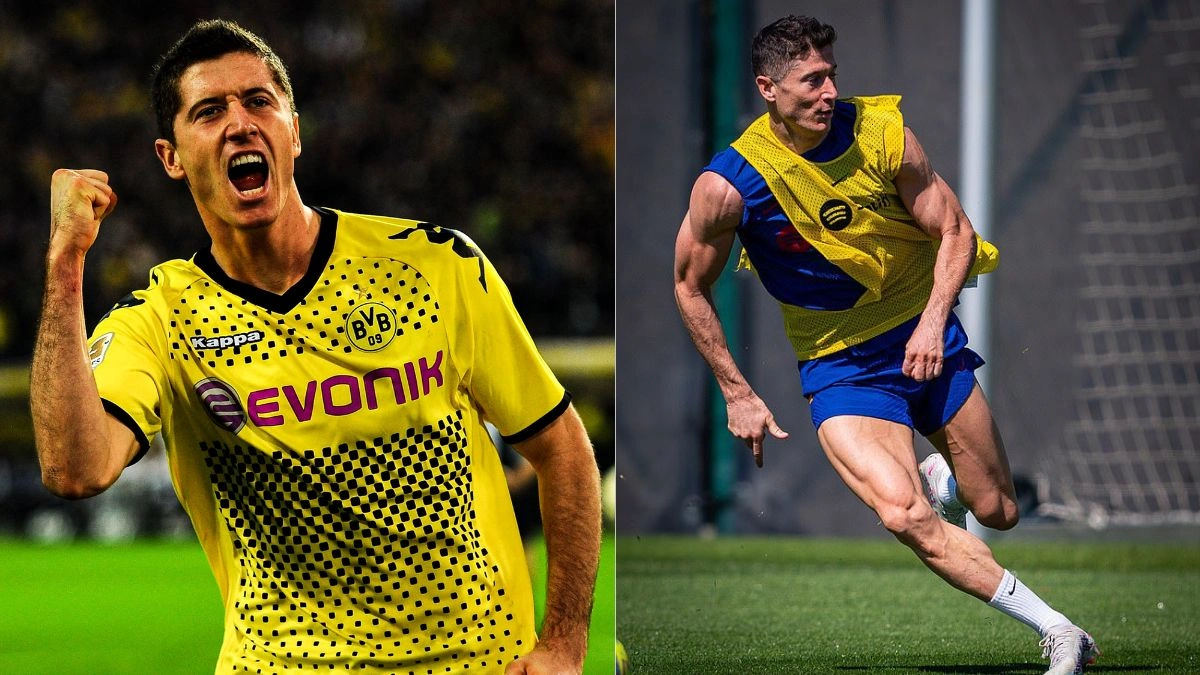
Robert Lewandowski’s rise to becoming one of the best strikers in the world is also a story of fitness transformation. Early in his career, he was a talented forward but lacked the physical dominance seen in top-level strikers.
Over time, Lewandowski redefined his body through scientific training and nutrition. His wife, a nutritionist and fitness expert, played a key role in shaping his diet. Today, he is renowned for his lean muscle mass, incredible stamina, and ability to maintain peak fitness throughout a season.
Mohamed Salah

Mohamed Salah’s transformation has been crucial to his success at Liverpool. When he first arrived in European football, Salah had pace but lacked the physical strength to dominate defenders.
Through years of hard work, Salah developed a muscular yet lean body, which perfectly complements his explosive speed and agility. His strict nutrition, training routines, and discipline have helped him stay among the world’s best attackers. Salah’s transformation has been admired by fans and fitness professionals alike.
Luke Shaw
Luke Shaw’s journey is different from others because it involved setbacks. The Manchester United left-back suffered a severe leg injury early in his career, which also led to fitness struggles.
For years, Shaw faced criticism for his conditioning. However, under new training regimes and personal dedication, he managed to turn things around. His improved fitness helped him secure a starting spot for both Manchester United and the England national team. His transformation is an inspiring example of resilience and determination.

Antonio Valencia
Antonio Valencia started his career as a speedy winger. Over time, he transitioned into a full-back at Manchester United, and to match the role, he completely reshaped his body.
Valencia became one of the most physically dominant defenders in the Premier League. His upper body strength, stamina, and explosive running were crucial in his successful career at Old Trafford. His transformation showed how players can adapt physically to prolong their careers in new roles.
Football fitness transformations are more than just about building muscle or losing weight. They are about adapting to the ever-changing demands of the game. From Cristiano Ronaldo’s iconic rise to Mohamed Salah’s disciplined approach and Luke Shaw’s comeback, these stories show how determination, training, and nutrition can redefine a player’s career.
In modern football, where physical demands are at an all-time high, these transformations highlight that success is not only about talent but also about the commitment to maintaining peak condition.
FAQs
Q1. Who had the most famous fitness transformation in football history?
A. Cristiano Ronaldo is widely regarded as having the most famous fitness transformation, going from a skinny teenager to one of the fittest athletes in world sport.
Q2. Did Adama Traoré build his body by lifting heavy weights?
A. Interestingly, Adama Traoré claims that his muscular physique was built mainly through resistance training and functional exercises, not heavy weightlifting.
Q3. How did Robert Lewandowski improve his fitness?
A. Lewandowski improved his body and performance through scientific training, tailored nutrition, and guidance from his wife, who is a nutritionist and fitness coach.
Q4. Which footballer turned fitness struggles into success?
A. Luke Shaw faced injuries and fitness criticism early in his career, but through hard work and dedication, he transformed his body and performance.
Q5. Why are fitness transformations important in football?
A. Fitness transformations help players adapt to higher demands, prevent injuries, and extend their careers. Modern football requires peak conditioning to perform consistently.
Also Read- The Role Of Recovery In Modern Football: Ice Baths, Cryotherapy, And More