
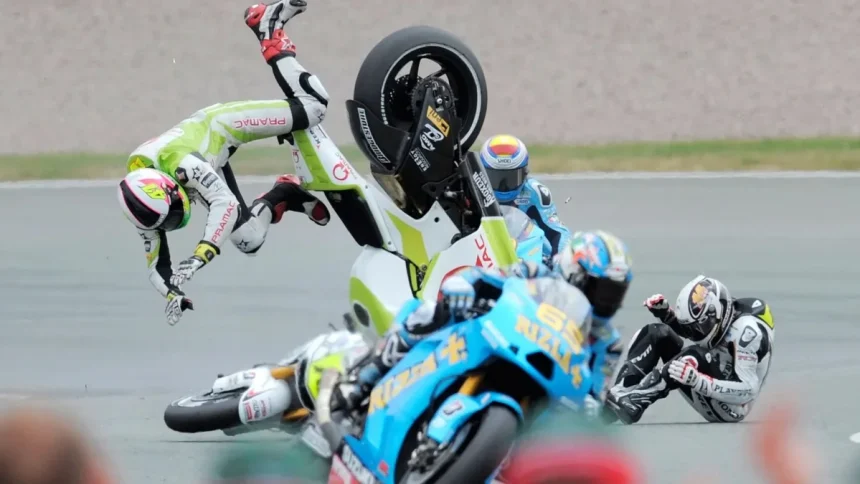
The 2007 MotoGP season was the 59th FIM Road Racing World Championship, running from 10 March to 4 November 2007 with 18 races across the globe. It marked a major change by introducing new 800 cc engine regulations, replacing the previous 990 cc bikes, and reshaping competition.
Australian rider Casey Stoner dominated on his Ducati, winning 10 races and the MotoGP title ahead of stars like Dani Pedrosa and Valentino Rossi. The season also crowned Jorge Lorenzo (250cc) and Gábor Talmácsi (125cc) as class champions.
Building Strong Muscles for Crash Protection

MotoGP riders train their bodies to build strong, lean muscles that work like natural armor. They do high-intensity workouts such as HIIT and strength training to strengthen muscles around their bones and joints. When a rider crashes, these muscles help protect the body by absorbing some of the impact, reducing the chances of serious bone and joint injuries.
Read More
Keeping the Body Flexible to Reduce Injuries

Riders regularly practice yoga, Pilates, and mobility exercises to keep their joints flexible. Flexible muscles and joints are less likely to tear or snap during a crash. When riders hit the ground, their bodies can move more freely, which helps reduce serious injuries like torn ligaments or stiff joint damage.
Read More

Training Fast Reactions to Avoid Wrong Movements

During crashes, the natural reaction is to put hands out to break a fall. Riders train their reflexes using light boards and hand-eye coordination drills to avoid this instinct. This training helps them protect their wrists and arms, which are common injury areas in high-speed crashes.
Learning How to Fall Safely Through Dirt Riding
Many MotoGP riders practice motocross and dirt bike riding from a young age. Riding on loose dirt teaches them how to handle unstable bikes and how to fall safely. This experience helps riders learn how to roll and tumble instead of landing stiffly, which reduces injury risk.
Read More

Strengthening the Core for Impact Absorption
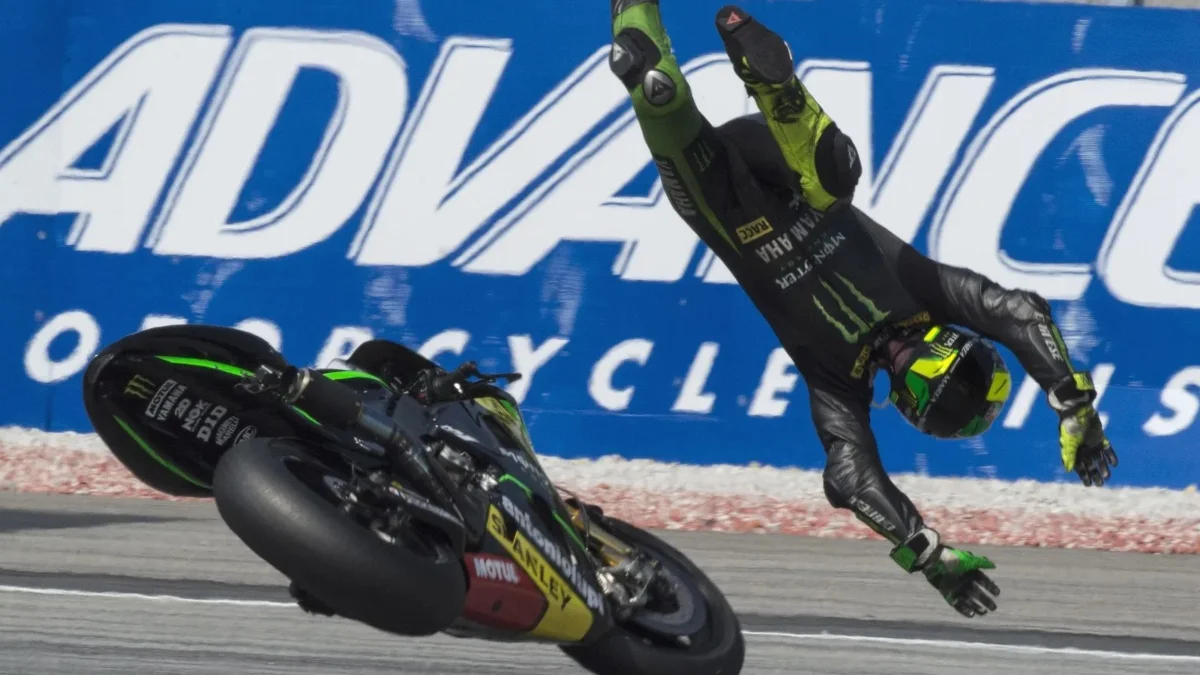
A strong core is extremely important in MotoGP. Riders do exercises like planks and leg raises to build strong abdominal and back muscles. A strong core helps the body absorb violent forces during crashes, especially in high-side accidents, preventing severe internal and spinal injuries.
Strengthening the Neck to Protect the Head and Spine

Riders do special neck exercises to strengthen the muscles that support the head. During crashes, the head and helmet can snap violently. Strong neck muscles help reduce whiplash injuries and protect the spine from sudden, powerful movements.
Mental Control to Stay Calm During Crashes

Mental training is just as important as physical training. With the help of sports psychologists, riders learn to stay calm in dangerous moments. This helps them “tuck in” their arms and legs during a fall, reducing the chance of breaking limbs and helping them slide more safely.
ALSO READ: Mary Kom Net Worth in 2026: Earnings, Assets, And Legacy