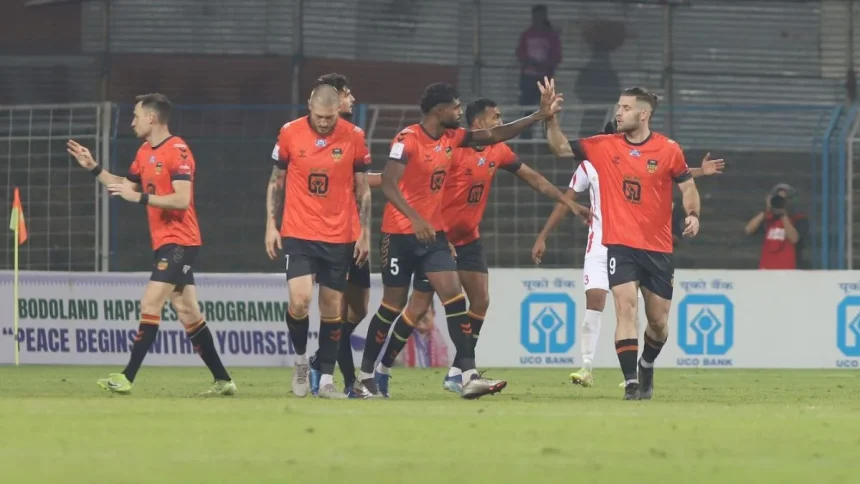
From the upcoming season beginning February 21, the I-League is set to be restructured and rechristened as the Indian Football League, subject to approval by the All India Football Federation’s (AIFF) Executive Committee. While formal clearance is still pending, stakeholders have indicated it is largely procedural.
The AIFF will continue to own the league, but its role will be largely confined to regulatory and disciplinary matters- a deliberate step away from direct operational control.
Shillong Lajong owner Larsing Ming, one of the driving voices behind the proposal, described the shift as a “fresh start”, drawing parallels with governance structures in leagues such as the English Premier League.
The timing of the proposal is no coincidence. Indian football has been grappling with instability since the expiration of the Master Rights Agreement (MRA) between the AIFF and Football Sports Development Limited (FSDL) in December last year. The breakdown left both the Indian Super League (ISL) and the I-League briefly paused, exposing the fragility of the ecosystem beneath the top tier.
For I-League clubs- many already struggling with shrinking revenues, limited broadcast exposure and inconsistent scheduling- the vacuum created an unexpected opportunity: to reclaim agency over their own competition.

The rebranding to the Indian Football League is thus less cosmetic than symbolic, signalling a move away from survival mode towards collective responsibility.
I-League 2025-26: Format
The 2025–26 season will be a shortened one, featuring 10 or 11 clubs, with final confirmation expected after February 2. Two teams- Diamond Harbour of West Bengal and Chanmari FC of Mizoram- have been promoted, while uncertainty remains over Churchill Brothers amid an ongoing legal dispute following a Court of Arbitration for Sport ruling that awarded last season’s title to Inter Kashi.
The competition will follow a two-stage format. All teams will play a single round-robin phase, after which the league will split into a championship group and a relegation group. Points from the first stage will carry forward, preserving competitive integrity in the title race. The bottom two teams from the relegation phase will drop to I-League 2.

Financially, the league’s operating cost has been pegged at ₹3.25 crore, with clubs contributing 60 per cent- roughly ₹20 lakh per club- and the AIFF covering the remainder. For the first time, clubs will directly shoulder a majority share of the league’s running costs, reinforcing their stake in its sustainability.
Also Read: Top 4 Footballers With the Most Career Goals
Indian Football Crisis
Indian football’s domestic pyramid has been rebranded before. The National Football League became the I-League in 2007; the launch of the ISL in 2014 then reshaped the hierarchy entirely, pushing the I-League into the shadows. What followed was a slow erosion of relevance, visibility and commercial value.
The proposed Indian Football League is an attempt to correct that drift- not by challenging the ISL’s supremacy, but by building a more coherent, professionally run second tier.
Whether this model succeeds will depend on execution rather than intent: transparent governance, credible commercial partnerships, stable calendars and genuine cooperation between clubs and the federation.