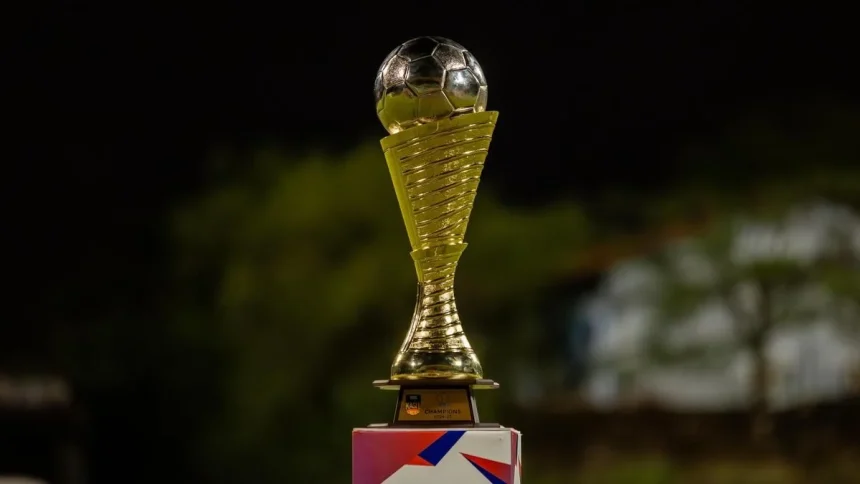
The I-League has officially been rebranded as the Indian Football League (IFL) from the 2025–26 season, following approval by the All India Football Federation (AIFF).
The decision, ratified by the AIFF Executive Committee during an online meeting, signals more than just a name change- it represents an attempt to restore credibility, structure and long-term direction to India’s second-tier competition.
From Flagship League to Second Division
Launched in 2007 as India’s premier club competition, the I-League replaced the National Football League and carried the mantle of top-tier football for nearly a decade. However, the arrival and rapid rise of the Indian Super League (ISL) in 2014 gradually reshaped the hierarchy.
Under a new roadmap agreed between stakeholders, the ISL was elevated as the country’s top division, and by the 2022–23 season the I-League had officially been repositioned as the second tier. Since then:
- The I-League champion earns promotion to the ISL
- The bottom two clubs are relegated to I-League 2
The restructuring created uncertainty and tension among stakeholders, and the competition endured a turbulent phase- including a temporary pause amid administrative instability in Indian football last year.
Club owners and AIFF officials proposed the name change earlier this year, arguing that the league required a fresh identity to move beyond recent controversies.
The 2026 Season: New Format, New Structure
The 2026 Indian Football League season will kick off on February 21, exactly one week after the ISL begins its campaign.
A truncated 55-match season will feature 11 clubs, including:

Gokulam Kerala, Namdhari, Rajasthan United, Diamond Harbour, Real Kashmir, Shillong Lajong, Aizawl, Sreenidi Deccan, Chanmari, Churchill Brothers and Dempo.
Promotion and qualification movements have already shaped the lineup:
- Inter Kashi, winners of the 2024–25 season, have been promoted to the ISL.
- Diamond Harbour and Chanmari moved up from I-League 2.
Churchill Brothers’ appeal for ISL inclusion was rejected after a Court of Arbitration for Sport ruling confirmed Inter Kashi as champions, although related legal proceedings remain pending in domestic courts.
Also Read:Top 4 Footballers With the Highest Market Value in 2026
-Stage Competition Model
The upcoming campaign will mirror formats used in the 2020–21 and 2021–22 seasons.
Stage 1: League Phase

All teams compete in a single-leg round-robin format. Points accumulated during this stage will carry forward.
Stage 2: Split Phase
- The top six clubs advance to a championship round (home and away).
- The remaining teams enter a centralised relegation round.
To further improve transparency, fixture scheduling will be handled by an AI-based system designed to eliminate human bias. Broadcast and match production standards will continue at last season’s benchmark.
A Pivotal Moment for Indian Football
The rebranding comes at a time when Indian football is attempting to stabilise after months of governance uncertainty and legal disputes. For many stakeholders, the shift to the Indian Football League represents a symbolic and operational reset.
Whether the new identity translates into improved commercial growth, stronger fan engagement and competitive balance remains to be seen. But structurally, the federation has made it clear: the second tier is no longer an afterthought- it is now positioned as a professionally governed bridge between grassroots development and the country’s top-flight competition.
As the 2026 season approaches, Indian football enters what administrators hope will be a more stable and clearly defined era- one built not just on rebranding, but on reform.