
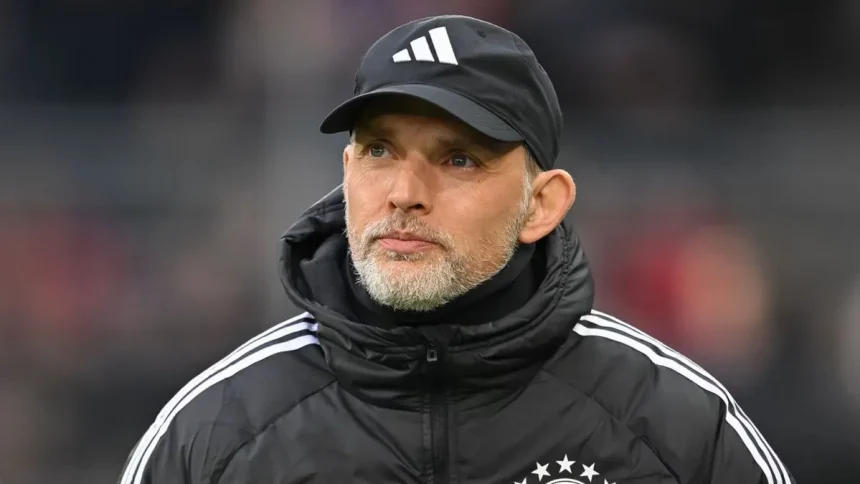
When Thomas Tuchel agreed to extend his contract as England head coach until after UEFA Euro 2028, the football world took notice. This isn’t just another managerial extension, it’s a strategic gamble by The Football Association (FA) that positions Tuchel at the centre of an ambitious and long-term blueprint for one of Europe’s most scrutinized national teams.
With qualifiers, Nations League assignments, the 2026 FIFA World Cup in North America, and a home European Championship on the horizon, the German strategist’s extended stay is set to reshape England’s footballing trajectory.
The Bold Move: Thomas Tuchel Commits to England Till 2028
In February 2026, England officially secured Thomas Tuchel as their head coach through to Euro 2028, signalling rare continuity in an era where national team bosses are often judged tournament by tournament. Tuchel’s original contract, set to expire after the 2026 World Cup, has now been lengthened to span three major competitive cycles. By anchoring his stay, the FA has made a clear statement: long-term stability is now integral to its development model.
From the FA’s perspective, Tuchel brings a level of experience unmatched by most international coaches. His coaching résumé boasts Champions League success with Chelsea and domestic silverware with clubs like Bayern Munich and Paris Saint-Germain. That pedigree adds a strategic dimension to England’s ambitions, a combination of tactical sophistication and international tournament acumen rarely seen in the nation’s recent history.
Crafting Identity: What Thomas Tuchel Brings to the Three Lions
Under Thomas Tuchel, England’s approach has been defined by organization and balance. The team’s qualifying campaign for the 2026 World Cup was exemplary, eight wins, zero goals conceded, and a first-of-its-kind clean sweep for a European nation. That result alone magnified Tuchel’s early influence and reinforced the FA’s resolve to back his project.

The German coach has also shown an acute awareness of the demands of international football. Unlike club management where tactics are drilled daily, national team strategy hinges on short training windows and pinpoint squad management. Tuchel has emphasized not just performance but culture, pushing for social cohesion and mental sharpness within the squad as requisite assets for extended competitive runs.
His philosophy marries structure with boldness. In interviews, Tuchel has described his England teams as “brave” and unwilling to shy away from ambitious game plans, especially on the world stage. That mentality aligns with England’s hunger for a major trophy, something that has eluded the men’s side since 1966.
The Long Game: Stability as a Strategic Advantage
The FA’s decision to lock Thomas Tuchel in until after 2028 reflects more than confidence, it is an attempt to cultivate strategic continuity. Historically, England has shifted managers based on short cycles, reacting to tournament exits rather than looking ahead with patience. This time, the FA is embracing a different mindset: build a coherent system, embed tactical identity, and allow the coach the runway needed to realise it.
Read More

Tuchel’s extended tenure also neutralizes external distractions. There had been substantial speculation linking him with top club positions, from Manchester United to Real Madrid. With his commitment to the English national team secured, such rumours are less likely to disrupt preparations ahead of 2026 and beyond.
Continuity affords developmental benefits as well. Players on the verge of senior breakthroughs now know the expectations and style under Tuchel. Likewise, the coach can integrate youth prospects without worrying about an imminent managerial turnover. Over time, this continuity can breed familiarity, resilience, and a unified tactical core, elements that are essential in elite international football.
Tactical Evolution Under Thomas Tuchel
Thomas Tuchel’s approach in England has been a blend of pragmatic organisation and dynamic transition play. The team has shown compact defensive structure while retaining fluidity in attack when opportunities arise. Gone are the days of overly cautious setups; under Tuchel there is a deliberate effort to control phases of play and force opponents into uncomfortable patterns.
The German’s penchant for meticulous preparation is evident in how “small details” are stressed in training and match planning. From pressing triggers to rotational sequences, his methods are designed to create a team that can adapt to different styles, crucial in tournaments like World Cup and Euro.
A Culture of Confidence: Players Backing Tuchel
Perhaps the most telling aspect of this long-term vision is the squad’s general acceptance of Tuchel’s methods. While some critics argue that stability before tournament proof is bold, many within the camp believe the clarity and direction Tuchel provides are catalysts for meaningful success. Players are receptive to his tactical guidance, and the team’s cohesion suggests that the German has fostered respect, trust, and tactical buy-in, ingredients that elevate a squad beyond individual talent.
Also Read: How Lamine Yamal Became La Liga’s Most Talked-About Teen Talent