
In the world of international football, World Football Rankings do far more than just list teams in order, they reflect a nation’s consistency, competitive pedigree, and ability to thrive under pressure. From Spain’s recent ascension to the summit to France and England’s perpetual presence near the top, this constantly updated leaderboard tells a deeper story about global football powerhouses and how they maintain their elite status.
What Are World Football Rankings and How Do They Work?
At its core, the World Football Rankings are a structured system designed to evaluate the comparative strength of national football teams. Introduced by FIFA in 1992, the rankings have evolved considerably over the decades, balancing simplicity and statistical precision to track performance across international fixtures.
Since 2018, the official FIFA system has shifted to an Elo-based methodology, a dynamic model borrowed from chess rankings that adjusts a team’s score after each match based on both the actual result and the expected outcome. Points are added or deducted depending on the match’s importance (friendlies versus World Cup qualifiers, for example) and the relative strength of the opponent. This system ensures that World Football Rankings are not static but responsive to real-world results, adding a layer of credibility and competitive realism.
Games matter: beating a higher-ranked nation in a World Cup qualifier yields more points than a routine friendly victory. That makes each international window and tournament stage an opportunity to climb, or slip, in the global pecking order.
Spain’s Tactical Mastery and the Journey to No. 1 in World Football Rankings
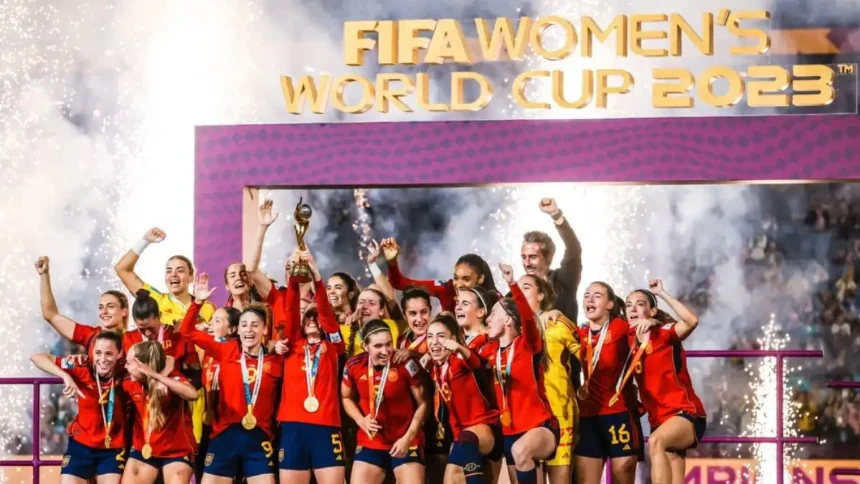
Spain’s resurgence to the very top of the World Football Rankings is a testament to sustained excellence. The 2025 FIFA rankings saw La-Roja return to pole position, overtaking traditional heavyweights through a blend of tactical innovation, generational talent, and unrelenting consistency.
Spain’s footballing identity, possession-based control, fluid transitional play, and a youth development pipeline that consistently delivers top-tier talent, has translated into results that matter. Their rise reflects not only marquee tournament success like Euro 2024 but also consistent points-earning performances across qualifiers and high-stakes friendlies recognized by FIFA’s points system.
France’s Dynamic Depth and Ranking Resilience
Just behind Spain in the World Football Rankings, France has remained a perennial force. Les Bleus benefit from a vast talent pool, strong domestic leagues, and an ability to rotate star players without losing competitive edge. This depth allows France to adapt tactically against diverse opponents, securing valuable points in both qualifiers and major tournaments.
Beyond raw talent, France’s strategic approach, integrating youth prospects while retaining seasoned internationals, maintains their high ranking position. Their continued presence near the summit of the World Football Rankings illustrates how an evolving squad philosophy, rather than reliance on a single legendary figure, sustains elite performance year after year.

England’s Climb: Balancing Tradition with Modern Ambition
England’s place within the top echelons of the World Football Rankings is no accident. The Three Lions’ competitive results across international breaks and qualifying campaigns have steadily boosted their points tally, pushing them closer to the top three.
England’s football resurgence blends tactical adaptability with attacking depth, supported by a domestic league that operates at an elite technical and physical level week in, week out. International results, particularly in highly weighted competitions, provide England with the ammunition to accumulate ranking points and build upward momentum toward the No. 1 spot.
When Global Standards Are Defined by Consistency and Competitiveness
Looking at the World Football Rankings through the lens of teams like Spain, France, and England, a pattern emerges: sustained excellence, strategic squad development, and performance under pressure are non-negotiable for elite status. These nations don’t just headline the rankings because of occasional victories, they do so because their planning, player ecosystems, and competitive philosophies align with the metrics that the ranking system values most.
Moreover, the World Football Rankings influence more than bragging rights, they affect seeding in major tournaments like the FIFA World Cup, shaping matchups and strategic pathways. The top four ranked teams in the lead-up to the 2026 World Cup, including Spain, France, Argentina, and England, were even placed in separate brackets under a new tennis-style draw to protect competitive balance.
In essence, World Football Rankings are more than numbers; they’re a reflection of footballing culture, strategic foresight, and the relentless pursuit of excellence that makes the beautiful game globally compelling.
Also Read: Why High-Press Football Is Losing Its Edge Across Europe’s Top Leagues?