
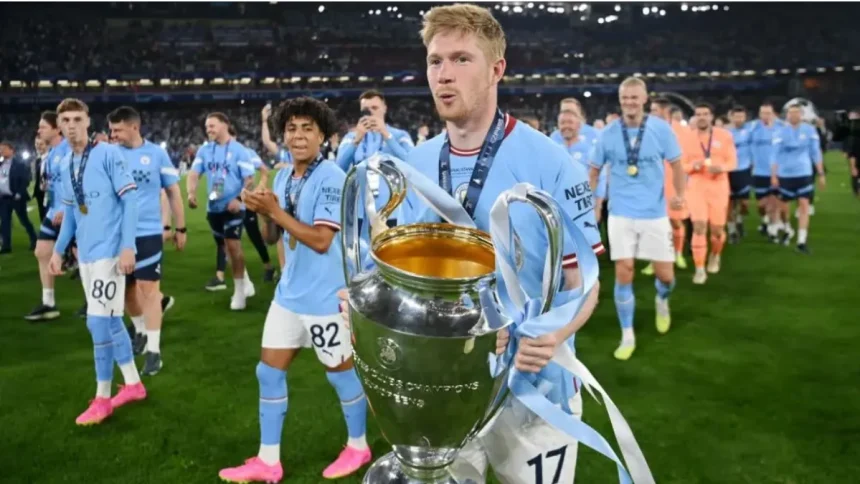
When the stakes rise and margins shrink, UEFA Knockout football transforms the very nature of the game. Unlike the rhythm and predictability of league campaigns, UEFA Knockout ties bring urgency, tension, and a completely different tactical landscape. Every decision carries amplified consequences, and every mistake can define a season.
UEFA Knockout Format: Why Every Minute Matters More
The defining feature of UEFA Knockout football is its elimination structure. Unlike league matches where teams accumulate points over time, knockout ties operate on a do or die basis, often across two legs with an aggregate score deciding progression.
This format forces teams to think beyond a single 90 minutes. Managers must balance both legs, often treating the first as a setup and the second as the decisive battle. The absence of long term recovery means there is no room for complacency. A single lapse can overturn months of dominance.
Extra time and penalties further intensify the format. Unlike league matches where a draw still yields points, stalemates in UEFA Knockout scenarios push teams into high pressure deciders where mental strength becomes as crucial as tactical discipline.
Tactical Shifts in UEFA Knockout Matches
League football rewards consistency, but UEFA Knockout football rewards adaptability. Teams frequently abandon their usual playing identity in favor of pragmatic approaches tailored to the opponent.
Read More

Managers often prioritize defensive solidity over attacking flair, especially in away legs. Compact shapes, controlled pressing, and calculated transitions become the norm. Even possession dominant sides are willing to cede the ball if it improves their chances of controlling key moments.
Game management becomes an art form. Slowing down tempo, drawing fouls, and disrupting rhythm are all strategic tools. Unlike league fixtures where teams chase goal difference or entertainment, UEFA Knockout matches are about survival and efficiency.
Risk vs Reward: The Core of UEFA Knockout Football
Risk assessment is at the heart of every UEFA Knockout encounter. In league football, teams can afford calculated risks knowing there are future matches to compensate. In knockout ties, the margin for error is razor thin.

An aggressive attacking approach might yield goals but also expose defensive vulnerabilities. On the other hand, a cautious setup might limit scoring opportunities but increase the likelihood of staying in the tie. Managers constantly weigh these trade offs.
Late game scenarios highlight this contrast. Chasing a deficit often forces teams to commit numbers forward, leaving spaces open for counterattacks. Conversely, teams protecting a lead may retreat too deep, inviting pressure. These moments define UEFA Knockout drama.
Psychological Pressure in UEFA Knockout Games
The mental dimension of UEFA Knockout football is significantly elevated compared to league matches. Players are acutely aware that every action could determine progression or elimination.
This pressure often influences decision making. Players may opt for safer passes instead of creative risks, or rush chances under the weight of expectation. Experienced squads tend to handle these situations better, using composure as a competitive edge.
Crowd dynamics also play a bigger role. Home advantage in knockout ties can be decisive, with atmospheres amplifying intensity. The psychological battle between teams often mirrors the tactical one on the pitch.
Squad Rotation vs Stability in UEFA Knockout Phases
League campaigns demand rotation to manage fatigue over a long season. However, UEFA Knockout matches usually see managers rely heavily on their strongest available lineup.

Continuity and understanding between players become critical. Partnerships in defense and midfield cohesion are less likely to be disrupted. Managers tend to trust their core players, even if it means increased physical load.
That said, substitutions carry greater tactical weight. Impact players from the bench can change the momentum of a tie, especially in the later stages when fatigue sets in.
Game State Awareness in UEFA Knockout Ties
Perhaps the most distinct difference lies in how teams interpret game states. In league matches, a team trailing early still has time across the season to recover. In UEFA Knockout football, every goal alters the entire dynamic of the tie.
An away goal, even without its historical rule advantage, still shifts psychological momentum. Teams constantly adjust based on aggregate score, remaining time, and opponent behavior.
This leads to fluid tactical shifts within matches. A team might start cautiously, become aggressive after conceding, and then revert to control mode after scoring. These constant adjustments are less common in league football, where structure tends to remain consistent.
Why UEFA Knockout Football Feels Different
The contrast between league football and UEFA Knockout football ultimately comes down to context. One is a marathon built on accumulation, the other a sprint defined by moments.
Every pass, tackle, and decision carries amplified significance. Teams are not just playing for points but for survival. This shift in stakes changes how football is played, managed, and experienced by fans.
Also Read: Future Of Football: New Rules And Tech Changes That Could Transform The Game