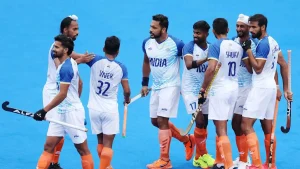

Late drama is no longer a coincidence in International Hockey Tournaments. It is becoming a pattern. Matches that remain cagey for three quarters are now being decided by sharp, calculated interventions in the final minutes. Teams are not just reacting late in games. They are engineering outcomes through deliberate tactical shifts that maximize narrow margins.
The Rise of Micro-Tactics in International Hockey Tournaments
Modern International Hockey Tournaments have evolved into contests of precision rather than dominance. With teams closely matched in fitness, structure, and skill, the difference often lies in micro-tactical adjustments. Coaches now rely on real-time data, video analysis, and bench communication to tweak formations, pressing triggers, and passing lanes during the final quarter.
This trend is particularly visible in tightly contested fixtures where teams remain level or separated by a single goal. The emphasis shifts from long-term strategy to situational awareness. Whether it is altering the midfield press or switching to a high-risk attacking structure, these subtle changes are proving decisive.
Rolling Substitutions and Impact Players in International Hockey Tournaments
One of the defining features of International Hockey Tournaments is the rolling substitution system. Unlike football, hockey allows constant rotation, which opens the door for late-stage specialists. Coaches are increasingly deploying fresh legs in the final quarter to disrupt defensive structures.
Impact players are now selected not just for overall ability but for their capacity to execute specific roles under pressure. A drag-flick specialist, a high-press forward, or a defensively disciplined midfielder can be introduced with a clear tactical brief. These late injections often tilt the balance in otherwise even contests.
Read More
Fatigue management also plays a role. Teams that conserve energy through structured rotations find themselves sharper in the closing minutes. This physical edge, combined with tactical clarity, becomes a decisive factor.
Penalty Corner Strategies Reshaping International Hockey Tournaments
Penalty corners remain one of the most influential aspects of International Hockey Tournaments, especially in tight matches. What has changed in 2026 is the sophistication of late-game variations. Teams are no longer relying solely on primary drag-flickers. Instead, they are introducing disguised routines, deflections, and delayed injections.
Opponents often spend the majority of the game decoding standard routines. Late-stage changes disrupt that preparation. A sudden variation in injection speed or a shift in the stopper’s positioning can create just enough confusion to convert a crucial goal.

Defensively, teams are also adapting. Goalkeepers and first runners are being repositioned based on opposition tendencies observed during the match. These micro-adjustments in penalty corner setups are frequently the difference between winning and losing.
Game Management and Tempo Control in International Hockey Tournaments
Another critical factor in International Hockey Tournaments is how teams manage tempo in the final phase. Leading teams are becoming more adept at slowing the game down through controlled possession, tactical fouls, and structured passing patterns.
Conversely, trailing teams are increasing tempo through aggressive pressing and quick restarts. The shift from a structured build-up to direct play often happens in the last ten minutes. This sudden change forces defensive errors and creates high-quality scoring opportunities.
The ability to switch tempo effectively is not accidental. It is rehearsed. Teams now train specifically for late-game scenarios, ensuring players understand when to accelerate and when to control the pace.
Data-Driven Decisions in International Hockey Tournaments
Technology is playing an increasingly central role in International Hockey Tournaments. Analysts provide live feedback on opposition weaknesses, player fatigue levels, and positional inefficiencies. Coaches use this data to make informed decisions in real time.
For instance, if an opposition defender shows a drop in recovery speed, teams will target that channel late in the game. Similarly, patterns in penalty corner defense can be exploited with pre-planned variations introduced at critical moments.
Read More

This integration of analytics ensures that late-stage tactical changes are not based on intuition alone. They are calculated moves designed to exploit specific vulnerabilities.
Psychological Edge in Late Moments of International Hockey Tournaments
Mental resilience is another layer influencing outcomes in International Hockey Tournaments. Teams that remain composed under pressure are better equipped to execute tactical changes effectively. Late goals often come from moments of clarity rather than chaos.
Players are now trained to handle high-pressure scenarios with structured decision-making. Whether it is maintaining defensive shape or executing a set-piece routine, the psychological component is tightly linked with tactical execution.
Opponents, on the other hand, may struggle to adapt quickly to sudden changes. This mental lag creates openings that well-drilled teams exploit.
The Shift Toward Flexible Formations in International Hockey Tournaments
Rigid systems are gradually giving way to flexible structures in International Hockey Tournaments. Teams are comfortable switching formations mid-game, especially in the final quarter. A side may move from a balanced setup to an aggressive press or even deploy an extra forward in pursuit of a goal.
This adaptability makes late-stage tactical changes more effective. Opponents are forced to react rather than dictate play. The unpredictability of these shifts adds another layer of complexity to already tight matches.
Flexible formations also allow teams to overload specific areas of the pitch. Whether targeting wide channels or central spaces, these adjustments are designed to create numerical superiority at crucial moments.
Also Read: Indian Women’s Hockey Team Heads to Argentina for 4-Match Series