The International Cricket Council Player Rankings, also known as the ICC Player Rankings, are dynamic. It changes according to the performance of the players, the conditions in which they bat, and their dominance in those settings.
Over the years, there have been a few unusual batters whose domination, albeit for a short time, rivalled that of Australian all-time great Sir Don Bradman. He led the year-end chart for Batsmanship ten times, with 961 being his highest rating ever.
However, there have been a few Indians on the list, beginning with Sunil Gavaskar, perhaps the greatest Indian Test opener and one of the greatest openers of all time, who began it all in 1978 and 1979. To this day, India holds the record for the most consecutive year-end ICC rankings to awards.
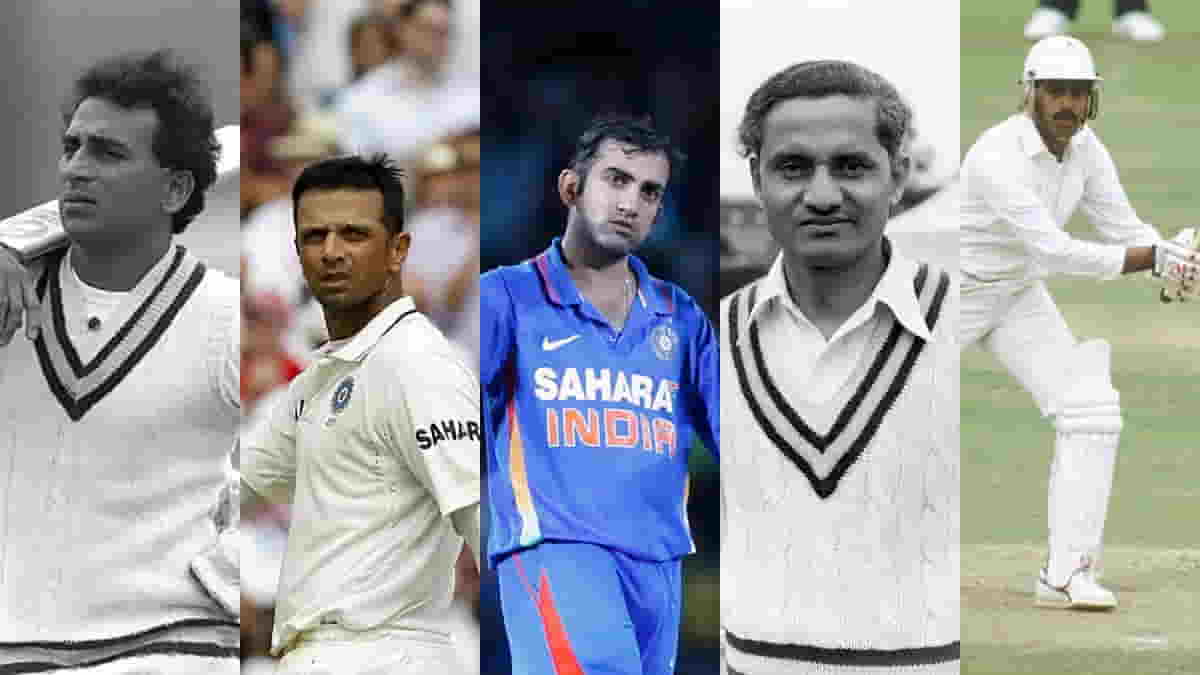
So, here is a list of ten Indians that have attained the highest rating in their respective fields:
-
Virat Kohli
It would be his Baptism By Fire if he was to be hailed as the greatest batsman of his generation, and boy did he deliver. He did it in style, scoring 149 and 51 in the first Test match of India’s ongoing test series against England in 2018.
Read More

He scored more in his first Test innings on English soil after that aberration of a visit in 2014 than he had in the entire 2014 tour. He followed up his 149-run performance with 51 runs in the second innings of the first Test, but he was unable to seal the game for his country. Virat Kohli, a man on a quest to make this team the best travelling team in the world, did not disappoint in the third Test, scoring 97 runs in the first innings and then adding another 103 runs to help India win the game. He worked even harder on the ICC rating table to better his greatest rating from the first Test.
-
Sunil Gavaskar
The year 1979 was a turning point in Gavaskar’s brilliant career, as he scored 1407 runs (the most in any calendar year) in 26 innings spanning 17 Test matches at an average of 54.12. In those Test matches, he struck four hundred and eight half-centuries and was at the pinnacle of his abilities.
This highest became a little surreal and mystical when he took guard on Day 5 with India’s scorecard at 76/0 and contributed 42 runs to that total. It was to be the innings of his life, as India chased an impossible 437 runs. He stood at the crease for nearly 8 hours, facing 443 balls and scoring 221 runs to help India edge heartbreakingly close to the total. He was out at 389/4, but India was unable to cross the line, and the Test finished in a tie.
This inning earned its due instantly, as Gavaskar achieved his highest rating points for this knock on September 3, 1979, becoming the first Indian to reach the 900-point limit.
-
Sachin Tendulkar
This list of the greatest ratings achieved by a select group of unique Indians would be incomplete without Sachin Tendulkar, a batting titan and an emotional icon for a billion Indians. Tendulkar had a memorable year in 2002, as he scored the second most Test runs in that calendar year.
He scored 1392 runs in 26 innings across 16 Test matches, with a best of 193 and an incredible average of 55.68. The most memorable moment of that year would have been his 193-run knock at Leeds, which helped India win the Test match and draw the four-match series. This was also the year in which he accumulated the most rating points after the second Test match against Zimbabwe. He scored 176 runs to help India win the game, and he also coincidentally reached 7500 runs in the Test match when he was on 81. India went on to win the two-Test match series 2-0.
-
Rahul Dravid
With all of his finesse and delicacy, Rahul Dravid was an institution in his own right and a great example of a class in the way he played and enjoyed Test cricket. He wasn’t one for showmanship, but he was a fighter on the inside, masked behind his powerful attitude.
Sachin Tendulkar might have gone on to become the greatest batsman India has ever produced if he had not been born and played at his age. But, for what it’s worth, he’s the player that coaches point to now in terms of his attitude and respect for the game. The fact that he is the only player in Test history to have faced the most balls speaks something about his concentration abilities. As a result, it was only natural for him to reach the zenith of his Test batting ranking after scoring twin centuries against Pakistan.
-
Cheteshwar Pujara
Pujara’s 8-year career has seen him likened to Rahul Dravid and VVS Laxman, among others, for his sound-proofing method. However, his record in international settings says otherwise, as he fails to get a move on despite spending a significant amount of time at the crease facing several balls.
Read More

However, in terms of subcontinental record, he is perhaps second only to Virat Kohli in this present Indian setup. And, albeit on a few times, he has demonstrated his class by stepping up when his team needed him to. He batted all the way through the innings after coming in as an opener. The 145 not-out he scored in a winning cause established this current Indian team’s winning streak in that magnificent home season.
On the 7th of August 2017, he achieved his highest test rating against a familiar and possibly favourite opponent, Sri Lanka. In the Test match, he led the way with 133 runs, which helped India win by an innings and 53 runs.
-
Gautam Gambhir
It was India’s Tour of New Zealand 2008-09 series when India had gone with the goal of winning a Test series in New Zealand for the first time since the memorable 1967-68 tour. The first Test was a walk in the park for India, who won by 10 wickets.
The real test began in the second match when India was bowled out for 305 against New Zealand’s enormous first-innings total of 619. India was on the verge of losing by an innings when Gautam Gambhir entered the fight.
His 137 off 436 balls was a grind that was required to rescue the Test match and so save India from losing the series, which they later won. This inning provided a jolt and fresh meaning to Gambhir’s batting, which resulted on November 28, 2009, against Sri Lanka.
Gambhir’s 167-run effort ensured that India did not have to bat in the second innings. The Sri Lankans were defeated in both innings, giving India a one-inning and 144-run victory, and Gambhir was rewarded with his highest grade.
-
Gundappa Vishwanath
In his own right, he was a superb batsman. For all of his centuries and renowned non-century knocks, Gundappa Vishwanath was never one for statistics. Cricket, which is known as a number game, cannot handle this genius’s ability.
Wisden 100 ranks his historic 97 in Madras in the 1974-75 series against West Indies, which included Andy Roberts, as the second-best non-century.
While his records do not justify his potential, his impactful innings and flair place him in the same league as Victor Trumper, who, while having a worse Test record than Vishwanath, is remembered for his approach to the game.
Nonetheless, he received his highest rating against the visiting Australians in the 1979-80 series on October 17, 1979, after scoring 131 in the first innings. After India forced a follow-on, the game was called a draw.
India went on to win the series, with Vishwanath leading the way with 518 runs in the series.
-
Vijay Hazare
The Hall of Fame of Indian Batsmanship will be incomplete without mentioning Vijay Hazare. He was the kind of Renaissance man who established Mumbai’s well-known heritage of technically sound batsmanship.
In the 1951-52 series, he was the first Indian captain when India won its first-ever Test match, defeating England in Madras. He holds the record for catching Don Bradman’s wicket three times in Test cricket, and he did so against a side that became renowned as “The Invincibles” later on.
Nonetheless, he got his greatest rating against arch-rival Pakistan in the 3rd Test on November 17, 1952, after scoring 146 not out in the first innings, and India won that match effortlessly by 10 wickets. This was also Pakistan’s debut Test series as a team, and they won the second Test match, although India won the series 2-1.
-
Virender Sehwag
Test cricket is a patient team sport in which audiences and players must sit through days and sessions of exciting and miserable moments. However, there have been a few exceptional individuals who have gone to the crease with a devil-may-care attitude and completely changed the course of the game in their team’s favor.
Virender Sehwag was one such player who did it on a consistent basis with his daring strokeplay. The sheer brilliance with which he went about his game, from perfect timing to amazing hand-eye coordination, made the opposition squad and the greats of yesteryear bow their heads in awe of this beast of a player.
It should come as no surprise that he earned his highest Test rating against Sri Lanka on July 22, 2018, scoring 109 and 31 in difficult Sri Lankan conditions. Unfortunately, the match could not be saved, but he was able to add his name to the list of gaming legends.
He was and still is the original Lord of the Lord’s Cricket Ground, cricket’s famous “home.” He has three centuries at the famed stadium and is on the prestigious Lord’s Honours Board. In fact, no other visiting batter has more than two at the stadium, with only Graham Gooch(6), Michael Vaughan(6), Kevin Pietersen(5), Andrew Strauss(5), Alan Lamb(4), Ian Bell(4), and Alastair Cook(4) ahead of him.
So, on November 16, 1988, he got his greatest ranking against New Zealand after scoring 75 runs in the first innings of the first test at Bangalore. That test match was won by India by 172 runs.
Also Read: Unveiling the Camera Setup: Types of Cameras Are Used in a Cricket Match?
“Get more sports news, cricket news, and football updates, log on to sportsdigest.in. Follow us on Facebook or Twitter and Subscribe to our YouTube Channel.”