
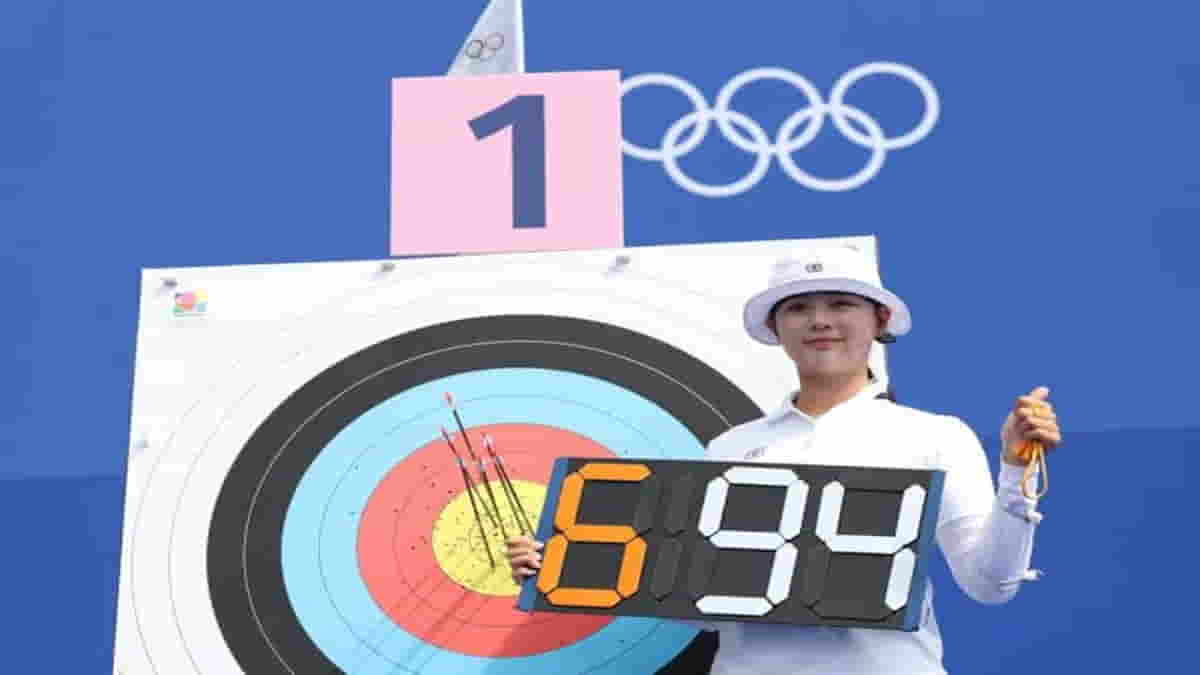
The game of bow and arrow, “archery” is a century-old tradition that has its roots etched in ancient civilisation. Although, historically, archery was only used as a catalyst for hunting and war, with time it witnessed a trailblazing transition and evolved as a highly competitive modern sport.
Archery was first introduced in the Olympics as a demonstration sport at the Paris Olympics 1900. Later in 1904, Archery was officially introduced as a mainstream Olympic sport in St. Louis, USA. Although Archery made its debut as a men’s dominated game in the Olympics, it later introduced a women’s format as well.
Ever since 1904, Archery has established itself as one of the most prominent Olympic sports in the history of the Olympic Games and garners the attention of millions of viewers around the globe. Prominent athletes, including Darrell Pace, Kim Soo-Nyung, Hubert Van Innis, Ki Bo-bae, Karnam Malleswari and Rajat Chauhan have represented their respective countries and clinched the most coveted and highly prestigious Olympic medals in the past few decades, making archery as one of the most prominent Olympic sports in the Olympic landscape.
In this article we will take a look at the history and inclusion of archery as a mainstream and highly competitive sport in the Olympic Games in detail.
Tracing the History of Archery as an Olympic Sport
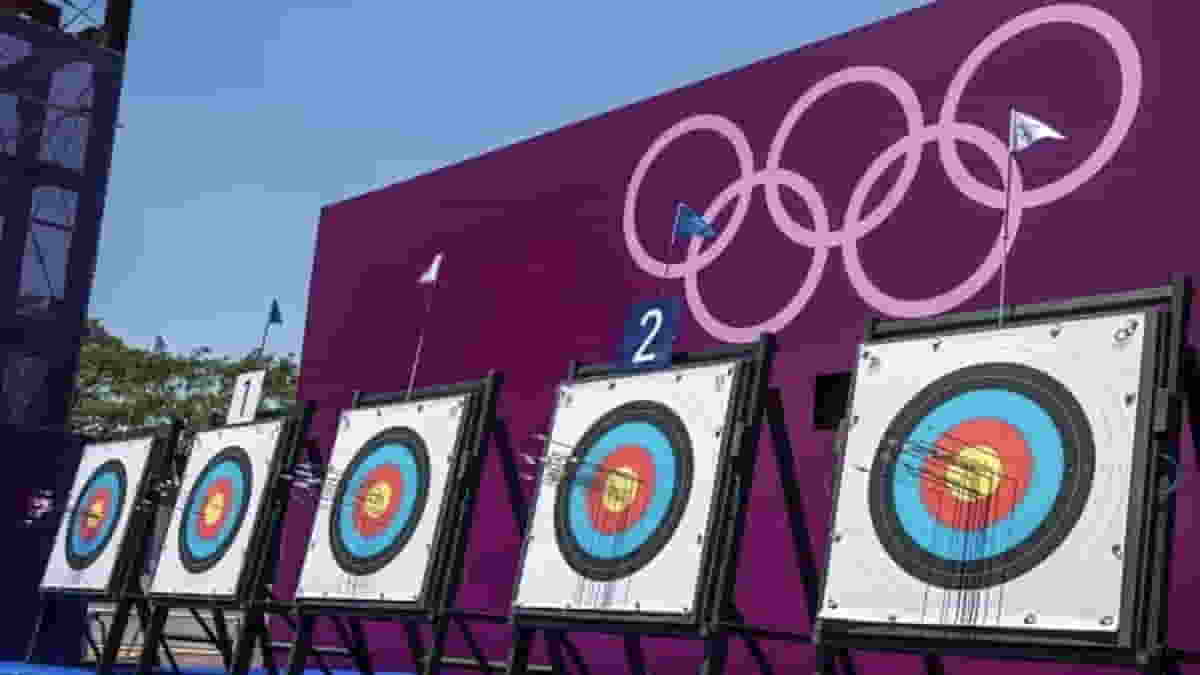

Archery: Summer Olympic Games
Archery made its debut at the Olympics in the 1900 Olympic Games in Paris as an official Olympic sport and has been one of the most popular sports in the highly competitive format ever since. Over the years, a total of 105 nations have participated and competed against each other to clinch Olympic medals in archery, with France appearing for a record-breaking fifteen seasons.
Governed by the World Archery Federation (WAF), the sport of archery made its Olympic breakthrough with seven disciplines at varying distances. The 1904 Summer Olympics included a total of six archery events with three events solely dedicated to the women’s archery team.
Although archery witnessed a significant viewership during its inaugural Olympic season, it was dropped from the 1912 Summer Olympics, it later made a roaring comeback at the 1920 Summer Olympics.

Archery : Olympic formats
Archery as an Olympic sport has witnessed its share of inclusions and exits from the Olympic gateway over the years. Additionally, the Olympic sport of bow and arrow has also witnessed numerous changes and transformation in its format and structure in accordance with the rules and regulations of the Olympic Games.
Archery was dropped from the Olympic Games for as long as fifty-two years, from 1920 to 1972. It was only in the 1972 Summer Olympics held in Munich that archery made its most awaited comeback. Initially, archery made its Olympic comeback in the “double FITA format”, which included individual events from men’s and women’s archery teams; the format later gained its prominence as the “1440 round’”.
The double FITA format witnessed a major transition yet again at the 1988 Summer Olympics, where the WAF added an extra competitive team edge to the sport and re-named the format as the “Grand FITA round”. Furthermore, archery witnessed a concluding transition at the 1992 Summer Olympics with the introduction of a new format, “Olympic round”, which directed the players to lock horns against each other in head-to-head matches.
Since the 1992 Summer Olympics, the sport of archery has been following the same Olympic round format till now, with no major changes or additions.
Archery : Olympic Qualifications
As per the rules and regulations designed by the World Archery Federation (WAF), the archers competing at the Olympic sports must be at least 16 years old or above. Additionally, the countries participating in archery events at the Olympics can reserve their spot in two formats, either for the team or for an individual athlete.
The competing nations can reserve a spot for a total of three athletes in the team format and for a single athlete in the individual format. The World Archery Federation (WAF) has ensured a total of twelve team spots for each gender, including one spot reserved for the host country, a total of eight spots reserved for the World Archery Championships and three reserved for the Final World Team Qualification Tournament.

In addition to these twelve existing spots, the World Archery Federation (WAF) has designed a total of twenty-eight more individual spots for each gender, contributing to a total of 64 competing archers in each individual event.
Archery : Olympic Records
Since its ironic “Olympic round” transition at the 1992 Summer Olympic Games, the Olympic sport of archery has witnessed numerous archers smashing previous records, adding a new wave of enthusiasm and diligence to the sport’s legacy at a global level.
An anecdote of path-breaking records in the men’s, women’s and mixed format is mentioned below:
Men’s Current Olympic Records
| # of arrows | Archer(s) | Score | Games |
| 72 (ranking) | Kim Woo-jin (KOR) | 700 | 2016 |
| 216 (team ranking) | South Korea (KOR), Im Dong-hyun, Kim Bub-min, Oh Jin-hyek | 2087 | 2012 |
Women’s Current Olympic Records
| # of arrows | Archer(s) | Score | Games |
| 72 (ranking) | An San (KOR) | 680 | 2020 |
| 216 (team ranking) | South Korea (KOR), Jang Min-hee, Kang Chae-young, An San | 2032 | 2020 |
Mixed team Current Olympic Records
| # of arrows | Archer(s) | Score | Games |
| 144 (ranking) | South Korea (KOR), Kim Je-deok, An San | 1368 | 2020 |