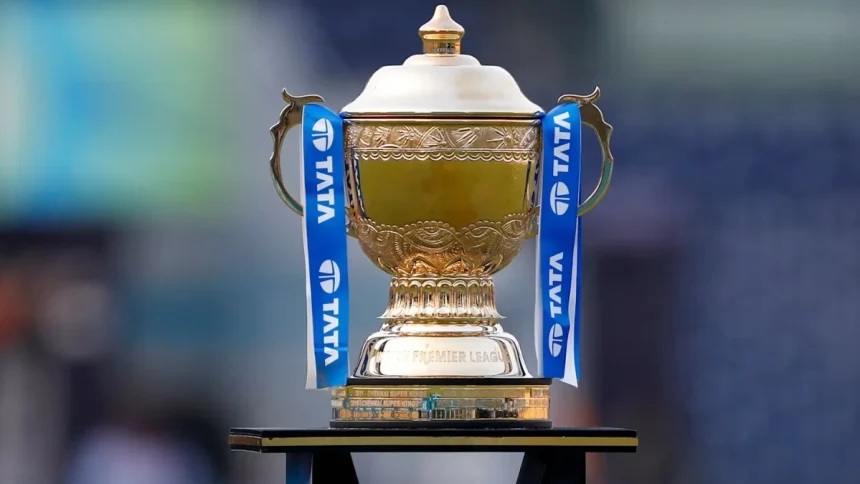
IPL 2026: The Indian Premier League has been hit by another unexpected development, but this time the focus is not on players or on-field action. Instead, the spotlight is firmly on finances. After Bangladesh announced an indefinite ban on the telecast of IPL 2026 in the country, many were quick to wonder whether the Board of Control for Cricket in India could be facing a major financial setback.
Bangladesh IPL 2026 Telecast Ban: How Much Money Will BCCI Actually Lose?
The decision to stop IPL broadcasts in Bangladesh has raised a big question around the possible financial impact on the BCCI. The ban came in the aftermath of Kolkata Knight Riders releasing Bangladesh pacer Mustafizur Rahman from their IPL 2026 squad, following instructions from the BCCI. This move was linked to reports of killings of Hindu minorities in Bangladesh, which turned the situation into a sensitive political issue.
What started as a player release soon grew into a national talking point. The issue has now reached the international stage, with the Bangladesh Cricket Board pushing for their ICC T20 World Cup 2026 matches to be moved from India to Sri Lanka.
Experts see limited financial damage
While there has been talk of heavy financial losses, experts tracking the sports business believe the actual impact on the BCCI will be minimal. According to them, Bangladesh is not a major broadcast market for the IPL, and losing it does not significantly affect the league’s overall revenue.
The IPL continues to draw its biggest financial strength from larger markets, and a temporary or even extended loss of one territory is unlikely to shake the league’s financial foundation.

The core insulation lies in locked-in media rights
From a broadcast revenue point of view, the BCCI remains well protected. The IPL media rights for the 2023 to 2027 cycle have already been sold for a massive INR 48,390.32 crore. This is a long-term, contract-based global deal, which means payments are fixed and do not change due to short-term telecast bans in specific countries.
In Bangladesh, the sub-licensing rights are held by T Sports until 2027. Industry experts point out that these payments are also governed by contracts. Unless a force majeure clause is triggered, the fees are likely already secured, even if matches are not shown on television. As a result, the BCCI’s main broadcast income remains unaffected for now.
Santosh N, managing partner at D&P Advisory Services, a valuation service provider, was quoted as saying by Business Standard: “I don’t see this move, banning IPL broadcasts in Bangladesh, having a big impact. It doesn’t affect BCCI’s revenue, nor does it change what the broadcaster would pay.”
Read More

Why Bangladesh’s absence may not matter much
Bangladesh has had a relatively small presence in the IPL over the years, with only two or three players regularly featuring in recent seasons. Because of this, viewership numbers and advertiser interest from the country are not expected to see a sharp drop.
Taken together, these factors suggest that while the telecast ban has created headlines and political noise, its financial impact on the BCCI and the IPL is likely to be limited.
ALSO READ: 6,6,6,6,4,6: Jonny Bairstow’s Brutal Over Stuns SA20