



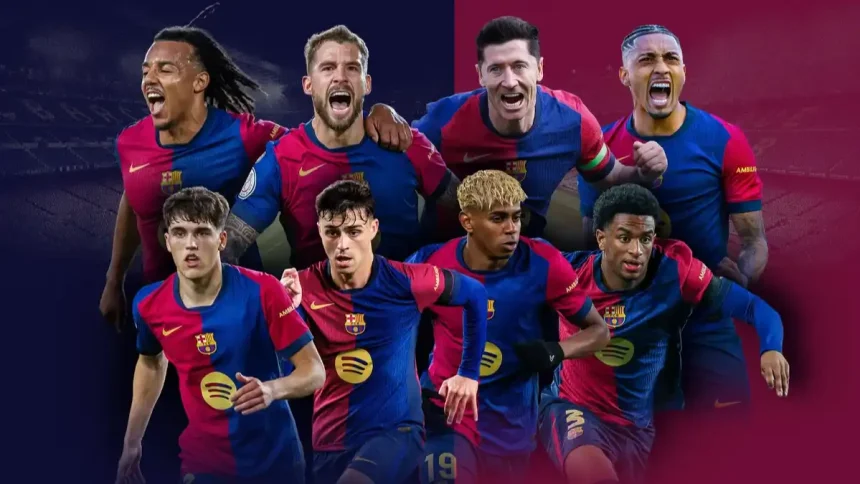
Barcelona are once again at the forefront of tactical innovation, but this time the transformation is less about rigid positional play and more about fluid adaptability. Barcelona have evolved their midfield structure into a dynamic system where roles shift seamlessly depending on phases of play, opposition pressure, and game state. This new approach is not just reviving their identity but also redefining how midfielders operate across European football.
- Barcelona’s Midfield: From Structure to Fluidity
- Barcelona and the Rise of Hybrid Midfielders
- Tactical Rotations: The Core of Barcelona’s System
- Barcelona’s Press Resistance Through Positional Intelligence
- Barcelona’s Influence on European Midfield Trends
- Barcelona and the Balance Between Control and Directness
- Barcelona’s Midfield as a Tactical Blueprint
Barcelona’s Midfield: From Structure to Fluidity
For years, Barcelona were synonymous with a fixed positional system built around control and short passing. Today’s Barcelona, however, are embracing tactical flexibility. Instead of sticking to traditional roles like a deep-lying pivot or advanced playmaker, Barcelona midfielders are now expected to operate across multiple zones.
This transformation allows Barcelona to maintain possession while also increasing verticality. Players drift between lines, interchange positions, and create overloads in central and half spaces. The result is a midfield that is far less predictable and far more difficult to press.
Barcelona and the Rise of Hybrid Midfielders
A defining feature of this Barcelona evolution is the emergence of hybrid midfield roles. Players are no longer confined to singular responsibilities. A central midfielder might drop into the defensive line during build-up, then push forward into attacking channels moments later.
This hybridization is central to Barcelona’s ability to dominate different phases of play. It ensures numerical superiority in build-up while also offering additional runners in the final third. Barcelona are effectively blurring the lines between defensive midfielders, central midfielders, and attacking midfielders.

This shift reflects a broader trend in European football, but Barcelona are executing it with a level of technical precision that sets them apart.
Tactical Rotations: The Core of Barcelona’s System
Rotations are the heartbeat of Barcelona’s midfield structure. Whether it is a pivot dropping between center-backs or an interior midfielder moving wide, Barcelona rely on constant movement to destabilize opposition shapes.
These rotations are not random. They are choreographed patterns designed to manipulate defensive lines and open passing lanes. Barcelona use these movements to progress the ball through tight spaces and maintain control under pressure.

The emphasis on rotations also allows Barcelona to adapt mid-game. Against high pressing teams, they can create numerical advantages in deeper areas. Against low blocks, they can push midfielders higher to increase attacking presence.
Barcelona’s Press Resistance Through Positional Intelligence
One of the most striking aspects of this Barcelona midfield is its press resistance. This is not just about technical ability but also about spatial awareness and decision-making.
Barcelona players constantly scan their surroundings, adjust their positioning, and offer passing options at different angles. This creates a network of support that makes it extremely difficult for opponents to win the ball cleanly.
By maintaining close distances between players and ensuring multiple passing lanes, Barcelona reduce the risk of turnovers. This controlled approach allows them to dictate tempo and rhythm even against aggressive pressing systems.
Barcelona’s Influence on European Midfield Trends
Barcelona’s tactical flexibility is not happening in isolation. It is influencing how other European clubs approach midfield construction. Coaches across the continent are beginning to prioritize versatility, mobility, and intelligence over rigid positional roles.
The idea of a single holding midfielder anchoring the system is gradually being replaced by more fluid structures. Barcelona are leading this shift by demonstrating how adaptable midfield units can control games more effectively.

This influence is particularly evident in teams that emphasize positional rotations and multi-functional players. Barcelona are setting a benchmark for how modern midfields should operate.
Barcelona and the Balance Between Control and Directness
Another key aspect of Barcelona’s approach is their balance between control and directness. While they still value possession, there is a greater emphasis on vertical progression.
Midfielders are encouraged to break lines with passes or carries rather than recycling possession endlessly. This adds a layer of unpredictability to Barcelona’s play and makes them more dangerous in transition.
By combining their traditional strengths with a more direct approach, Barcelona are creating a hybrid style that is both efficient and aesthetically appealing.
Barcelona’s Midfield as a Tactical Blueprint
What makes this Barcelona evolution particularly significant is its potential as a tactical blueprint. The emphasis on flexibility, intelligence, and adaptability aligns with the demands of modern football.
Midfielders are no longer just connectors between defense and attack. In this Barcelona system, they are creators, disruptors, and stabilizers all at once.
This multi-dimensional approach is redefining expectations for midfield roles and pushing the boundaries of tactical innovation in European football.
Also Read: FIFA World Cup 2026: Best Jerseys Ranked