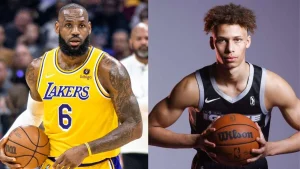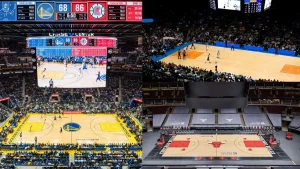

The basketball dynasties were not long shots. These were the outcomes of the pointed visions, the right decisions, and the common desire to win. The Celtics’ defensive power and the Warriors’ rapid-fire shooting changed the whole perspective of the game for each dynasty. They convey that being great is not merely a matter of skills, but of creating something that remains.
Basketball is not merely a succession of highlights and buzzer beaters. Essentially, it is a narrative about periods, superiority, and teams that have managed not to disappear. A basketball dynasty takes years to develop, and it is still a long road ahead before victory. A vision has to be shared, a discipline instilled, and a winner’s culture that persists for years has to be created.
What Constitutes a Basketball Dynasty?
A dynasty represents more than just one championship triumph. It signifies an enduring peak of performance. An authentic dynasty prevails over its competitors in a league by conquering it for several seasons, and sometimes even wrong-footing the very game rules. It is similar to a perfectly adjusted engine, which, year after year, continues its smooth running while others find it hard to catch up.
Basketball Dynasties: History And How They Were Built?
Let us explore the most classic dynasties in basketball history one by one.
The Boston Celtics Dynasty of the 1960s
The first team to come to mind when talking about dynasty is, without a doubt, the Boston Celtics of the 1960s. Winning 11 championships in 13 seasons is a mark of not just impressive but pure legendary status.

The presence of a strong leader in Bill Russell, excellent coaching by Red Auerbach, and creating a team-first mentality all contributed to making an unbeatable lineup. Their foundation was defense, and their essence was teamwork. Each player was aware of the part he had to play, and nothing came before winning, not even the player’s ego.
The Showtime of Los Angeles Lakers
The 1980s marked a watershed moment in basketball history as the Lakers not only changed the game’s direction but also the entire atmosphere surrounding the game. This was basketball with brilliant strokes, fast deliveries, and wide-open grins.
Magic Johnson’s imagination, Kareem Abdul Jabbar’s reliability, and Pat Riley’s strictness combined to make a flawless equipoise. The Lakers went for stardom, but at the same time, they were very careful not to blow up the roles of the supporting guys who flourished in a fast-paced environment. The line between fun and productivity was blurred, and the NBA couldn’t ignore it.
The Chicago Bulls Era
The 1990s were the Chicago Bulls’ decade. They turned out to be a worldwide phenomenon with six titles within eight years.
No one could beat Michael Jordan’s competitiveness, Scottie Pippen’s all-around skill, and Phil Jackson’s mellow leadership. The triangle offense provided a framework, and Jordan added excitement. The Bulls mastered mental toughness, too; they sometimes defeated their rivals before the fourth quarter even started!
The San Antonio Spurs Blueprint
Not glamorous, not noisy, yet very effective. The Spurs discreetly erected one of the highly regarded dynasties in basketball history.
Tim Duncan’s gentleness, Gregg Popovich’s strategy, and a culture of selflessness characterized San Antonio. Player development was a key factor. International scouting, smart drafting, and long-term planning enabled them to remain competitive for almost twenty years.
Also Read: 5 Best Limited-Edition Basketball Sneakers You Can Still Buy
The Golden State Warriors Revolution
The Warriors not only grabbed the postseason crowns but also transformed the approach to basketball in the present-day era.

Stephen Curry’s shooting established the new rules of floor spacing; the other two dots of Klay Thompson and Draymond Green finished the picture. The combination of smart drafting, faith in analytics, and dedication to ball movement made up their rise. Through this, they demonstrated that innovation can possess the same amount of power as raw talent.