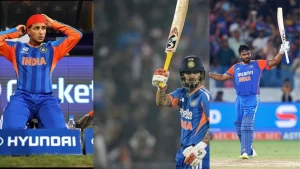
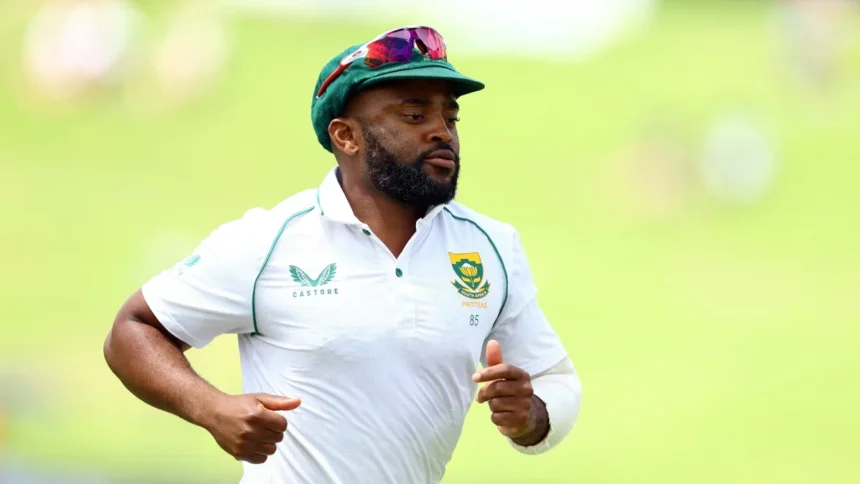
The Bauna-grovel controversy: The disastrous home defeat of India to South Africa in Guwahati was one of their heaviest Test defeats and not the only talking point in the series.
What began as a verbal exchange on the field soon spiralled into a full-fledged debate involving players, coaches, broadcasters and former cricketers. The incident has overshadowed India’s back-to-back home series losses and added new layers to an already intense rivalry.
Series Context: India Slumps While South Africa Rises
India were whitewashed at home for the second time in just over a year, following last year’s 3-0 loss to New Zealand. The defeat also ended India’s 18-match home Test series unbeaten run.
The 2-0 victory has propelled South Africa to second place in the World Test Championship standings, while India has slipped to fifth. But beyond the cricketing implications, the series will be remembered for the verbal battles that erupted on and off the field.
How the Bauna-grovel Controversy Started
The first flashpoint came during the opening Test, which South Africa won by 30 runs. Jasprit Bumrah was heard on the stump mic using the word ‘bauna’ while discussing whether India should review an LBW decision involving Temba Bavuma.
Read More

Rishabh Pant seemed to suggest the ball may have struck Bavuma high, and to this Bumrah replied:
“Bauna bhi to hai ye” translates roughly as “He’s short as well.”
Although the word ‘bauna’ literally means “dwarf,” which is a jibe, the ICC decided not to take further action, ruling that Bumrah’s remark was not an insult. Nevertheless, the comment still sparked controversy as it related to cultural sensitivity and player conduct.

From ‘Bauna’ to ‘Grovel’: Shukri Conrad Rekindles Tensions
It all started when South Africa head coach Shukri Conrad used the word ‘grovel’ during the day-four press conference of the second Test. Explaining their tactical declaration and strategy against India, Conrad had said:
“We wanted the Indians to spend as much time on their feet… we wanted them really to grovel, to steal a phrase, and then say: ‘Come and survive on the last day.’”
The term set off an immediate backlash given its racial and historical implications, and the incident became what is more widely debated now as the Bauna-grovel controversy.
Reactions from Bavuma and Cricketing Legends
Temba Bavuma responds diplomatically.
After South Africa sealed the series, captain Temba Bavuma acknowledged the backlash, saying:
“I heard the coach’s comments this morning… Shukri is close to 60 and he will reflect on what he said. But in this series, certain guys have crossed the line as well.”
Read More

Though Bavuma stopped short of condemning his coach, he hinted both teams contributed to the escalating tensions.
Former cricketers dismayed at ’embarrassing’ England performance
Many cricketing legends took exception to Conrad’s phrasing, which:
Dale Steyn on Star Sports:
“You don’t use words like that. It’s disappointing.”
Anil Kumble on JioStar:
“When you’re on top, humility matters. I never expected this kind of language from the support staff.”
Cheteshwar Pujara, before Day 5:
“It’ll fire up the team, but it also hurts. It won’t go down well in the dressing room.”
Why Words ‘Bauna’ and ‘Grovel’ Caused Controversy
1. The cultural context of ‘Bauna’
The word is commonly used in Hindi to describe a person with dwarfism, but the usage can be offensive, depending on the context. Intent plays a crucial role in ICC’s sanctions. As Bumrah’s use of the word was more descriptive rather than insulting, he escaped any punishment, even though some people listening online were offended.
2. The historical baggage of ‘Grovel’
The word ‘grovel’ has become particularly historically loaded in the context of cricket. Infamously, it was used by Tony Greig before England’s 1976 series against West Indies. With Greig a white South African and the West Indies team predominantly Black, his remarks were seen as racially charged.
Clive Lloyd later said: “The word ‘grovel’ is one guaranteed to raise the blood pressure of any black man.” West Indies famously responded by winning the series 3-0.
Is Conrad’s use similar?
While Conrad is from South Africa, he is not white, and he captains a multiracial Proteas team. He acknowledged in his comments that he was “stealing a phrase”, but for many, the reference was inappropriate, though others saw it purely as competitive rhetoric.
ALSO READ: Dawid Malan Joins Gloucestershire On Two-Year T20 Deal