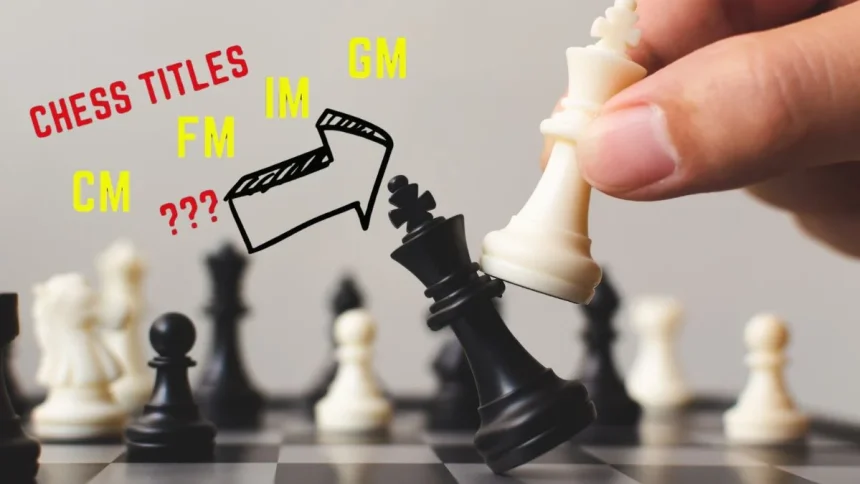
If you’ve ever watched a chess stream or scrolled through leaderboards, you’ve seen those magical letters next to names, GM, IM, WGM, like badges of honour. These aren’t just fancy labels; they’re hard-earned proof of a player’s dominance, also called chess titles.
In the high-stakes world of chess, titles turn good players into legends, and understanding them unlocks why top guns like Magnus Carlsen or Judit Polgar stand miles above the rest. Buckle up, because we’re diving into the elite hierarchy that separates the kings from the pawns.
Official FIDE Chess Titles
There are eight main FIDE chess titles, the gold standard awarded for life by the game’s governing body, plus national ones like National Master (NM).
GM
At the peak sits Grandmaster (GM), the ultimate crown and the highest chess titles for a player hitting a 2500 classical FIDE rating plus three GM norms from international tournaments, think flawless performances against elite foes.
IM/FM/CM
Dropping down to other chess titles, International Master (IM) demands a 2400 rating and three IM norms, while FIDE Master (FM) and Candidate Master (CM) kick in at 2300 and 2200 ratings with no norms needed.
Read More

WGM/WIM/WFM/WCM
For women, who can snag any chess titles, there are dedicated ones: Woman Grandmaster (WGM) at 2300 with norms, Woman International Master (WIM) at 2200 with norms, Woman FIDE Master (WFM) at 2100, and Woman Candidate Master (WCM) at 2000, no norms required. National federations like US Chess hand out NM around 2200, fueling local heroes.
Achieving these isn’t a casual grind; it’s a brutal climb through rated battles and norm hunts. Players rack up a target FIDE rating in classical play, then chase norms, scoring above a set performance level (like 2600 for GM) in qualifying events against titled opponents.
Norms demand consistency: three strong showings in FIDE-approved tournaments, often spanning continents. Women’s titles follow similar paths but with adjusted thresholds to spotlight rising stars. Grind daily on platforms like Chess.com, where titled players flex in live events, and watch your rating soar, but only the relentless earn the prefix that screams “master.”
Read More

These chess titles aren’t just bragging rights; they’re the heartbeat of chess ambition, signalling who’s ready to topple champions. Whether you’re chasing CM or dreaming of GM glory, they map the path from amateur to icon. So grab your board, study those norms, and join the titled elite, your move could rewrite the rankings!
Also read: Who Is Karthik Venkataraman? Meet India’s Rising Chess Grandmaster