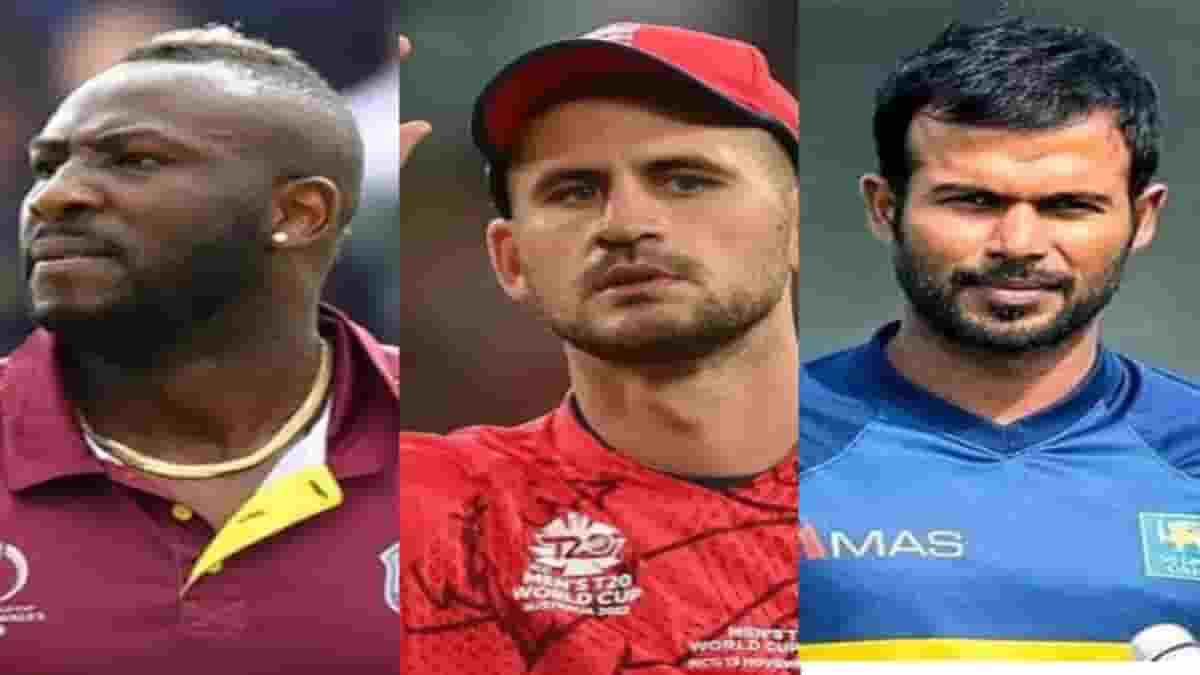
Although the International Cricket Council (ICC) has made numerous efforts in order to control illegal doping practices and ensure that the sport of cricket remains clean, the history of the sport has witnessed a few instances where cricketers have been actively involved in consuming prohibited substances in order to boost their energy levels on the field. Such instances of doping violations have not just plagued the glorious history of cricket but have also led to endless speculations around the ICC’s anti-doping code.
In this article we will take a look at the top four most controversial cricketers who were handed bans for doping violations.
Top 4 Cricketers Who Were Served With Bans For Doping Violations
-
Shoaib Akhtar – Pakistan

Former professional Pakistan’s destructive bowler, Shoaib Akhtar, the ultimate king of unbeaten pace delivery record of “161.3 kmph” and often referred to as the “Rawalpindi Express” was suspended by the Pakistan Cricket Board for a couple of years after he tested positive for consuming a banned performance-boosting drug called “nandrolone” in October 2006.
Right after the investigation, Shoaib Akhtar was also pulled out of the 2006 ICC Champions Trophy tournament. Shoaib Akhtar officially announced his retirement from all formats of cricket in 2011 shortly after playing his last group-stage match against New Zealand at the ICC World Cup 2011.
Read More

-
Upul Tharanga – Sri Lanka

The second cricketer on our list of top four most controversial cricketers who were handed bans for doping violations is former Sri Lankan cricketer and limited-overs skipper, Warushavithana Upul Tharanga, popularly known as “Upul Tharanga”.
Upul Tharanga landed in a brutal controversy about doping violation after the World Cup semi-final against New Zealand on 29 March 2011 when his urine sample tested positive for prednisone and prednisolone, which were considered to be on the list of banned performance-boosting substances by the World Anti-Doping Agency.
Although in the initial phase of the investigation, Upul Tharanga claimed that he was only following his asthma medication and had absolutely no knowledge about the banned drugs, Tharanga later confessed that he had taken some herbal remedy to recover from a prolonged shoulder injury which might have contained the above-mentioned banned substances.
As a consequence of deliberately breaching the ICC Anti-Doping Code, Upul Tharanga was handed an official ban from all formats of cricket for three long months.
-
Andre Russell – West Indies

One of the most formidable all-rounders of the West Indies cricket squad, Andre Russell, also commonly referred to as “Dre Russ”, is third on our list of the top five most controversial cricketers who were handed bans for doping violations. Andre Russell is often hailed as one of the most influential players in the West Indies cricket squad that clinched the ICC Men’s T20 World Cup in 2012 and 2016.
Andre Russell witnessed one of the roughest patches in his cricketing career in 2016 when he deliberately missed out on three doping tests in a period of twelve months, committing an anti-doping whereabouts violation. As a consequence of which, Andre Russell was served with a ban from cricket for one year on 31 January 2017.
-
Alex Hales – England

Read More

English professional cricketer Alexander Daniel Hales, popularly referred to as “Alex Hales”, who recently announced his retirement from all international cricket formats in August 2023, was shockingly withdrawn from England’s World Cup squad in 2019 for a heinous doping violation and was served with a ban from cricket that lasted for a total of twenty-one days for recreational drug use.
The whole incident left Alex Hales and millions of fans of England’s cricket team devastated. Although Alex Hales was handed a legal ban, the England Cricket Board (ECB) remained extremely supportive towards the cricketer and insisted on him taking corrective and preventive measures following his suspension, which officially lasted for twenty-one days.