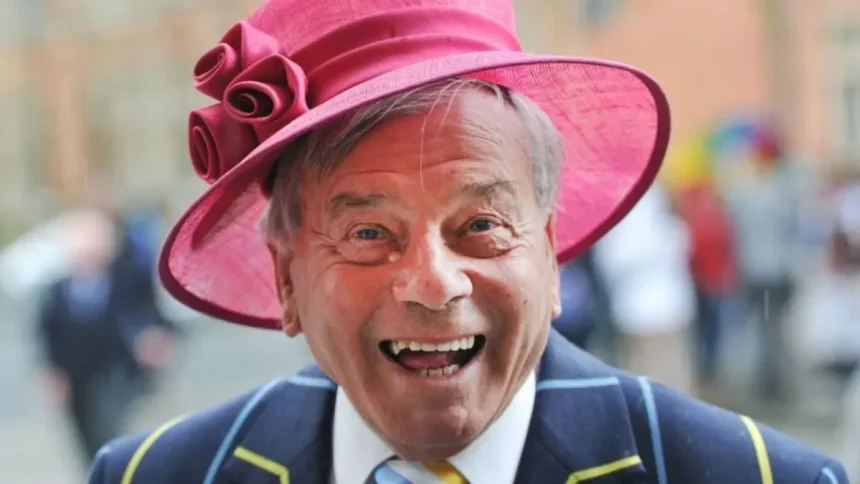
The world of cricket is in mourning following the death of one of the greatest and most iconic umpires in the game’s history, Dickie Bird. This larger-than-life personality was renowned for his infectious enthusiasm, uncompromising integrity, and rich legacy, which reflected an era in the game that has long been replaced by technology and the emergence of contemporary umpires
A Pre-Technology Legend Umpire
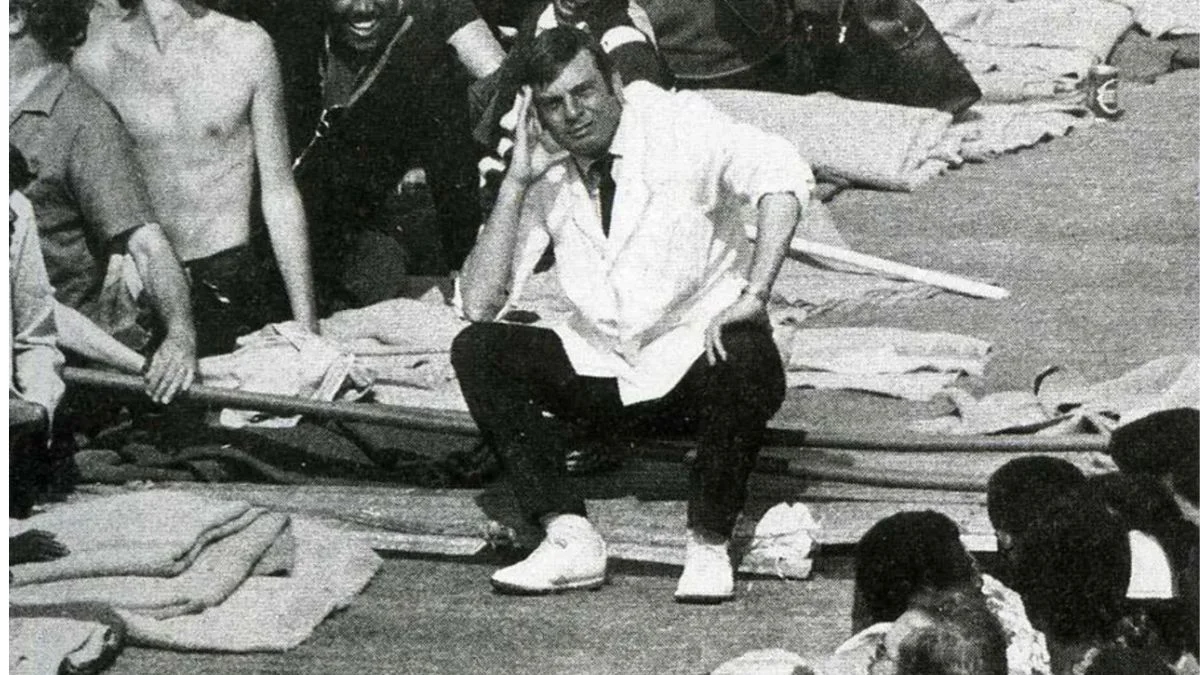
To cricket supporters of a certain vintage, looking back at old umpire decisions, particularly from key Ashes series or legendary games against the West Indies in the 1980s has a nostalgic value that recalls a time when umpires such as Dickie Bird called the shots on the field with minimal technological assistance.
In those times, when a medium-pace inswinger would turn into a batsman’s front pad, it was umpires like Dickie Bird who held the last key, trusting on instinct and experience to make the call. Now, the luxury of DRS (Decision Review System) provides instant critique and rectification. But at Dickie Bird’s time, the umpire’s finger was the last word.
Dickie Bird: The “Not-Outer” Who Refused to Compromise His Convictions
Dickie Bird, who died aged 92, was arguably the best-known “not-outer” in cricket. His capacity to make serene and unemotional judgments without giving way to pressure was perhaps his best asset.
Unlike today’s umpires, who are subject to constant replays and peer pressure through social media, Dickie Bird held his head up high, even during times of extreme pressure, and only changed his mind as a last resort, when the situation warranted it.

Had Dickie Bird been a part of modern cricket where every choice is scrutinized and conveyed to the entire world, his journey as a cricket umpire might never have taken off. Yet, during his time, his judgment was never retractable.
Dickie Bird’s legacy as an umpire was borne on trust, reliability, and respect by players because they were fatigued and likely they trusted they were equally committed to the spirit of the game.
Dickie Bird’s Emotional Final Test Match and Impact
During test match Cricket’s summer season of 1996, Dickie Bird officiated his last Test match at Lord’s, even though it really happened during an overcast summer day.
Read More

He walked through a guard of honor in front of the selected players, and the fans, slight tears welling in his eyes, as he stood on the steps at Lord’s one last time. It was a good way to symbolise Dickie Bird’s love for cricket, the players, and the fans. His career lasted 66 Tests, where he officiated some of cricket’s most legendary matches, including World Cup finals.
The Amateur Spirit of Cricket in Dickie Bird’s Time
Cricket during the 1990s, when Dickie Bird was in his prime, was still governed by amateur values. Even though cameras and media were booming in the 1990s, cricket was still largely a self-governed sport, with umpires such as Dickie Bird governing on-field matters and integrity of the game.
His geniality and efforts to be fair meant he was able to control players from myriad cultures and from different environments, and earned respect from every corner of the globe.
Matthew Engel once said, that Dickie Bird was, He was, as Matthew Engel once wrote in Wisden, “the first to combine the distinct roles of top-flight umpire and music-hall comedian”.
Dickie Bird’s Iconic Moments
Dickie Bird has experienced unprecedented downs in his career under his watchful eye. In his 1973 and second Test match at Lords, a bomb scare held up the game to gain the news of the day, while years later he dealt with stoppages of play for, amongst other things, excessive sunlight at Old Trafford cricket ground in 1995.
Whatever the situation Bird used his experience and an admired, calm temperament to make decisions that were sure to last in memory long after.

One of the most touching moments was during the Centenary Test at Lord’s in 1980 when Dickie Bird was brought to tears by the MCC members’ abuse to himself and fellow umpire David Constant. Through the difficult times, however, Dickie Bird’s passion for cricket never wavered.
The Scrutiny Modern Umpires Face: A Contrast to Dickie Bird’s Era
Unlike in Dickie Bird’s day, present-day umpires such as Sue Redfern are subject to intense scrutiny and even outright hostility for their judgments.
The recent public outcry against Redfern’s contentious decision to bowl out a batsman during the T20 Finals Day is just one example of how far the game has evolved. Such a public backlash would have been unthinkable in Bird’s day when a discreet discussion in the pub was all that was required instead of a public press statement.
In those days, Bird was well clear of the sort of hyper-analysis that scares cricket today. His judgments were respected, and he could umpire without fear of public backlash or social media storms.
Dickie Bird’s Fame Beyond Umpiring
Dickie Bird’s fame extended far beyond the cricket pitch. His style, together with his association with greats such as Geoffrey Boycott and Michael Parkinson, made him the center of UK culture. Dickie Bird’s popularity had reached a point that even people who didn’t watch cricket knew him, and his name became what one would associate with fairness and integrity in sports.
Although Dickie Bird was not the most renowned player to hail from his native town of Barnsley thanks to the premature death of Tommy Taylor his lasting name in the world of cricket has made him a household name.
His name recognition in all forms of media, ranging from television shows to live radio commentary, reflected his broad popularity, even in the days before the internet and social media were so dominant.
The Evolving Umpire: From Dickie Bird to Simon Taufel
With DRS and better technology, attention turned to precision and accuracy, with umpires such as Simon Taufel, who exemplified the modern style with his unflashy, diligent approach, being the prototype.
Dickie Bird, on the other hand, had a special mix of personality and humor that he injected into his work, often playing practical jokes such as walking around with rubber snakes and lighting firecrackers in the middle of the match.
Although Taufel’s approach helped to reduce errors, it is interesting to note that the time provided by Bird led to more interaction with the people involved in, and the game itself, as he was not focused on accuracy, he was focused on keeping the spirit of the game alive.
The Loss of Personality in Modern Umpiring
Now that technology has come to the fore, so much of that human contact and the light-hearted fun that Dickie Bird personified has gone out of the game. The eccentric, zany umpires of yesteryear, such as Bird, have been replaced by a more technological, statist-based system where personality too often gives way to accuracy.
Whereas umpires these days are remarkably accurate, there is a growing fear that cricket has lost its personality, with slow over-rates and a lack of charisma dominating debate instead of people enjoying the game.
ALSO READ: ICC Suspends USA Cricket Board: What Does This Mean For US Cricket’s Future?