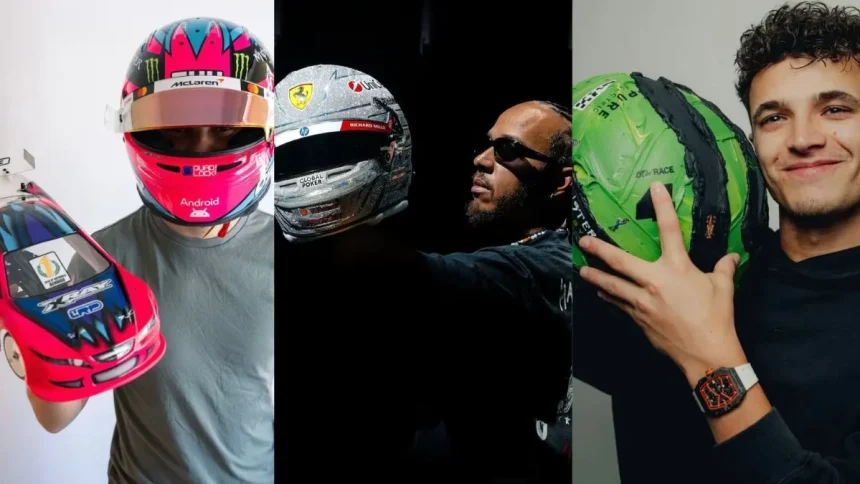
If you thought F1 cars were the stars of the show, think again; those iconic F1 helmets are the unsung heroes keeping drivers alive at 300 km/h. Over seven decades, F1 helmets have evolved from basic cork caps to high-tech carbon fibre fortresses that tackle crashes, debris, and even fires. But do they really boost safety and vision? Spoiler: Absolutely yes, and here’s the full story.
F1 Helmets Evolution
From the 1950 F1 kickoff at Silverstone, drivers like Nino Farina rocked just linen caps and goggles, zero real protection against flying stones or flips. By 1952, FIA made F1 helmets mandatory, starting with cork and lacquer “hard hats” that barely covered the skull. They absorbed some energy but shattered easily in big hits. Fast forward to 1957, Bell Helmets dropped the game-changer: fibreglass shells with polystyrene liners for better impact resistance. No more relying on luck; these were built for racing.
Safety ramped up huge in the late ’60s when Dan Gurney pioneered full-face F1 helmets at the 1968 German GP. Open-face designs left faces exposed, remember Lotus’ Alan Stacey dying from a bird strike in 1960? Full visors with perspex blocked debris, and anti-fog tech killed visibility fears. By 1975, open faces were history. Tear-offs came next to peel away oil and dirt mid-race, fixing blurry views without stopping. Fire resistance was introduced in 1973 after tragedies like Jo Siffert’s, adding air tubes to fight smoke.
The real cinema unfolded post-1994 horrors, Senna and Ratzenberger’s deaths sparked a carbon fibre revolution in 2001. Penetration resistance jumped 30%, energy absorption 70%, and weight dropped to ease neck strain. HANS device (mandatory 2003) tethers F1 helmets to shoulders, slashing basilar skull fractures by 80% in crashes. Felipe Massa‘s 2009 spring-to-face nightmare? FIA hit back with Zylon strips (2011), then carbon reinforcements (2019), passing 250 km/h ballistic tests. Today’s Bell, Arai, Schuberth, and Stilo helmets shrug off tanks, literally, like Schumacher’s in 2004.
Vision-wise, integrated visors, tear-offs, and shrunk openings (2019 specs) give crystal-clear sight without the old goggle fog or debris pelts. Sure, early full-faces spooked drivers, but innovations turned sceptics into believers. F1 helmets don’t just improve safety and vision; they save lives and sharpen focus in chaos. As speeds climb, expect more wizardry ahead. Stay tuned, F1 fans!

Also read: Haas Changes 2026 Car Reveal Date After Unforseen Circumstances