



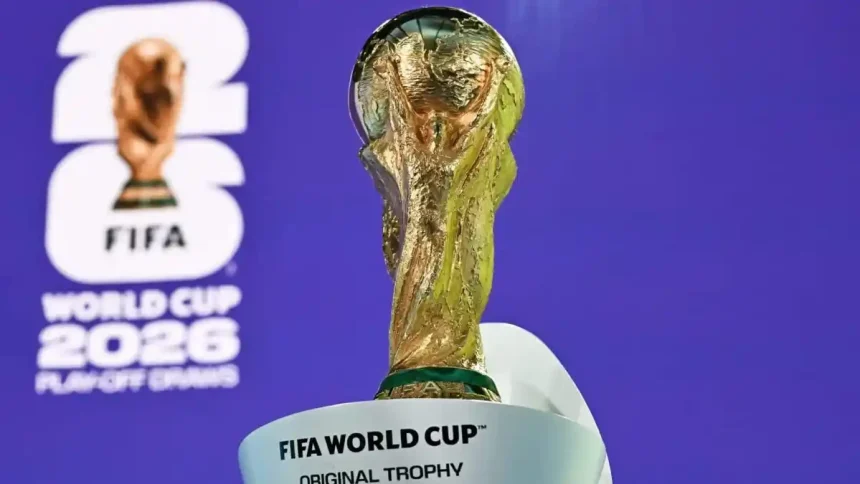
The new FIFA World Cup rules have been introduced ahead of this years tournament. With just a few months remaining for the 2026 FIFA World Cup, the International Football Association Board (IFAB) has introduced a new set of rules. While there was already a lot of anticipation surrounding the tournament, these new rules will certainly add to it, with fans waiting to see how they come into play.
The newly introduced rules will see changes being made to how the players are substituted, treated while being injured, and more. That said, let’s take a look at the newly introduced rules for the FIFA World Cup.
All FIFA World Cup rule changes ahead of the 2026 tournament
Substituted players must leave the pitch within 10 seconds
One of the biggest FIFA World Cup rule changes for the 2026 is about substitutions. Players who are being replaced will now have 10 seconds to leave the pitch. However, if a player takes longer than that, the substitute waiting to enter will have to wait one full minute before stepping onto the field.
This rule is designed to reduce deliberate time-wasting, particularly in the final stages of matches when teams often try to slow down the tempo to protect a lead.
🚨🚨| FIFA has 𝐀𝐏𝐏𝐑𝐎𝐕𝐄𝐃 several new rules for the 2026 World Cup aimed at reducing time wasting and improving decisions.
→ Substituted players must leave the pitch within 10 seconds, or the replacement waits 1 minute before entering.
→ Throw-ins must be taken within 5… pic.twitter.com/ig2kNHnR0Q
— CentreGoals. (@centregoals) March 13, 2026
Throw-Ins must be taken within 5 seconds
Another change targets delays during throw-ins. Players will now be required to take a throw-in within five seconds once they are ready to restart play. If they fail to do so within the time limit, possession will be awarded to the opposing team.
This update encourages quicker restarts and keeps the game flowing, which could lead to a faster-paced style of play during the World Cup.
Players receiving medical treatment must wait one minute to return
Under the new regulations, players who receive medical treatment on the pitch must leave the field and wait one minute before returning to the game.

The purpose of this rule is to discourage players from exaggerating injuries to break the rhythm of the match. It also ensures that medical stoppages are used only when genuinely necessary.
During high-stakes matches in the 2026 FIFA World Cup, this could play an important role in maintaining the flow of the game.
VAR can now intervene on second yellow cards and corner decisions
The Video Assistant Referee (VAR) system will also have expanded authority. VAR will now be able to intervene in second yellow card decisions and review corner kick calls when there is a clear refereeing error.
Since its global debut at the 2018 FIFA World Cup, VAR has become a key tool in assisting referees. The expanded powers aim to reduce controversial decisions and improve fairness in crucial moments of matches.
Also Read: FIFA World Cup 2026 Full Schedule: Dates, Matches, Venues And Timings