

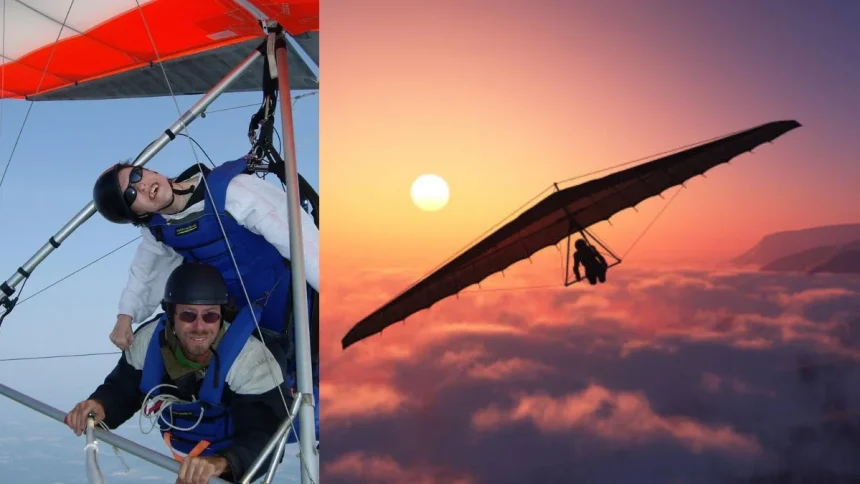
Hang Gliding is a non-motorized air sport where a person flies using a light, rigid-wing aircraft. The pilot lies in a harness and controls the glider by shifting body weight. It uses natural air currents like thermals and ridge lift to stay in the sky. Many beginners try tandem flights with trained instructors first. Pilots need skill, weather knowledge, balance, and courage to glide safely and enjoy amazing sky views.
Inside a Hang Glider: Parts and Pilot Control
A hang glider is made of a strong metal frame covered with special fabric wings. It is light but strong enough to fly safely. The pilot wears a harness and lies flat, parallel to the wing. There is no steering wheel. The pilot controls the glider by shifting body weight and holding a control bar. Moving forward, backward, or sideways changes direction and speed during flight.
Hang Gliding: Experience, Skills, and Safety Facts
Hang gliding is an exciting air sport where most flights last about 10 to 30 minutes. During this time, pilots experience strong winds, high altitude, and amazing views, which many describe as unforgettable. The sport depends heavily on the weather. Wind speed, wind direction, and the presence of thermals decide how long and how safely someone can fly. Beginners can try tandem flights with certified instructors, but becoming skilled requires learning aerodynamics, meteorology, and precise control. Even though modern equipment and training focus on safety, it is still considered an extreme sport. Studies show the fatality rate is about 1 in 2,000 active pilots.
How Hang Gliders Take Off and Stay in the Air
Hang glider pilots take off by running down a hill or slope until the wind lifts them up. Sometimes they use a tow rope pulled by a vehicle to rise into the sky. After takeoff, they look for thermals, which are columns of warm rising air. These thermals help them gain height without an engine. With good thermals, pilots can stay in the air for hours and safely travel long distances.
Hang Gliding and Paragliding: Key Differences
Hang gliding and paragliding are both foot-launched air sports, but they are different. In hang gliding, the pilot lies flat in a horizontal position. In paragliding, the pilot sits upright in a harness. Hang gliders have a rigid metal frame with firm wings, which helps them fly faster and perform better. Paragliders use a soft, parachute-like wing. Because of their strong structure, hang gliders are generally faster than paragliders.
Best Hang Gliding Places and Basic Costs
Some famous hang gliding spots are Zapata, Texas, known for long-distance thermal flights, and Kitty Hawk, North Carolina, linked to the Wright Brothers. In India, Billing at 8,500 feet in Kangra Valley is popular. No experience is needed for tandem flights, but schools train pilots for solo licenses. A new high performance glider costs 5,000 to 8,500 dollars. Training courses cost a few hundred to over a thousand dollars.

ALSO READ: Aravindh Strikes First Win In Prague Chess Festival