

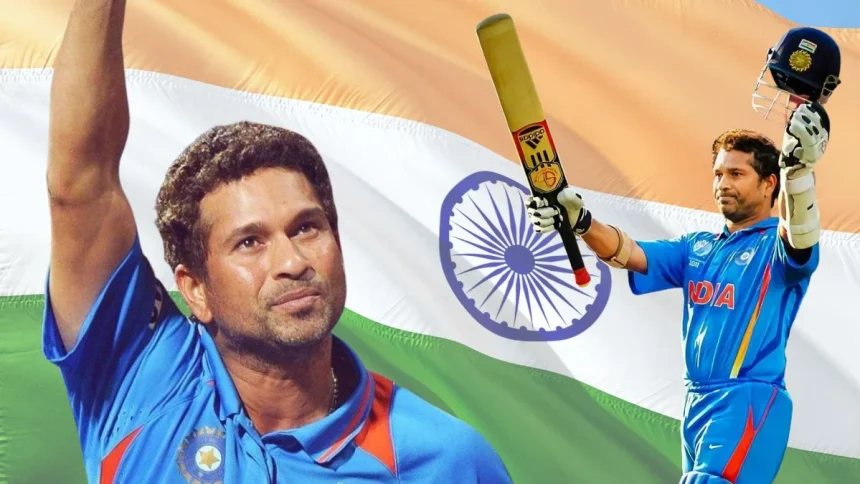
There are cricketers, and then there is Sachin Tendulkar. The distinction matters because in the 53 years since he was born in a middle-class home in the Bandra neighbourhood of Mumbai, he did not simply play cricket. He became it. He became the hopes of a billion people, the weight of a nation’s expectation worn as lightly as a white’s kit, and somehow, game after game, decade after decade, he carried it all with grace, with hunger, and with that unmistakable straight bat.
Today, on his birthday, we do not merely celebrate a man who scored runs. We celebrate someone who changed the relationship between India and sport itself. Before Sachin, cricket was a game India played. After Sachin, cricket became something India lived, breathed, prayed through, and ultimately won by.
The Beginning: The Boy Who Showed Up at Sixteen


November 15, 1989. Karachi. Pakistan. A sixteen-year-old walked out to bat in his very first Test match against one of the most fearsome pace attacks in the world Waqar Younis, Wasim Akram, Imran Khan. He was hit on the nose by a rising delivery from Waqar. His teammates, senior men who had played international cricket for years, expected him to retire hurt. Instead, he waved off the physio and kept batting.
That moment a bleeding teenager refusing to leave a pitch in Karachi told you everything you needed to know about what was coming. This was not a talented youngster finding his feet. This was a cricketer who had already arrived, fully formed, with an appetite for the contest that bordered on the ferocious.
Read More
He had been identified early. At Shardashram Vidyamandir school in Mumbai, under the sharp eye of his legendary coach Ramakant Achrekar, the young Sachin was batting for hours every single day. Achrekar used to place a one-rupee coin on top of the stumps as motivation if a bowler got Sachin out, the bowler kept the coin. If Sachin survived the session, Achrekar kept it. Sachin has said that his 13 one-rupee coins from those sessions are among his most treasured possessions. That detail tells you everything about the man he became.
By the Numbers: Records That May Never Be Broken

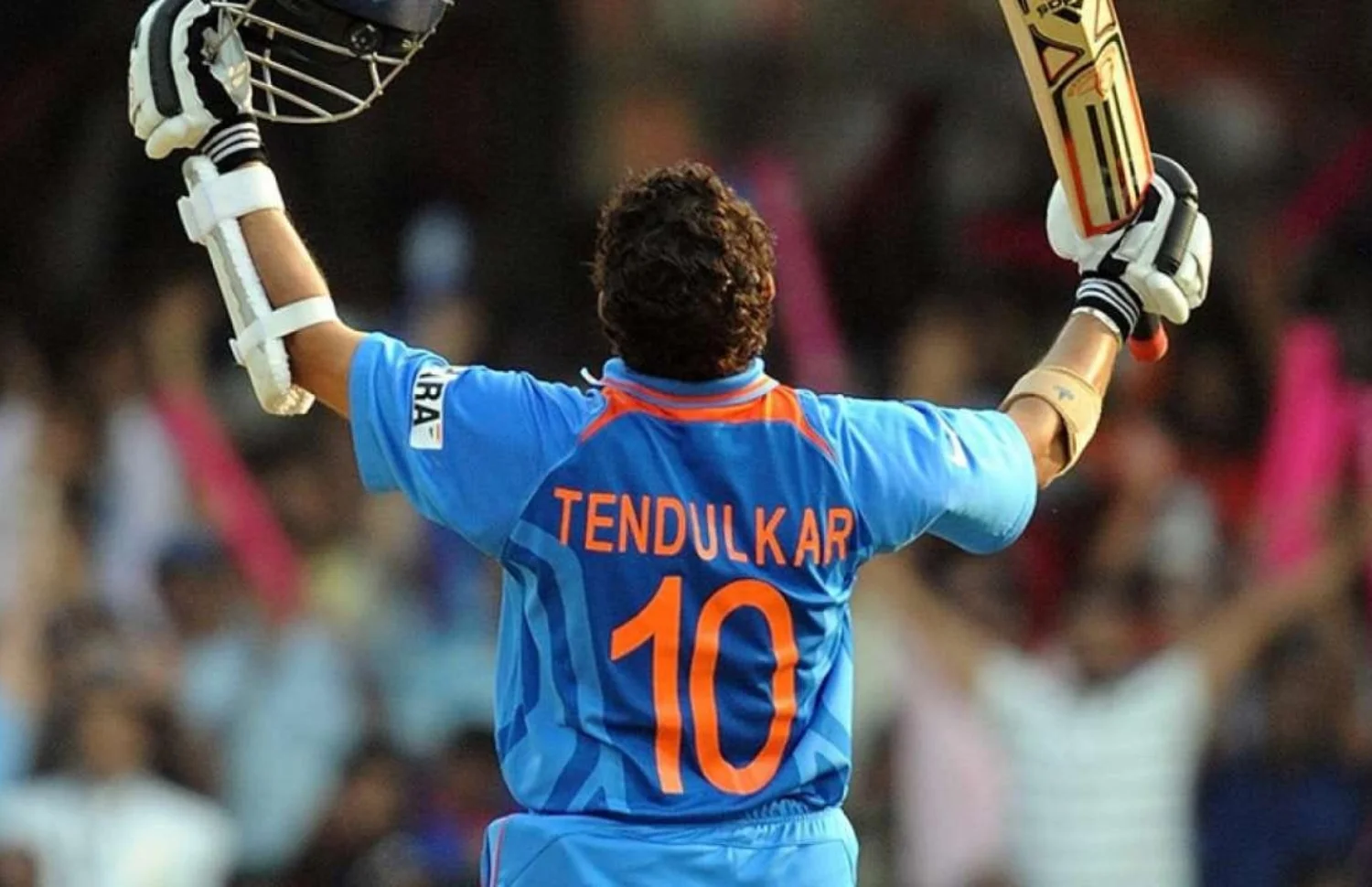
Some careers are measured in seasons. Sachin Tendulkar’s is measured in eras.
100 international centuries: 51 in Tests, 49 in ODIs. To put this in perspective: the second-highest tally belongs to Ricky Ponting, with 71. Sachin’s lead of 29 centuries over the second-best batsman in history is itself a number many cricketers never reach in their entire careers.
Read More
34,357 international runs: the most ever scored by any batsman in the history of the sport. No one is close.
664 international matches across Tests and ODIs, spanning 24 years: from 1989 to 2013. Twenty-four years at the highest level, against every team, on every surface, in every condition.
200 not out in an ODI in 2010, against South Africa, Sachin became the first batsman in history to score a double century in a One Day International. The format had existed for nearly 40 years. No one had come within 30 runs of it. He did not just break the ceiling; he discovered that a ceiling existed.
15,921 Test runs and 18,426 ODI runs both all-time records at the time of his retirement. These are not just statistics. They are the geometry of devotion.
The Innings That Defined an Era
1989: International debut in Karachi at 16. Gets hit on the nose. Doesn’t leave. The world takes note.
1994: First ODI century, 110 against Australia in Colombo. A batting genius begins rewriting the rules of limited-overs cricket.
1996: Scores 523 World Cup runs, nearly single-handedly keeping India alive. The loss hurts. The legend grows.
1998: Desert Storm, Sharjah Two consecutive centuries against Australia in a sandstorm, under conditions that reduced other batsmen to survival mode. He did not survive. He attacked. One of cricket’s most mythologised performances.
2003 World Cup Final vs. Pakistan: His 98 runs of ruthless, surgical precision in the final remain the definitive example of a batsman willing a team to safety. India won. He walked off to a standing ovation from Pakistani fans as well.
2010: First batsman in history to score 200 in an ODI. South Africa had no answer. Cricket had no precedent.
2011: World Cup Winner After 22 years of waiting, Sachin held the World Cup trophy at the Wankhede Stadium in Mumbai. India carried him on their shoulders that night. The nation exhaled.
2012: The 100th Century Against Bangladesh in Mirpur. The most awaited, most agonised-over milestone in cricket’s history. He got there. India stopped. One hundred international centuries. A number no one had ever imagined as a target, let alone a landmark.
2013: The Farewell His retirement at Wankhede after 200 Tests. His speech reduced the country to tears. He thanked his father, his mother, his wife Anjali and then he thanked India.
What He Did to India

Numbers can explain what Sachin Tendulkar achieved. They cannot explain what he meant.
In the nineties, when India was liberalising and finding its feet in a newly globalised world, Sachin was the clearest proof that an Indian could be the best in the world at something and not just good, not a runner-up, but definitively, historically, irreversibly the greatest. A generation of Indians grew up believing that because of him.
Cities stopped during his batting. Offices emptied. Surgeries documented, on record were rescheduled around his Test innings. A man reportedly won a landmark legal case and immediately switched on the television to check Sachin’s score. Mothers named their sons after him because they were born on the day of a Sachin century. He was not a cricketer who played for India. He was India, playing cricket.
And through it all, he remained by every account, from every opponent, every teammate, every journalist who ever interviewed him genuinely humble. Not the performed, strategic humility of the celebrity. The real kind. He remembered people’s names. He showed up on time. He trained hardest of anyone in any squad he was ever part of. He cried when he lost. He did not cheat. He did not sledge. In a sport that can make monsters out of men, Sachin remained a decent human being for 24 years at the highest level of the game. That, in its own way, is the most extraordinary statistic of all.
“Tendulkar is, in my time, the best player without doubt. Watching him is one of the pleasures of following this game.” – Sir Don Bradman, 1998
“Sachin, you have carried the burden of the nation for 21 years. It is time for us to carry you on our shoulders.” – Virat Kohli, 2013
“He is a genius. To watch him bat is one of the great privileges of being alive at this time.” – Shane Warne, 2006
A Brand Bigger Than Cricket

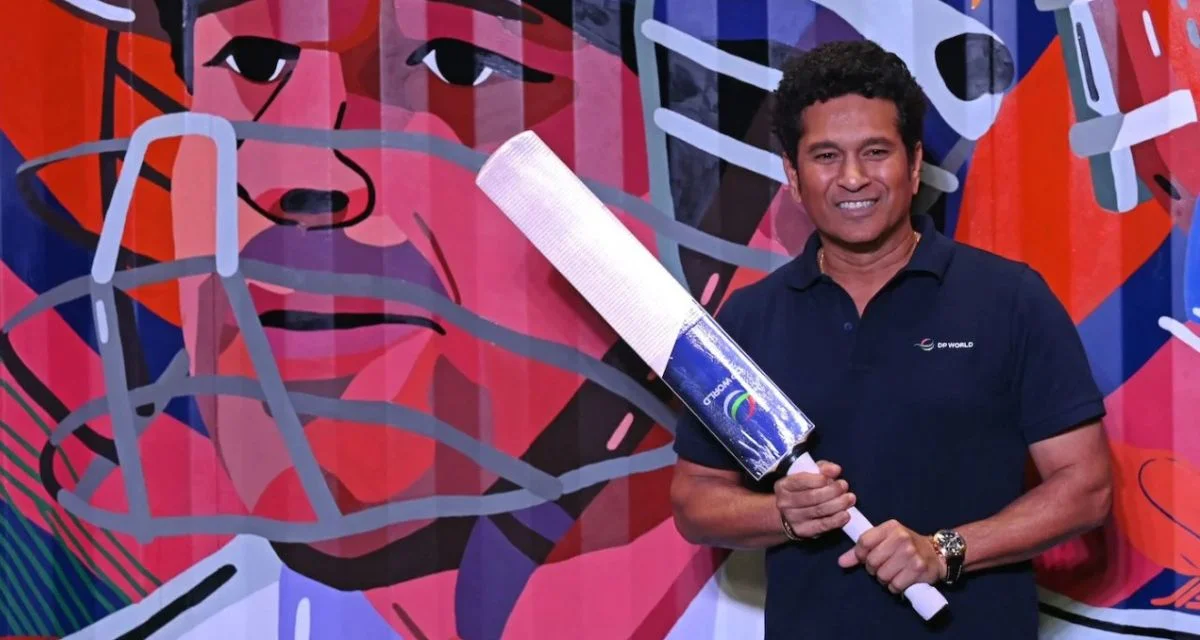
Post-retirement, Sachin Tendulkar did not fade into nostalgia he built an empire.
As one of India’s most commercially enduring sporting icons, his brand value has consistently ranked among the highest for any retired sportsperson in Asia. At his peak, he endorsed over a dozen major brands simultaneously from MRF (a partnership that began before most fans were born) to Adidas, Boost, Luminous, and BMW generating brand revenues in the hundreds of crores annually.
He launched Sachin’s, his fine-dining restaurant. He co-owned Kerala Blasters FC in the Indian Super League, investing in football’s growth in India. His social media following runs into the tens of millions, with engagement rates that brands continue to pay premium for, more than a decade after his retirement. He has invested in startups, backed technology platforms, and built a commercial identity that is not parasitic on nostalgia it is driven by the genuine authority of a man who earned every inch of it.
But perhaps more telling than any commercial metric is the moral authority he carries. When Sachin speaks on Indian talent development, on social causes, on young cricketers he advises he is listened to. He sat in India’s Rajya Sabha as a nominated member. He has spoken at international forums on issues of child welfare and sport. His voice carries the weight of a life spent earning it, one innings at a time.
Honours and Awards:
- Bharat Ratna (2014): First sportsperson ever to receive India’s highest civilian honour
- Padma Vibhushan (2008)
- Padma Shri (1999)
- Rajiv Gandhi Khel Ratna (1997)
- Arjuna Award (1994)
- ICC Cricket Hall of Fame (2019)
- Wisden Cricketer of the Year: five times
- UNICEF Goodwill Ambassador
More Than Just a Batsman
In the avalanche of batting records, what is forgotten is that Sachin Tendulkar was a genuinely useful right-arm medium pace bowler with 154 ODI wickets, 45 Test wickets and a breathtaking outfield fielder in his younger years who took catches that seemed to defy physics. He was a cricketer in the true sense of the word. Not a specialist. A complete cricketer.
He mentored. He advised. He watched every younger batter in the squad not to protect his own standing, but because he understood, viscerally, what a one-degree correction in technique could mean for a career. Virat Kohli has spoken in multiple interviews about what Sachin’s guidance not just on the pitch, but in the dressing room, in private gave him in his formative years. The numbers ended in 2013. The influence did not.
The Wankhede Farewell
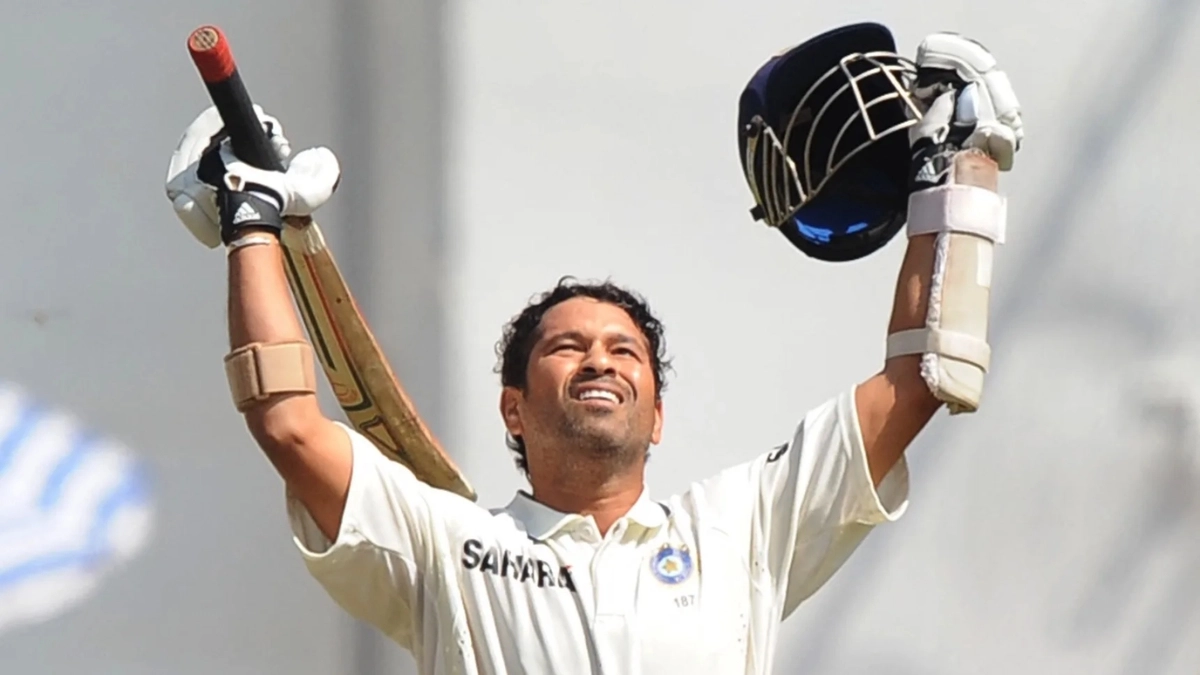
On November 16, 2013, Sachin walked to the crease at the Wankhede Stadium in Mumbai for the last time. He scored 74 in his 200th Test match against the West Indies and then stood at the crease and wept, like the rest of the country watching. His retirement speech, delivered on the same ground where he had played as a boy sneaking into the nets, remains one of the most emotional moments in the history of Indian sport.
He spoke for eleven minutes. He thanked his father who passed away when Sachin was mid-tour and whom he flew back to cremate before returning to finish the series. He thanked his mother. He thanked his wife Anjali, who gave up her medical career so he could pursue cricket. He thanked his children. He thanked his coach Achrekar. And then, as the 33,000-strong crowd roared in one unbroken wave of sound, he said simply: “I am very fortunate to have lived my dream.”
India cried. Not because he was gone. But because something irreplaceable had just stepped off the field, never to return.
Happy Birthday, Sachin.
You gave a country not just victories but belief. You showed a billion people that excellence and humility could live in the same man. You made us believe that a boy from Bandra could be the best in the world, and keep being the best for twenty-four years, and do it without losing the things that made him human.
The numbers will stand for decades, perhaps forever. But what you gave India was not a scoreboard. It was a mirror and in it, we saw the best version of what we could be.
The little master turns 52 today. Wherever he is, the bat is still perfect.
“Sachin! Sachin!” Two words. One chant. A billion voices. Forever.