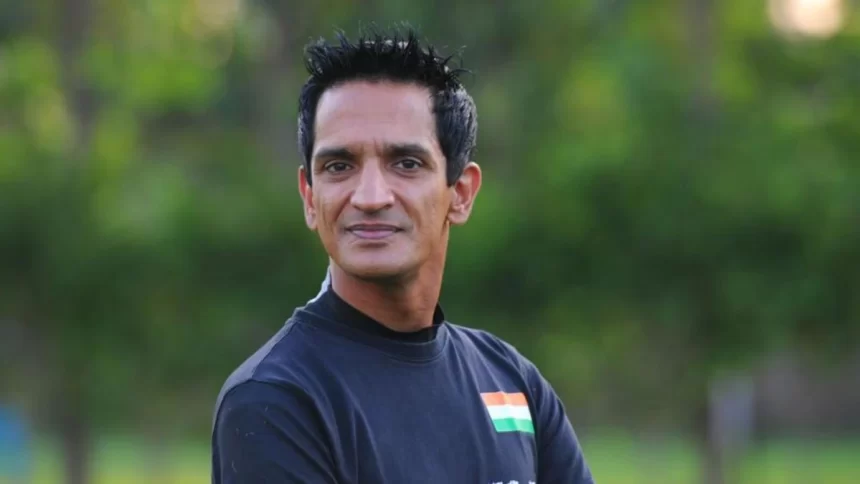
Who is Ranjit Bajaj, really?
The guy who looked at India’s football pyramid, said “challenge accepted,” and then actually moved bricks. Founder of Minerva Academy, ex-owner of Minerva Punjab FC, current owner of Delhi FC, serial talent-farmer, and a one-man pressure group on Indian football’s power corridors. He’s loud on X and louder on the touchline, but beneath the noise sits a ruthless system for spotting, schooling, and shipping young ballers to the top.
In short, Kabir Khan of Football.
The quick origin story
2015-2017: Turned academy dreams into Minerva Punjab FC, climbed the ladder, and in 2017-18 won the I-League. First North Indian club to do it. That was not a fluke, that was planning.
2020: Sold Minerva Punjab to RoundGlass. Club rebranded, eventually became Punjab FC in the ISL era. Bajaj pivoted back to the factory floor where he’s most dangerous: youth development.
2020-present: Took over Delhi FC, pushed them up from I-League 2 into the I-League, and turned Ambedkar Stadium nights into proper events.
Read More

How he’s changing the Indian Football scene
1) He turned “grassroots” from a buzzword into a production line
Minerva Academy’s youth sides have hoarded national age-group titles for fun, repeatedly topping AIFF youth competitions across U13, U15, and U18. That volume is not normal. It’s a conveyor belt.
And then came the global flex. In 2023 Minerva became the first Indian team to win the Gothia Cup. In 2025 they did it again, and added Dana Cup and Norway Cup in the same summer. Unbeaten tours. Goals raining like a Delhi monsoon. That is culture shift territory.
Why this matters: Indian academies rarely prove themselves outside our bubble. Winning Europe’s biggest youth tournaments tells parents, scouts, and sponsors that Indian kids can dominate global age-group football when they’re put through an elite program. It also pressures the rest of the ecosystem to raise standards.

2) He built a pathway, not just a team
Bajaj’s model runs from schoolboy scouting to pro minutes. Minerva’s “World Cup Batch 2034” plan sounds grand, but it’s a clear roadmap with obsessive daily routines and relentless travel for top-tier competition. Delhi FC then gives older graduates a senior stage. That loop is powerful.
3) He makes youth football aspirational again
If you’ve seen his social feeds, you know the tone: celebratory, confrontational, hyper-transparent. He floods timelines with training clips, airport selfies, and scorelines from Sweden to Denmark to Norway, dragging attention toward kids who usually get none. That constant storytelling has pulled fans into U14 football like it’s prime-time.
4) He plays hardball with the suits
Bajaj is not shy. From fixing allegations to governance rants and roadmap ultimatums, he pushes publicly and forces replies. Whether you agree or not, the pressure has kept federation policies and league structures in the news cycle. That visibility helps clubs outside the ISL bubble.
Inside the Minerva method
Volume scouting + residential discipline + real competition
Scouting across the North and Northeast, with partnerships that widen the net.
Residential training at Mohali with strict routines, recovery, and sports science.
Read More

International reps every year so kids face different styles early.
Age-group title targets at home to measure progress.
This isn’t vibes. It’s a repeatable machine that keeps spitting out winners.
The Delhi FC project
When Delhi FC climbed into the I-League, it gave North India another serious senior platform. Add the Durand nights and a city starved for top-flight football, and you get a genuine pipeline endpoint for Bajaj’s academy graduates. It also diversifies the geography of Indian football beyond traditional hubs.

Results you can’t argue with
1. I-League champions with Minerva Punjab in 2017-18.
2. Sold and retooled while RoundGlass Punjab later won the I-League in 2023. The conveyor kept humming.
3. AIFF youth titles across categories in 2023-25, including the 2025 Sub Junior crown.
4. Global youth treble 2025: Gothia Cup, Dana Cup, Norway Cup. Unbeaten runs and absurd goal counts.
The friction and the fuel
He has racked up critics and controversy. Touchline spats, sharp tongue, and the occasional disciplinary headline come with the package. But even his harshest rivals will tell you he moves the needle. He keeps the conversation hot, keeps standards under the microscope, and keeps youth football in the headlines.
What this means for Indian football over the next five years
1. North India as a talent hotbed instead of a footnote.
2. More Indian academies touring Europe because parents now demand it.
3. A real second staircase to the top via I-League clubs like Delhi FC.
4. Federation pressure to expand and properly fund grassroots structures. Even if policy shifts are slow, constant scrutiny changes budgets.
Ranjit Bajaj is the rare owner-operator who treats youth development like a moonshot, not CSR. He built an unapologetically competitive academy, proved it on European soil, weaponised social media to make kids the story, and then plugged them into senior football with Delhi FC. Love him or hate him, the man has dragged Indian football’s baseline higher. That’s impact you can measure in medals, not monologues.
Also Read- Liverpool Summer Transfer Window: In And Out With Prices Under Arne Slot