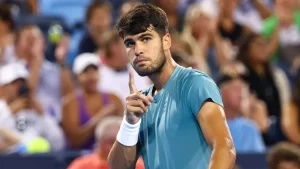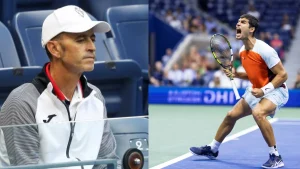

In an unprecedented show of unity and strategic clarity, several of the world’s top tennis players including Jannik Sinner and Carlos Alcaraz are intensifying their campaign to secure a larger share of the revenues generated by the sport’s four Grand Slam tournaments. The latest push comes in the form of a second letter, dated July 30, sent to organizers of the Australian Open, French Open, Wimbledon, and the US Open. The letter outlines concrete financial and structural demands, including an increase in players’ revenue share and the establishment of long-overdue benefits such as pensions and maternity support.
The Recurrent Concern of Tennis Players: Jannik Sinner, Carlos Alcaraz Lead the Way
This latest letter is signed by a powerful group of top-10 players, including Aryna Sabalenka, Iga Swiatek, Coco Gauff, and Jack Draper apart from Alcaraz, Sinner. Notably absent is Novak Djokovic, who signed a similar letter earlier this year and is a central figure behind the Professional Tennis Players’ Association (PTPA).
The players are calling for:
- A rise in Grand Slam revenue share from 16% to 22% by 2030
- An annual contribution of $12 million toward pension, health, and maternity benefits
- The formation of a new player council to ensure athletes have a greater say in tennis governance
This initiative reflects a growing professionalization within the player ranks, with former WTA CEO and Pac-12 Commissioner Larry Scott acting as an advisor to the group.
Response from Grand Slams
All four Grand Slam governing bodies acknowledged receipt of the July 30 letter and responded. The United States Tennis Association (USTA), which organizes the US Open, issued a detailed reply on August 18. Signed by interim co-CEO Brian Vahaly and outgoing tournament director Stacey Allaster, the USTA emphasized its record of increasing player compensation.

“As you are aware, we have always been willing to increase compensation for players- as evidenced by the 57% growth of the US Open purse over the past five years,” the letter read.
The 2025 US Open prize pool reached an all-time high of $90 million, with singles champions Alcaraz and Sabalenka each taking home a record $5 million.
The USTA also reaffirmed its commitment to “direct, honest and transparent discussions” on improving the tennis ecosystem, including a healthier calendar, enhanced player consultation, and greater financial value for all involved.

PTPA Expands Antitrust Lawsuit
The players’ demands come against the backdrop of an ongoing antitrust lawsuit filed by the PTPA in March. Originally directed at the ATP, WTA, ITF, and the International Tennis Integrity Agency, the lawsuit alleges anti-competitive behavior and insufficient financial return to players.
While Djokovic is not a plaintiff, his fingerprints are all over the case as co-founder of the PTPA. Earlier this week, the PTPA confirmed that it has now added the Grand Slam tournaments as defendants, calling it a “necessary next step” in holding tennis’s power structures accountable.
“This is about accelerating long-overdue reform across the entire tennis ecosystem,” the PTPA said in a public statement.
Financial Imbalance Highlighted
One of the more striking arguments from the players centers on the vast profits made by tournaments compared to what athletes receive. The PTPA claimed that the US Open made more revenue from selling a single specialty cocktail (approx. £9.5 million) than it paid to both singles champions combined.
With Grand Slam prize money exceeding £325 million in 2025 and projected to reach £370 million by 2030, players believe a 22% share is both fair and sustainable.
Tennis remains one of the few global sports without guaranteed player benefits like pensions or maternity support, and where top events operate with relative autonomy from the tours. By pushing for not only more money but also institutional reform, players are signaling a shift from individual advocacy to collective bargaining.
Also Read: Aryna Sabalenka Leads WTA Prize Money With $12.1M
For decades, the sport has celebrated individual brilliance but lacked structural coherence. This coordinated effort by players- especially from a new generation led by Alcaraz, Swiatek, Gauff, and Sinner- suggests that the era of passive acceptance may be over.
Negotiations are ongoing, and legal proceedings could stretch for months. But the pressure is mounting on tennis’s most prestigious institutions to modernize, share profits more equitably, and finally acknowledge that the athletes- without whom there would be no show- deserve a stronger voice in shaping the future of