The Matches That Changed Football Rules Forever
Football isn’t set in stone. Every so often, one crazy match forces FIFA to grab the rulebook and rewrite history. Here are the matches that shaped how the game is played today.
1966 World Cup Final – Goal-Line Technology’s Origin Story
Geoff Hurst’s “did it cross the line?” goal against Germany caused decades of pub arguments. This controversy planted the seed for goal-line technology, which finally arrived in 2012. Without that goal, your TV wouldn’t be buzzing every time the ball scrapes the line.
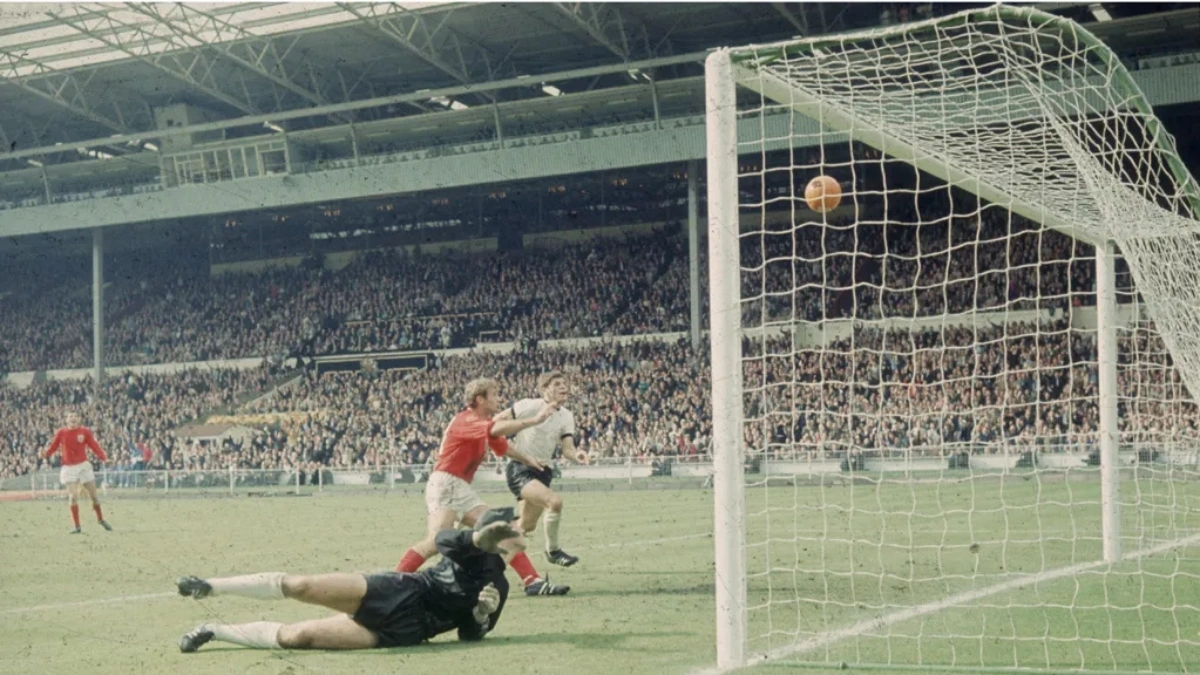
Geoff Hurst’s second goal in the 1966 World Cup Final between England and West Germany. On the surface, it was just a ball smashing the crossbar and bouncing down. But what followed sparked arguments that lasted for decades, eventually paving the way for goal-line technology.
It was the 101st minute of extra time at Wembley. Geoff Hurst unleashed a rocket that thundered off the underside of the bar, bounced on (or maybe over?) the line, and spun back into play.
The referee, Gottfried Dienst, looked confused. So he turned to the Soviet linesman, Tofiq Bahramov, who confidently signaled that it was a goal. England went 3-2 up, and the rest, as they say, is history. Hurst later completed his hat-trick to seal a 4-2 win, England’s one and only World Cup triumph.
1986 Argentina vs England – The Hand of God
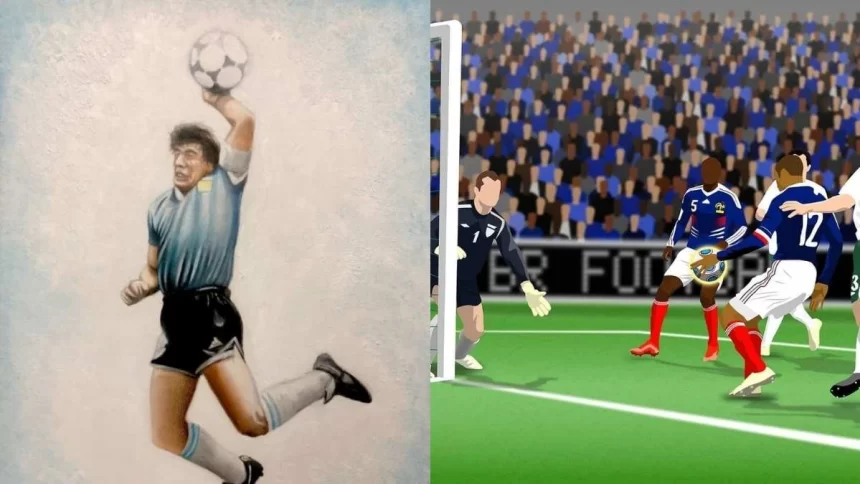
Diego Maradona’s infamous handball remains one of football’s biggest scandals. His cheeky punch forced FIFA to rethink handball laws and referee training. VAR today? You can thank (or blame) Maradona.
Six minutes into the second half, the moment arrived. Maradona darted into the England box, and as the ball looped into the air, he rose alongside goalkeeper Peter Shilton. The only problem? Shilton was a full 8 inches taller. Logic said Shilton should win every time.

But Maradona, cheeky as ever, threw up his left fist and punched the ball past Shilton. Goal given. England players swarmed the referee, Tunisian official Ali Bin Nasser, but he stood firm. Argentina 1-0 up.

France vs Senegal 2002 – The Golden Goal Dies
The golden goal was designed to make extra time thrilling: first goal wins. Instead, teams became terrified of conceding. Games slowed down, fans yawned, and FIFA quietly buried the rule in 2004.
This match was not the direct match that was responsible but it was a domino effect that changed the rule completely. After winning, Senegal won the knockout rounds vs turkey and sweden meant that both the teams decided to sit deep and not indulge in scoring goals. FIFA reviewed these matches and this was the last World Cup that had this rule.
2009 France vs Ireland – The Henry Handball
In November 2009, France faced Ireland in a two-leg playoff to qualify for the 2010 World Cup. The second leg in Paris was tense, Ireland were leading 1-0, pushing the tie into extra time.
Then came the moment: Thierry Henry controlled the ball with his hand (twice!) before squaring it for William Gallas to score. The referee missed it. The goal stood. France went through to the World Cup. Ireland was robbed.
The replays made it crystal clear, and the outrage was instant. Headlines screamed “Cheat!”; Irish fans protested outside FIFA headquarters; even politicians weighed in.
Thierry Henry‘s sneaky handball denied Ireland a World Cup spot. Outrage followed, and FIFA faced huge pressure to introduce video referees. This was one of the final straws that pushed VAR into existence.
Read More

Football’s Rule-Shaping Matches
From Hurst’s goal-line debate to Henry’s handball, the sport evolves whenever controversy erupts. Every bad decision eventually leads to a new law.
Also Read- One-Club Wonders Vs Club Hoppers: Who Wins In Football History?