
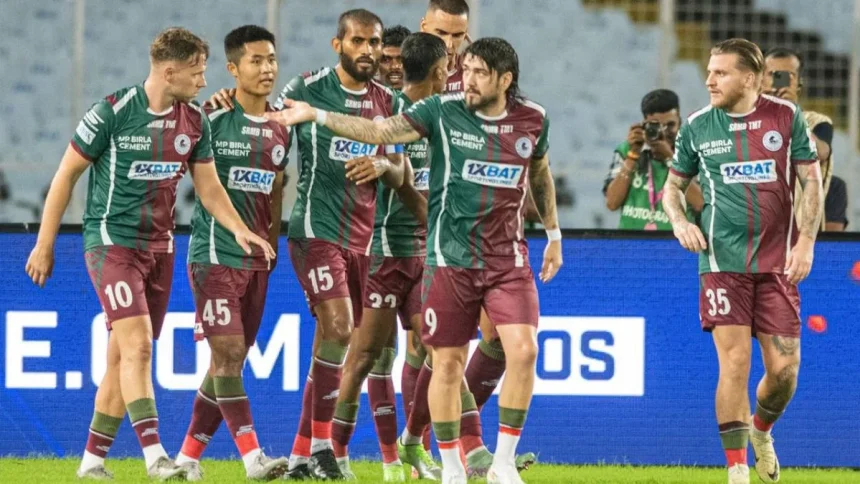
Mohun Bagan Super Giant’s continental ambitions have suffered a major setback after the Asian Football Confederation (AFC) imposed strict disciplinary sanctions on the Indian Super League champions for withdrawing from the 2025–26 AFC Champions League Two (ACL Two). While early reports suggested a blanket multi-year ban, the reality of the punishment is more nuanced- and arguably more damaging in sporting terms.
Why Mohun Bagan Has Been Charged
The AFC Disciplinary and Ethics Committee, at its meeting on December 17, found Mohun Bagan guilty of breaching Article 5 (Withdrawal from the Competition) of the ACL Two regulations after the club refused to travel to Iran for a group-stage fixture against Sepahan SC in September.
Mohun Bagan cited player safety concerns and visa issues involving several foreign players, including Jamie Maclaren and Jason Cummings. The club requested a neutral venue, arguing that the prevailing security situation posed risks to players and staff. The AFC rejected the request and insisted that the match be played as scheduled. When Mohun Bagan failed to fulfil the fixture after the group stage had already commenced, the governing body deemed it a withdrawal.
This was the second consecutive season in which the Kolkata club declined to travel to Iran, having taken a similar decision the previous year against Tractor SC- an episode that ended without heavy sanctions due to geopolitical tensions at the time.
The Real Nature of the Ban
Contrary to widespread belief, Mohun Bagan have not been handed a straightforward two- or three-year ban from Asian football.
Read More

Instead, the AFC has imposed a one-season competitive ban that is qualification-triggered and remains valid up to and including the 2027–28 season.
The committee ruled that Mohun Bagan are:
“Disqualified from participating in the next AFC club competition for which they would otherwise qualify, with the ban remaining effective up to and including the 2027–28 season.”

This wording is crucial. The ban does not operate on a calendar basis. It comes into force only when the club qualifies for an AFC competition, ensuring that Mohun Bagan must miss at least one continental campaign if they earn qualification.
How the Scenarios Play Out
If Mohun Bagan qualify for Asian competition in the 2026–27 season, the ban will be enforced immediately, barring them from participation that year. The punishment would then be considered served, allowing a return from 2027–28 onward.
If the club fail to qualify in 2026–27 but earn a spot in 2027–28, the ban remains dormant and is enforced that season instead. Only after sitting out that edition would Mohun Bagan be eligible to return.
Should the club fail to qualify for any AFC competition before the end of the 2027–28 cycle, the ban would technically expire- but by then, the club would already have endured multiple seasons outside continental football, achieving the AFC’s intended sporting deterrent.
This structure ensures the punishment cannot be avoided through poor domestic performance, making it more severe than a simple time-bound suspension.
Heavy Financial Fallout
The sporting ban is compounded by a significant financial penalty. The total hit to the club exceeds USD 400,000 (approximately ₹3.6 crore), comprising:
Read More

- USD 50,000 fine for withdrawal
- USD 50,729 as compensation for damages and losses claimed by the AFC and Sepahan SC
- Forfeiture and clawback of all ACL Two subsidies, including participation fees, performance bonuses, and travel allowances (up to USD 300,000 if already paid)
For context, the amount exceeds the prize money Mohun Bagan earned for winning the ISL Shield.
Also Read: What Is Project Mahadeva Football Initiative Launched by Lionel Messi?
Wider Implications
Even if Mohun Bagan dominate domestically over the next two seasons, they will still be forced to sit out at least one Asian campaign. The absence from continental football carries clear sporting, commercial, and reputational consequences for one of India’s most storied clubs.
The decision has also reignited debate over player safety, neutral venues, and the AFC’s flexibility in dealing with geopolitical and security concerns- especially when clubs cite government advisories and visa complications.
Appeal at CAS
Mohun Bagan have approached the Court of Arbitration for Sport (CAS), arguing that player welfare concerns were not given due consideration and terming the AFC’s ruling biased. While the appeal process is ongoing, club officials have indicated that fines may still be paid in the interim.