

Artificial Intelligence has overtaken the world and how!
Twenty-one humanoid robots raced alongside thousands of runners at the Yizhuang half-marathon in Beijing on Saturday. The machines joined humans to run over a 21-km (13-mile) course for the first time.
The robots were developed by various Chinese manufacturers as they came in all shapes and sizes. While some were shorter than 120 cm (3.9 ft), others as tall as 1.8 m (5.9 ft). One robot looked almost human, with feminine features and the ability to wink and smile.

Robots Race With Humans At Chinese Half-Marathon
Some firms tested their robots for weeks before the race. Beijing officials have described the event as more akin to a race car competition, given the need for engineering and navigation teams.

Teams from several companies and universities took part in the race. The robots were accompanied by human trainers who had to physically support the machines during the race.
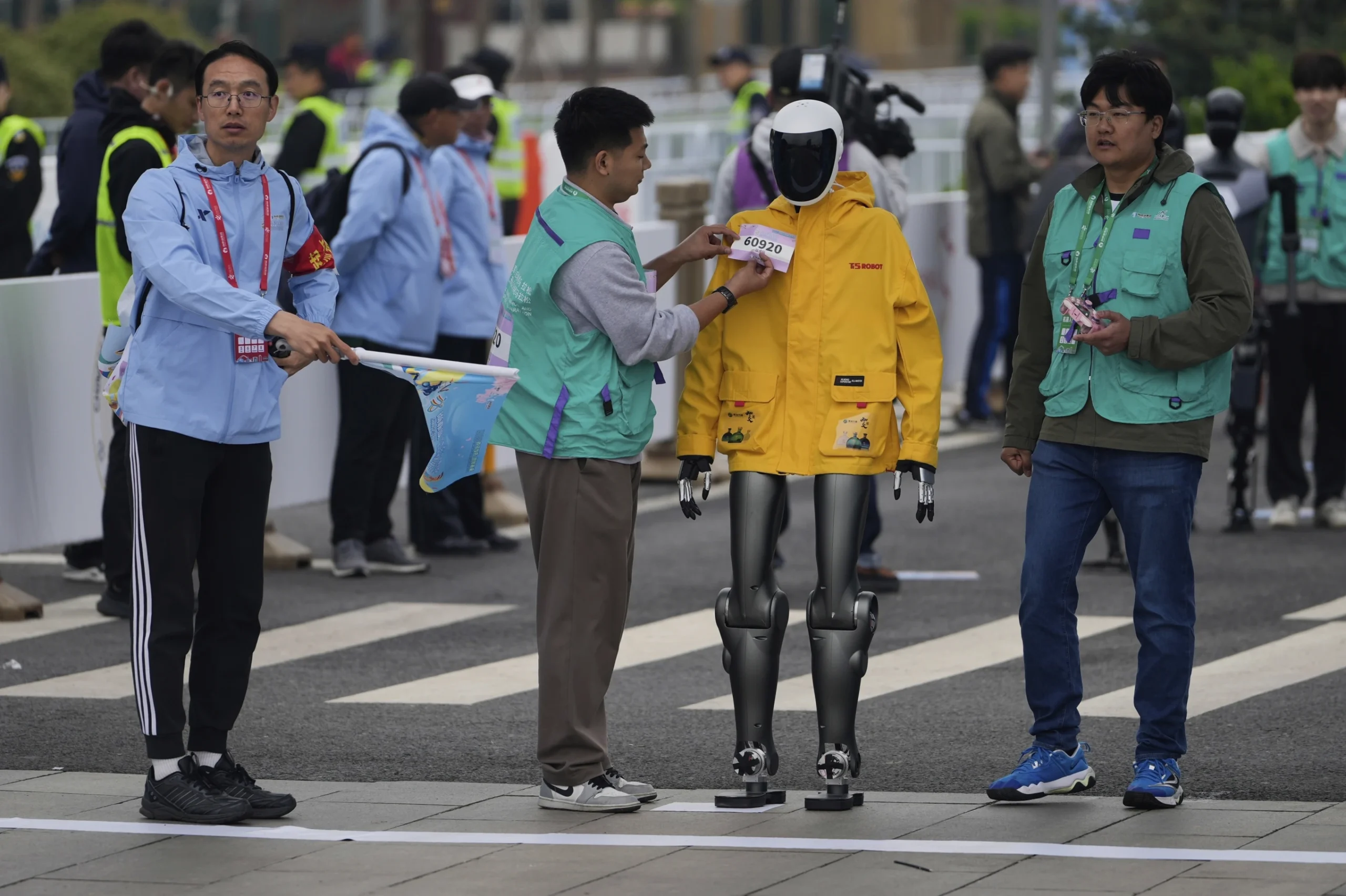
A few of the robots even wore running shoes, and one donning boxing gloves.
Tiangong Ultra, from the Beijing Innovation Center of Human Robotics, emerged as the victorious robot with a time of 2 hours and 40 minutes. The men’s winner of the race had a time of 1 hour and 2 minutes.

The race begins. Robots are lined up in a zigzag formation and will start one by one, each setting off at one-minute intervals. The first to set off is Tiangong Ultra, developed by Beijing-based National and Local Co-built Embodied AI Robotics Innovation Center. pic.twitter.com/kBE1bXGHJa
— Sixth Tone (@SixthTone) April 19, 2025
Also Read: China To Host First-Ever Robot Boxing Match
Tang Jian, chief technology officer for the robotics centre, said Tiangong Ultra’s performance was aided by long legs and an algorithm allowing it to imitate how humans run a marathon.
“I don’t want to boast but I think no other robotics firms in the West have matched Tiangong’s sporting achievements,” Tang said, adding that the robot switched batteries just three times during the race.
Just as human runners needed to replenish themselves with water, robot contestants were allowed to get new batteries during the race. Companies were also allowed to swap their androids with substitutes when they could no longer compete, though each substitution came with a 10-minute penalty.