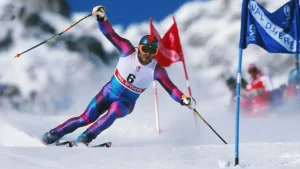

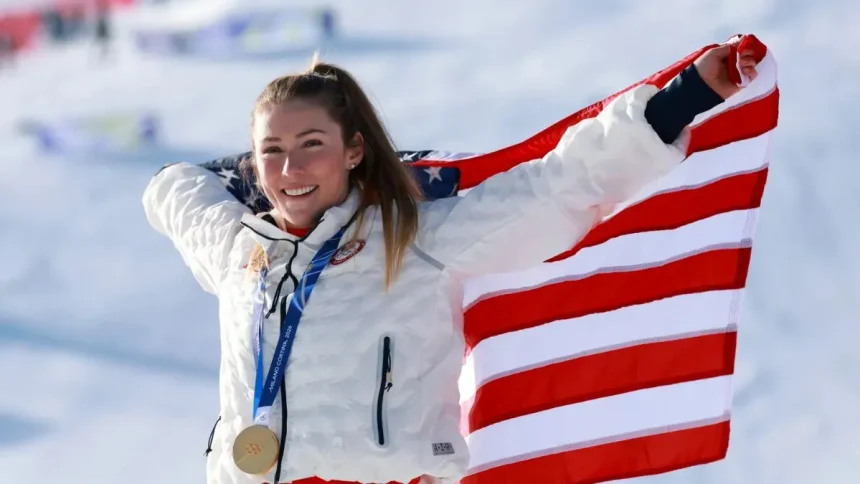
From icy slopes to frozen rinks, the Winter Olympic Games elevate athletes into the realm of legends, where split-second precision and unshakeable resolve define greatness. Every four years, the world turns its eyes to the snow and ice to witness performances that etch athletes into sporting lore. Few exemplify this better than American alpine skier Mikaela Shiffrin, whose journey through triumph, heartbreak, resilience, and redemption says as much about the spirit of the Winter Olympic movement as it does about her own incredible career.
Snow, Speed, and the Winter Olympic Stage
For many competitors, reaching the Winter Olympic stage is the culmination of years, often decades, of disciplined preparation. From the first time they clicked into bindings or stepped onto a track, young skiers, skaters, and snowboarders embrace the unforgiving elements. They chase margins measured not in minutes but in fractions of seconds. In events ranging from the precision-demanding slalom to the rhythmic elegance of figure skating, the Winter Olympic landscape rewards consistent excellence and punishes the slightest error.
Yet, the stage itself carries a weight of expectation unlike any other. When an athlete lines up at the start gate or prepares for their routine, they carry not just personal ambition, but the hopes of their nation. An athlete’s performance becomes a shared moment, a story broadcast in living rooms around the world, and a defining tableau of the Winter Olympic spirit that links eras and generations.
Mikaela Shiffrin: A Career Written in Ice and Ambition
Mikaela Shiffrin’s name has become synonymous with Winter Olympic excellence. She burst onto the scene as a teenager at the 2014 Sochi Games, where she became the youngest slalom champion in Olympic history. The alpine skiing prodigy backed that up in 2018 at Pyeongchang with a gold in giant slalom and a silver in the combined event, solidifying her status as one of the sport’s brightest lights.
Then came the disappointment: the 2022 Beijing Winter Olympic Games yielded no medals, a stark reminder that even the greatest athletes are vulnerable to fickle conditions, injury, and the weight of expectation. But champions are not defined by setbacks, they are defined by their response. In Milano Cortina at the 2026 Winter Olympic Games, Shiffrin rewrote her own narrative in dramatic fashion.

By posting commanding runs in the women’s slalom, she captured gold by the largest margin in any Olympic alpine skiing event in nearly three decades. This victory was more than a medal, it was redemption. Ending an eight-year Winter Olympic medal drought, she became the first American alpine skier to win three Olympic golds and the only competitor to secure slalom gold twice across non-consecutive Games.
The Anatomy of a Winter Olympic Comeback
What makes Shiffrin’s story so compelling isn’t just the medals, but the context. Few athletes have faced the emotional and physical adversity she has endured. In 2020 she lost her father, a figure central to her skiing journey. The emotional recovery that followed was as challenging as any physical training regimen. Then, coming off a disappointing 2022 Winter Olympic campaign, expectations for her in 2026 were not only high, they were cautious. Yet she answered with performance and poise.
Her comeback encapsulates the complex narrative arc typical of Winter Olympic legends: early promise, periods of dominance, adversity, and finally a return to the pinnacle. These are the moments that linger in memory, when an athlete overcomes internal doubt and external pressure to perform at their absolute peak on the world’s largest winter sports stage.

Beyond Shiffrin: The Universal Winter Olympic Drive
Shiffrin’s journey resonates because it reflects a universal trait among Winter Olympic athletes: relentless pursuit of refinement. Whether in alpine skiing, figure skating, speed skating, or hockey, these competitors hone their craft through thousands of repetitions, discipline under extreme physical stress, and the psychological edge needed to perform under pressure. Their motivation stems not just from winning, but from elevating human performance and pushing the boundaries of what’s possible on snow and ice.
This determination shines across disciplines. Whether it’s precision edge control in skating, aerodynamic posture in speed events, or the fearless velocity of snowboard cross, the essence of Winter Olympic greatness lies in the seamless marriage of preparation and performance.
Legacy in the Making
As the memories of each Winter Olympic Games crystallize, athletes like Mikaela Shiffrin remind us why this global event continues to capture imaginations. They become more than champions, they become compelling chapters in the story of human athleticism, resilience, and aspiration. And as each Games concludes, the next generation watches and learns, ready to chase their own moment of Winter Olympic glory.
Also Read: Top 10 World’s Most Valuable Sports Teams