

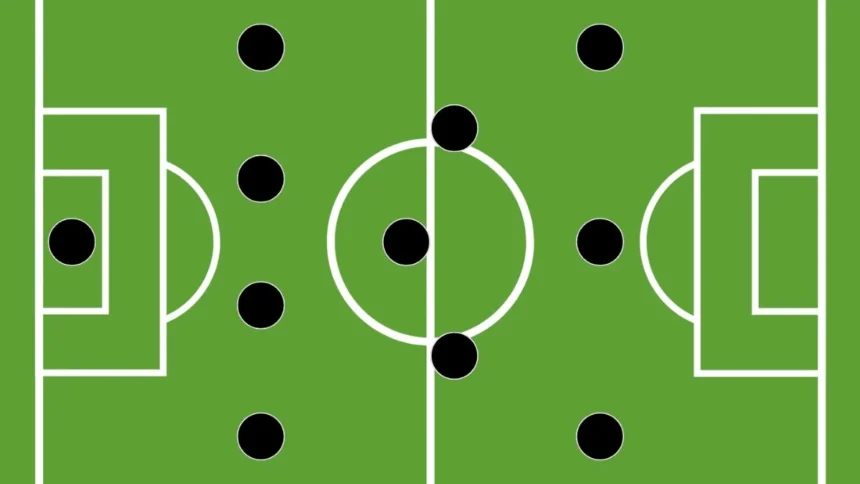
When it comes to football tactics, few formations have stood the test of time quite like the 4-3-3. Flexible, balanced, and attack-minded, the 4-3-3 formation has become a staple for many of the world’s top teams and managers. But why exactly is it so effective? And who are the coaches and clubs that have mastered it? Let’s dive into the beautiful world of the 4-3-3.
Why the 4-3-3 Formation Matters
At its core, the 4-3-3 formation is all about balance and control. With four defenders, three midfielders, and three forwards, it allows a team to defend solidly, dominate possession, and launch quick attacks.
One of the biggest strengths of the 4-3-3 is versatility. Teams can tweak it based on the situation turning it into a 4-5-1 when defending or a 3-4-3 when pushing forward. This adaptability keeps opponents guessing and allows coaches to make subtle changes without overhauling the whole system.
Another key reason why the 4-3-3 shines? It maximizes width. Wingers stretch the play, dragging defenders out of position and creating pockets of space for central attackers to exploit. Meanwhile, the midfield trio ensures that the team doesn’t lose control in the center of the park, a crucial aspect of modern football where midfield battles often decide games.
Coaches Who Have Perfected the 4-3-3
The 4-3-3 isn’t just popular, it’s iconic. Some of the greatest tactical minds have used it to redefine the way the game is played.


- Pep Guardiola:

Pep Guardiola Perhaps the most famous advocate for the 4-3-3, Pep’s teams (especially Barcelona and Manchester City) use it to suffocate opponents with possession, quick passing, and positional play. His version emphasizes midfield overloads and constant movement.
- Jürgen Klopp: At Liverpool, Klopp’s dynamic 4-3-3 is all about high pressing, quick transitions, and relentless energy. His front three think Salah, Mane, and Firmino terrorized defenses and became one of the most feared attacking trios in football history.
- Carlo Ancelotti:

Carlo Ancelotti While more pragmatic, Ancelotti has often used a variation of the 4-3-3 to great success, especially with Real Madrid. His system focuses on midfield control and clinical counter-attacks, using the strengths of players like Modrić and Kroos.
- Luis Enrique: During his time at Barcelona, Luis Enrique’s 4-3-3 with the “MSN” trio (Messi, Suárez, Neymar) produced an incredible blend of flair, speed, and lethal finishing.


Teams That Excel With the 4-3-3
It’s not just about the coaches some clubs have made the 4-3-3 part of their DNA:
- Barcelona:

Barcelona, Credits- AP Even today, La Masia (Barcelona’s famous academy) trains youngsters primarily in a 4-3-3 setup, focusing on ball possession, technical skills, and positional awareness.
- Manchester City:

Manchester City, Credits- Manchester City Under Guardiola, the Cityzens have refined the 4-3-3 to an art form, dominating English football with ruthless efficiency.
- Liverpool: Klopp’s Liverpool side that won the Premier League and Champions League is a shining example of how a high-energy 4-3-3 can overpower teams both defensively and offensively.
- Ajax: True to their philosophy of “Total Football,” Ajax relies heavily on a 4-3-3 to develop technically sound, tactically intelligent players who can adapt across positions.
Final Thoughts
The 4-3-3 formation isn’t just a tactical setup; it’s a philosophy. It embodies fluidity, creativity, and adaptability qualities that define the modern game. Whether you’re watching Guardiola’s passing carousel, Klopp’s gegenpressing machine, or a young Ajax team playing without fear, the 4-3-3 is often the secret behind the spectacle.
As football evolves, the 4-3-3 remains a timeless blueprint and for good reason.