Esports for education is a powerful new way for students to learn academically as well as socially. Esports is quickly becoming a powerful educational tool as schools, colleges, and universities adopt the technology to help educate students. This isn’t just for traditional learning; it’s also a way to help students socialise.
Extracurricular activities, according to research, help students succeed by improving their performance and overall well-being. The rise and success of cloud-based gaming has paved the way for a more inclusive and accessible approach to esports in education. Because the cloud-based nature of gaming makes it easy to access from anywhere and removes the processing power issue, it works well for school budgets because it requires less outlay for expensive and powerful computers to get gaming. So, why are esports beneficial to education?
What is Esports?
Esports, or Electronic Sports, is a competitive gaming medium that pits players against one another in order to win. This frequently entails working in groups to achieve a common goal. While each player has his or her own gaming system, a headset is frequently used for communication among gamers.
Esports, like traditional sports, necessitate teamwork, communication, critical and strategic thinking, creativity, sportsmanship, and leadership. All of this can be seen and heard live online, which has helped esports grow into a spectator sport and a billion-dollar industry that is expected to grow further. Involving students in video games and esports has demonstrated benefits in a variety of areas, including:

Hand-Eye Cohesion
Excellent for almost any later-life endeavour. The movement of the mouse or game controller to the screen can be difficult to learn because it is difficult to explain. This is especially important if your child plans to pursue a career in the sciences, such as engineering or surgery, or in sports such as football or tennis.
Games also require the player to keep track of multiple inputs at the same time. What is going on in the player’s immediate vicinity as opposed to the overall game map? How do statistics like the health bar work? Which button or direction is the most appropriate right now? Many aspects of game play occur simultaneously, requiring split-second decisions and instincts. Coordination is essential skill here, and esports can sharpen these skills.

Mathematical Abilities
Esports players frequently examine their own game stats in order to improve their performance. Basic math and data analysis skills assist them in determining where they may have erred during a match or how they can improve their strategy to gain an advantage. These mathematical abilities are directly related to, well, everything. This type of thinking is ideal for science or health majors, anyone going into business for finances, and general “adulting” tasks such as budget management.
Critical Thinking
The ability to think critically is easily the most important thing a video game can teach. In order to continue playing a video game, you must often solve puzzles or riddles. As with any competition, players must consider their opponent’s moves and attempt their overall strategy while adjusting their own moves to counter and win. Today’s games can be complex, with numerous movements, statistics, and/or options, and the action moves at breakneck speed. Gamers must process data quickly and react appropriately, which necessitates critical (and quick) thinking. In esports, team strategy, as well as individual players’ contributions to the team’s goals, present significant critical thinking challenges.
Concentration and Focus
Our 5-year-old bounces from one activity to the next, often losing interest quickly. Give him a tablet with Angry Birds on it? He suddenly gains the ability to focus lasers. He’ll sit there quietly playing until we pry it from his grasp, or the battery dies.

This hyper-focus does not have to be limited to video games. Gaming has the potential to alter the way our brain’s function. According to a Science Daily article, “studies have found that gamers improve in several types of attention, such as sustained attention or selective attention.” Attention-related brain regions are also more efficient in gamers, requiring less activation to maintain attention on demanding tasks.”
Experience with Technology
In today’s world, you can never have enough technological experience. Gaming interest exposes children to the hardware platform, software layers, operating systems, and other components required to run the games. They’re learning technology as a result of their participation in esports.
They’ll almost certainly need to do some troubleshooting along the way, such as connecting the hardware or configuring network connectivity. These abilities are directly transferable to a wide range of careers. Video games and esports may even inspire children to become computer programmers or hardware designers.
Problem Solving
Whether it’s analysing a game character’s statistics, picking the best builds or options, or analysing an opponent’s strategy, games and esports are all about problem solving.
Pouring over video game stats may appear trivial “in real life,” but players are conducting extensive analysis and delving deep into their math skills to find optimised builds and winning combinations. They’re devising strategies to counteract the tactics of their opponents. They’re also learning that in order to win league tournaments, they must work together.
Student Engagement and Participation
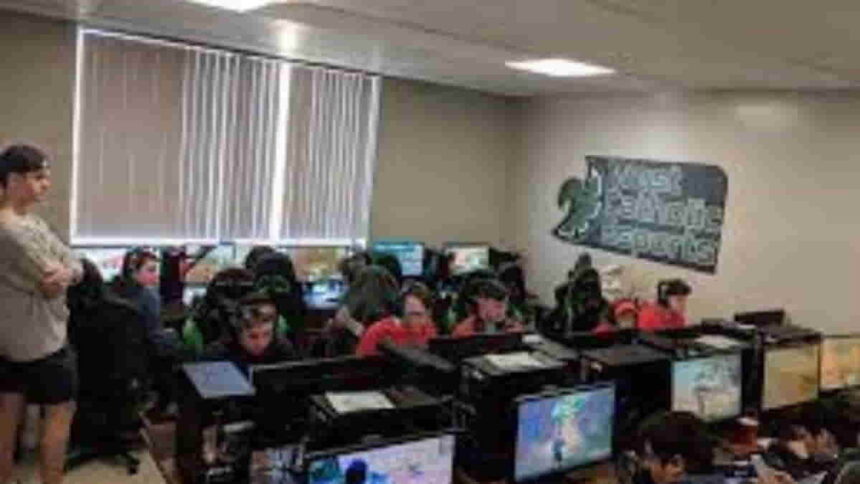
Schools can give students who might otherwise be uninterested or unengaged activities by utilising esports. Esports can give students a way to participate in school while doing what they enjoy and keep their interest in it. This presents K–12 institutions with a chance to connect with children who might otherwise be missed. Increased enrolment, retention, and graduation rates may result for colleges and universities as a result.
Fresh Courses and Degrees
Esports’ quick expansion is spawning a new industry that requires qualified people in all positions. People tend to concentrate on the players. The players have inspired a whole industry and business, resulting in a variety of new jobs and skill sets that are required.
New degrees focused on esports, esports business, and game design are being offered by a number of universities in response to this need. Students who are looking for this kind of degree specifically may be drawn to these programmes. A novel and focused degree programme can draw (and keep) new students who might not otherwise have thought about attending a university.
Wrap up: Benefits of Esports in Schools and Education
Schools are noticing the rise of esports and making adjustments. Esports in schools have a growing number of advantages for students, players, and the institution as a whole. Students gain from esports by using it to improve their social, academic, and teamwork skills. By offering fresh approaches to luring and involving students, esports are advantageous to schools, colleges, and universities.
“Get more sports news, cricket news, and football updates, log on to sportsdigest.in. Follow us on Facebook or Twitter and Subscribe to our YouTube Channel.”