
The contemporary Olympic Games, sometimes known as the Olympics, are the most prestigious international athletic occasions that include summer and winter sports competitions in which thousands of competitors from all over the world take part in a range of activities. More than 200 teams, representing sovereign governments and territories, compete in the Olympic Games, which are regarded as the world’s premier sporting event. Since 1994, the Summer and Winter Olympics have switched every two years during the four-year cycle of the Olympic Games, which are typically held every four years.
In this article, we will take a look at the brief evolution of sports and the historical period in which they were incorporated into the Olympic Games,
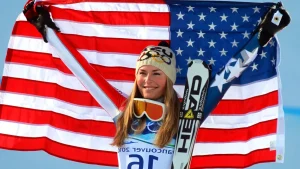
Alpine Skiing
The history of skiing is lengthy. Several historians place the invention of modern downhill skiing in the 1850s when Norwegian legend Sondre Norheim made the Telemark and Christiania (slalom) turns prominent and acclaimed skis with curved edges and bindings with stiff heel bands made of willow. Alpine Skiing was added to the Winter Olympics in 1936.
Archery
One of the earliest still-practiced sports, archery, has a tight relationship to the rise of civilization. It was analogous to the discovery of fire and the development of the wheel as a cultural achievement. Archery was added to the Olympics in 1900.
Artistic Gymnastics
In order to distinguish free-flowing methods from those utilised in military training, the term “artistic gymnastics” was coined in the early 1800s. Gymnastic competitions started to take off in schools and athletic clubs all throughout Europe, and they made a fitting comeback in 1896 in Athens when the Olympic Games were brought back.

Artistic Swimming
Synchronized swimming, commonly referred to as artistic swimming, is a relatively recent sport with water acrobatics as its roots. In the United States, it is incredibly well-liked. Artistic swimming was added to the Olympics in 1984.
Athletics
Athletics has always been continued to practice in sports history that has been documented. The “stadium” race, a sprint lasting around 192 meters, was the first competition in the early Olympic Games. Since 776 BC, there have been winners in this competition. Athletics has been a part of the Olympics since 1896.
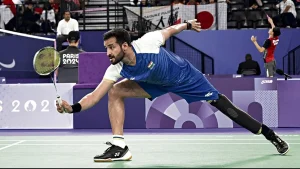
Badminton
A court is used to play the racket and shuttle game of badminton between two players or doubles teams. The Duke of Beaufort’s residence, Badminton House, in the English county of Gloucestershire, is whence the sport derives its name. Badminton was made a part of the Olympics in 1992.

Beach Handball
The sport of handball was developed on the beach by Italian coach Simonetta Montagni in the late 1980s. Coach Luciano Bartolini was requested to develop the first set of regulations for the sport in 1990 as the discipline gained popularity. He did this by adjusting the fast-paced game to fit inside the confines of the beach volleyball court. Beach Handball was included in the Olympics in 2018.
Canoe Flatwater
The kayak and the canoe are the two different boat types used in canoe sprinting. The kayak comes most likely from Greenland, where the Eskimos utilized it largely for transportation, fishing, and hunting. The canoe was a common form of transportation, trade, and warfare across the world. Around the middle of the 19th century, both of these crafts were used to establish the first recognized sporting events. Since the beginning of racing, the canoe sprint has been the customary format. Canoe Flatwater was included in the Olympics in 1936.
Figure Skating
As the name implies, figure skating entails skating “figures” on ice. Skaters must incorporate specific patterns or figures into their routines in order to compete. Ice skating has evolved from being a simple means of transportation on ice to the sophisticated fusion of sport and art that it is today. Figure Skating was included in the Olympics in 1908.
Ice Hockey
Ice hockey is a quick, nimble, and thrilling team sport played on an ice surface between two teams of six players (a goaltender and five skaters). The excitement and suspense of the contests of the Olympic Games draw sizable crowds. Ice hockey was included in the Olympics in 1992.