T20 as a format has evolved a lot since the time it was first played in 2003. In modern times, players are not judged by the amount of runs that they score but on the basis of the impact that they are able to create in the game with quick-fire cameos that are played while coming in to bat at crucial stages in the game.
The Approach
The change has been more visible in the last two to three years with batters going for their shots right from the first ball thereny getting the opposition bowlers under pressure straight away, which wasn’t the case say 5-7 years ago.
The Beginning
For the first decade or so, when T20 cricket started to gain popularity among the masses, it was about going hard in the first six overs in an attempt to score as many runs as possible while ensuring that not more then to wickets are lost.
The Consolidation
If the teams succeeded in scoring say 50-60 runs in the powerplay, it was considered as a good start, which was followed by consolidating the middle overs by rotating the strike and keeping the scoreboard moving while hitting a boundary or two in between.
The Finish
If, after ticking all the boxes, a team was able to score 180-190 runs, it was considered an above-par total which they would defend eight out of ten times.
Read More

The Change
But as they say, change is the only constent and it is reflected in the way the batters have started approaching T20 cricket, which is completely different from how it was played a few years ago.
The Fearlessness
Nowadays, batters don’t have the fear of getting out, and it is safe to say that 200 is the new 180 as teams eye a score of 200 runs on a consistent basis.
The Exception
Having said that, a lot of teams’ success in scoring 200 runs is dependent on the kind of surface that is on offer. For instance, the pitches are totally different in India and Sri Lanka in the ongoing T20 World Cup, with the ball coming nicely on the bat in the majority of the grounds in India, while batters had to grind it out in two of the three grounds that hosted the matches in Sri Lanka.
Read More

Do Follow Sports Digest on X: https://x.com/SportsDigestINT
The Evidence
The above mentioned information is backed by the fact that Sri Lanka almost chased a score of 213 runs against Pakistan after falling behind for a major part of the chase in the game played at the Pallekele International Cricket Stadium.
On the other hand, batters were finding it hard to time the ball in matches played at the R. Premadasa Stadium and the Sinhalese Sports Club in Colombo.
The Support
Another advantage of playing on a wicket that is good for batting is that a batter is able to trust the bounce and hit through the line, which also makes clearing the boundary relatively easy.
The Big Hitters
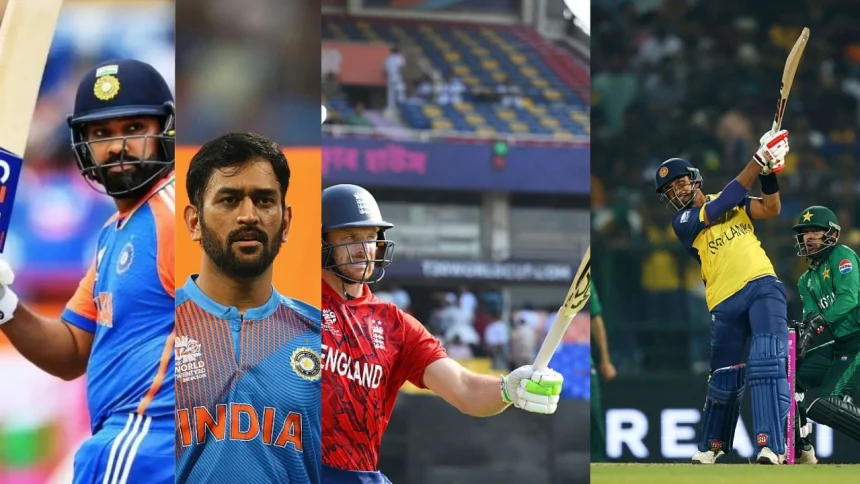
Let’s look at the top five captains with most sixes in the history of T20 World Cup
| Players | Country | Number of Sixes |
| Dasun Shanaka | Sri Lanka | 21 |
| Rohit Sharma | India | 19 |
| Chris Gayle | West Indies | 17 |
| Jos Buttler | England | 17 |
| MS Dhoni | India | 16 |
Also Read: Narendra Modi Stadium Pitch Report – Complete Venue Guide (Ahmedabad)