



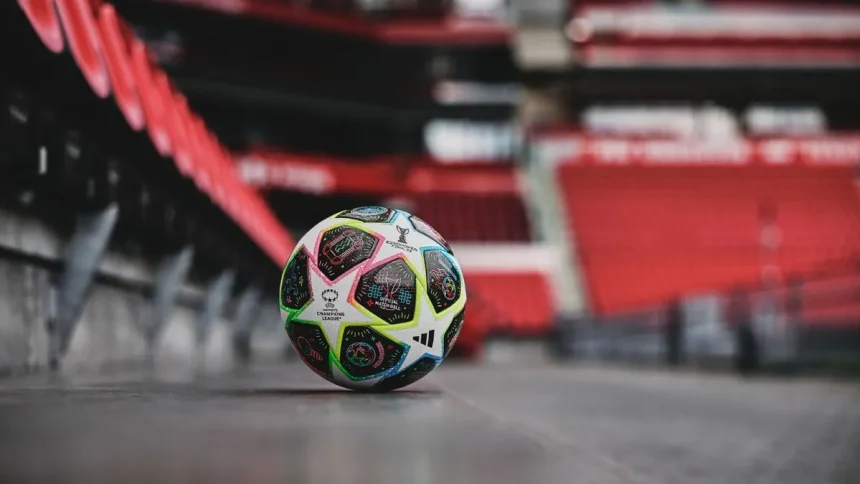
The UEFA Champions League has long been football’s ultimate club competition, a gladiatorial arena where the best of Europe’s domestic leagues clash. But in recent seasons, the pathway to glory, especially through the knockout phase, has evolved into perhaps the most unforgiving test in world football. With sweeping format reforms that reshape tactics, intensify pressure, and elevate stakes, the competition’s latter stages now demand not just elite quality, but ferocious consistency, adaptability, and mental resilience.
- A Sharper Blade: Why the Champions League Format Has Evolved
- The Brutality of Two Legs: A Mental and Physical Endurance Test
- The League’s Ripple Effect: Knockout Positions Earned in War, Not Play
- Tactical Complexity: Knockouts Demand Smart Game Theory
- Financial and Coefficient Stakes: A Knockout Is More Than a Match
- The Audience Angle: Drama, Drama, and Even More Drama
A Sharper Blade: Why the Champions League Format Has Evolved
The latest revamp of the UEFA Champions League abandoned the familiar group stage in favor of a single-league “Swiss model” phase involving 36 teams, each playing eight different opponents. This design was engineered to reduce dead-rubber fixtures and ensure competitive relevance in every match, a philosophy that carries straight into the paired knockout rounds.
Under the restructured system, the top eight teams leapfrog directly into the round of 16, while those ranked 9th to 24th face a high-stakes playoff just to earn their spot in the last 16. This clever seeding mechanism means that even early knockouts present elite-to-elite tangles that would have been quarter-final clashes under the old system.
The Brutality of Two Legs: A Mental and Physical Endurance Test
Knockout football in the Champions League has always been about fine margins, but the modern version amplifies the tension. Each tie (apart from the final) still spans two legs, home and away, but the abolition of the away-goals rule only reinforces the need for strategic balance. Teams cannot rely on narrow away advantages; instead, aggregate dominance is king.
The psychological weight of two-legged affairs is huge. Managers must calibrate aggression and discipline perfectly across 180 minutes. One defensive lapse or tactical misread in the first leg can dictate the entire tie. An early mistake in this phase often cannot be undone, forcing teams into a high-wire tactical dance where ambition must be tempered with caution, and mistakes are ruthlessly punished.
The League’s Ripple Effect: Knockout Positions Earned in War, Not Play
Because every point in the preceding league phase impacts whether a club faces a direct round of 16 slot or must survive playoffs, the sense of jeopardy extends far beyond domestic borders. Clubs are no longer shielded by a cushioned group place: finishing ninth means extra matches, greater risk of fatigue and tougher funnels into knockout football.
This has led to crucial late-season clashes between top clubs fighting just to avoid the playoff hurdle. In the 2025/26 campaign, drama on matchday eight saw a goalkeeper score a stoppage-time goal that dramatically altered who made the play-offs and who was eliminated, a stark demonstration that every point and every goal truly matters.
Tactical Complexity: Knockouts Demand Smart Game Theory
Gone are the days when the round of 16 was a relative formality for elite clubs. With re-seeding and bracket placements heavily influenced by league phase ranking, tactical nuance is crucial. Teams must consider more than just beating an opponent; they must also strategize to avoid facing other giants too early, balance squad rotation with competitive integrity, and manage continental fixture congestion alongside domestic campaigns.\

In the modern Champions League, coaches deploy multidimensional strategies that consider psychology, statistics, and even game theory, with each tactical tweak potentially deciding whether a storied club advances or crashes out before the quarter-final stage.
Financial and Coefficient Stakes: A Knockout Is More Than a Match
The knockout phase’s ruthlessness is amplified by its financial and prestige implications. Progressing deeper brings significantly higher rewards, not just in prize money but in coefficient points and future seeding advantages. Clubs with longer European pedigrees often benefit through commercial payouts tied to consistent advancement, which compounds the pressure on mid-tier clubs striving both for survival in the tournament and financial stability.
For teams like Newcastle United, qualifying for knockouts can meaningfully alter their financial trajectory, while for perennial heavyweights, a premature exit can be both a tactical and economic blow. Every tie is therefore not just a contest of skill, but an economic battleground.
The Audience Angle: Drama, Drama, and Even More Drama
For football fans, the modern knockout phase is compelling, and unforgiving. With fewer predictable outcomes and more unpredictability seeded into the draw, every tie feels like a mini-final. This intensifies viewership, fuels pundit debates, and creates narratives that resonate far beyond the final whistle. From tactical masterclasses to last-minute heartbreaks, the modern UEFA Champions League knockout phase exemplifies football drama at its most concentrated. Yet this heightened drama also exposes the cruel reality of knockout football: there are no second chances, no slow starts. A single moment can define an entire season.
Also Read: Real Madrid Tops, Liverpool Overtakes Premier League In Deloitte Money League