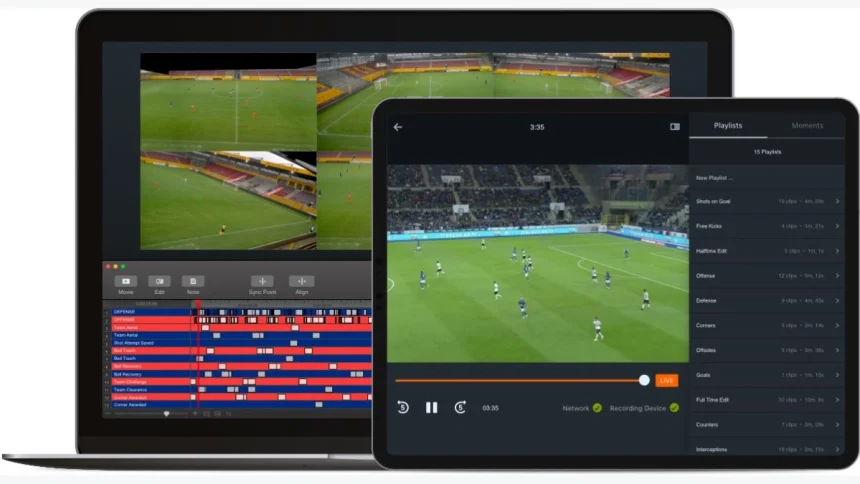
What Is Hudl Sportscode?
Hudl Sportscode is a professional video performance-analysis platform used by elite and aspiring football teams to code, clip, annotate, and combine video with event and tracking data. It gives analysts a highly customisable environment to tag match events, build timelines and playlists, create tactical clips, and export structured data for deeper modelling.
For football teams, Sportscode is more than video playback. It connects scouting, opposition analysis, coaching feedback, and sports science by letting users merge video with external datasets, run bespoke scripts, and share coded libraries with coaches and players, all while supporting fast live or post-match workflows that turn raw footage into actionable decisions.
What exactly is Hudl Sportscode?
Hudl Sportscode (often still called SportsCode in some resources) is a desktop-based performance analysis application designed for high-level sports analysis. It allows users to import multi-angle video, create custom code windows (tagging templates), record events live or in post, build timelines of all coded events, and assemble video playlists and presentations for coaches and players. The product is part of the Hudl ecosystem and is aimed at teams that need fully customisable, powerful workflows rather than a fixed “out-of-the-box” report.
Sportscode comes in tiers and modules (Review, Pro, Elite) to match different capture and analysis needs, from single-angle post-game coding to multi-angle live capture and advanced scripting. Key components include capture tools, code windows, packages & timelines, scripting for automation, and import/export options for data interchange.
Core features and capabilities (an analyst’s perspective)
Sportscode’s flexibility is its central strength. Here are the capabilities football analysts use most:

- Custom tagging (Code windows): Analysts design buttons for exactly the actions they want to capture, for example, “left wing cross”, “pressing trigger”, “successful counter”, or player-specific behaviours. This makes the coding highly bespoke to a team’s tactical language, enabling consistent, repeatable data capture.
- Timelines & packages: Every coded event appears in a timeline that can be scrolled, filtered, and exported. A “package” bundles video, timeline, notes and metadata into shareable units that coaches can use in presentations or player review sessions. Packages are the building blocks of an analyst’s clip library.
- Multi-angle capture & live coding: Sportscode supports capturing multiple camera streams simultaneously and live coding during matches or training. This allows fast turnaround, clips and playlists can be ready almost immediately after an event, useful for halftime reviews or next-session planning.
- Scripting & automation: Advanced users can write scripts to automate repetitive tasks, for instance, auto-generating playlists, batch-exporting clips, or mapping codes to pre-built dashboards. This reduces manual work and increases consistency across analysts.
- Data import/export (XML) & integrations: Sportscode can import and export timeline data as XML, enabling integration with GPS/IMU providers, third-party event providers, and data science pipelines. This interoperability lets teams combine video context with tracking metrics (distance, speed, positional data) or event datasets from providers like Opta/Stats, enriching the analysis.
How Sportscode helps football teams
Opposition analysis and match planning
Analysts use Sportscode to dissect upcoming opponents: coding patterns (build-up channels, transition triggers, set-piece routines), compiling playlists of repeated mistakes, and producing short tactical clips for coaching meetings. With tailored code windows, analysts can capture precisely the moments coaches care about, then present those clips with annotations and voiceover. Elite clubs and national programs use this to prepare video briefs that directly shape training focus.
Player feedback and development
For individual coaching, Sportscode lets analysts create per-player libraries showing tendencies, strengths, and areas for improvement. Players can watch short, targeted clips with voice notes or telestration (drawings on the screen) to improve decision-making. This focused feedback loop makes video review more actionable for players.
Performance & sports science alignment
Sportscode’s ability to import external data (GPS, heart-rate, accelerometry) and align that with video gives sports scientists context for physical spikes or tactical shifts. For example, a sudden increase in high-intensity runs can be viewed with the corresponding tactical phase, helping medical and conditioning staff assess load and tweak training plans. This combined view, video + numbers, improves communication between analysts and sports science teams.

Live match management and in-game adjustments
Teams that capture live multi-angle video and code in real time can feed coaches with immediate insights at halftime or via short breaks. Sportscode’s live capture + coding pipeline supports quick playback of key moments and helps coaching staff make informed tactical tweaks. This speed is often what separates good halftime changes from great ones.
Scouting and recruitment
Sportscode packages and playlists are used in scouting workflows to compare players’ decision patterns across multiple matches. Scouts build clip libraries focusing on specific actions (pressing success, aerial duels won, progressive carries), which helps recruitment teams make evidence-based signings. The standardised coding structure makes comparisons more objective.
Technical workflow: from capture to insight
A typical Sportscode workflow in a football club looks like this:
- Capture: Multi-angle cameras record the match or training. Video files are imported into Sportscode (or captured live). Sportscode supports local capture, IP streams, and multi-angle setups depending on product tier.
- Code: Analysts apply a code window to tag events either live or during post-match review. Each tag can be time-stamped and include notes. Code windows reflect a coach’s tactical framework so the output is aligned with team objectives.
- Build timelines & packages: Tagged events form a searchable timeline. Analysts create packages and playlists for coaches, players, or recruitment teams. Playlists can be exported with in/out points for quick viewing.
- Integrate data: Export timelines as XML to feed into sports science platforms or import event/tracking data to overlay with video. This combined dataset can be used to populate dashboards or feed statistical models.
- Present & act: Coaches receive focused packages (e.g., five clips on defensive transitions) and make tactical or training decisions. The package-based system ensures everyone sees the same evidence, improving decision clarity and implementation speed.
Strengths and limitations
Strengths
- Customisability: Analysts can tailor code windows and workflows to club philosophy, which gives high fidelity to the analysis.
- Integration capability: XML export/import and scripting make Sportscode highly interoperable with tracking systems and data pipelines.
- Speed: Multi-angle live capture plus efficient timeline tools mean faster clip turnaround for coaching decisions.
- Maturity and adoption: Sportscode has a long history in performance analysis and is widely used in elite environments, which builds a strong ecosystem of knowledge, tutorials, and case studies.
Limitations
- Steep learning curve: The platform’s flexibility comes with complexity; clubs need trained analysts to get full value. Many teams invest in analyst training or hire experienced users.
- Desktop-centric workflows: Sportscode is powerful on desktop environments, but seamless cloud-native collaboration often requires pairing with Hudl’s online tools or other platforms.
- Cost & resourcing: Elite tiers (multi-angle capture, add-ons, scripting) have higher cost and infrastructure needs, which can be a barrier for smaller clubs.
Real-world examples and evidence
Clubs and organisations across sports highlight how Sportscode allows them to generate digestible statistics, create a player library, and speed up analysis, making it easier to show players targeted clips and inform tactical plans. This shows how video + coding accelerates coach-to-player learning.
Read More

Teams also emphasise the value of combining video coding with tracking data; Sportscode’s XML interoperability and scripting tools make this integration practical, allowing teams to contextualise physical outputs with the tactical phase shown on video.
Best practices for football teams using Sportscode
- Define the tactical language first: Before coding, agree on a shared set of codes and definitions with coaches, consistency is critical.
- Train analysts and coaches together: Shared understanding reduces misinterpretation and makes packages more useful for players.
- Automate repetitive tasks: Use scripting to create templates, auto-playlists, and batch exports to save time.
- Link sports science early: Establish an XML pipeline with GPS and tracking vendors so video and physical data align by default.
- Keep player clips short and targeted: Players digest short playlists with clear objectives more effectively than long montages.
Hudl Sportscode remains one of the most powerful, flexible tools for football performance analysis. Its custom tagging, robust timeline and packaging system, multi-angle capture and strong data interoperability make it particularly suited to clubs that want a bespoke, evidence-driven approach to tactics, player development and sports science.
While it requires investment in training and infrastructure, teams that adopt Sportscode as part of an integrated analysis workflow can convert video and data into clear, fast, and coachable insights.
FAQs
Q1. Is Sportscode different from Hudl’s cloud tools?
Yes. Sportscode is a desktop performance-analysis application focused on deep custom coding and local capture, while Hudl’s online tools offer cloud services, automated breakdowns, and easier sharing.
Q2. Can Sportscode integrate GPS/tracking data?
Yes. Sportscode supports XML import/export which lets teams map tracking and GPS datasets to timeline events for combined video + data analysis.
Q3. Do I need a specialist to run Sportscode?
To unlock its full value, clubs usually employ trained analysts or invest in training, because Sportscode’s flexibility means it has a learning curve.
Q4. Can Sportscode be used live during matches?
Yes, Sportscode supports live capture and multi-angle IP streams in higher tiers, enabling real-time coding and rapid clip turnaround.
Q5. Is Sportscode suitable for smaller clubs?
Smaller clubs can benefit from Sportscode’s core features, but should weigh costs, capture infrastructure, and analyst training. Some may prefer more cloud-native Hudl options unless they need deep customisation.
Also Read- Moisés Caicedo Red Card: Chelsea Midfielder Handed Three-Match Premier League Ban