Formula 1 is preparing for major regulation changes in 2026, covering both car design and engine technology. Along with these technical updates, the sport is also introducing new lighting systems on the cars. These changes are not just cosmetic. They are designed to improve safety and make it easier to understand what a car is doing on track.
Let’s know why the 2026 Formula 1 cars will have new flashing rear lights and what they mean.
Part of the 2026 Formula 1 Rule Changes
A massive change to the rules regarding cars and power units is expected from Formula 1 for the commencement of the 2026 season. As a result, hybrid systems will have even more of an influence, with the MGU-K able to produce as much as 350kW of electrical energy.
With the electrical aspect of the energy system affecting the performance of cars to an increased degree, the FIA has enacted new visual ways to communicate how the energy management system of cars works.
New Amber Safety Lights
One addition is amber safety lights placed on the Formula 1 race car’s wing mirrors.
These lights turn on when:
- A car slows to below 20 km/h
- A car is stopped on the track
- A car is in neutral when a race starts
When the driver selects first gear, the lights switch off. This helps other drivers quickly identify slow or stationary cars, reducing the risk of accidents.
Rear Light Now Shows Energy Use
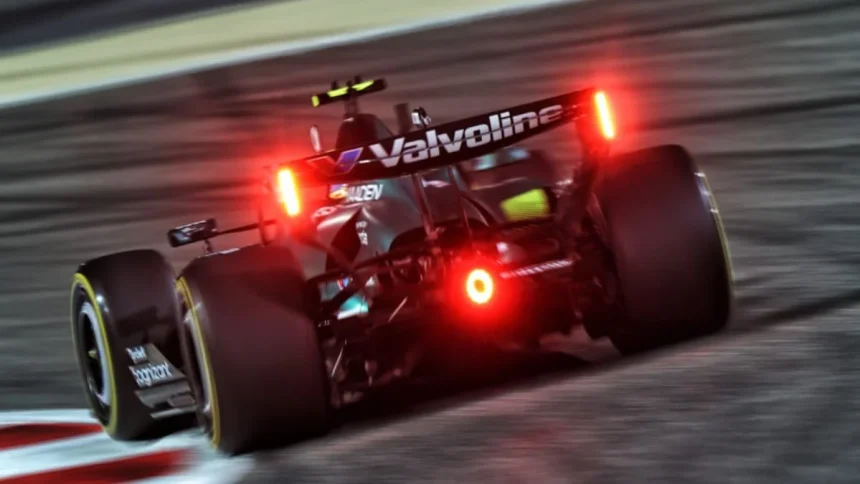
The rear impact structure light has also been redesigned. It is now oval-shaped and lighter, saving around 180 grams. More importantly, it now communicates how the MGU-K is operating.
There are three main flashing patterns:
- Single flash – The MGU-K is delivering less than its full 350kW of power.
- Two flashes – The MGU-K is not delivering power and is not recharging.
- Rapid multiple flashes – The MGU-K is recharging while the engine is still running at full throttle.
This last situation is known in the paddock as “super clipping.” It happens when the driver stays on full throttle, but the MGU-K switches to generator mode. It creates resistance against the engine and uses that energy, up to 250kW, to recharge the battery.
This system allows teams, drivers, and officials to better understand how energy is being managed during a race.
Rear Wing Lights Mirror the Pattern
The rear endplate lights flash red and mimic the main rear light’s flashing pattern to show signals clearly from the rear, particularly during close racing.
During tests, one team received erroneous signal information when one light flashed instead of both. At first, this was a source of confusion for some as they thought it indicated a different status than was actually the case, but it was ultimately determined to be an equipment failure.
Other Uses of the Rear Light
The red rear light continues to serve its traditional safety roles. It activates during:
- Safety Car and Virtual Safety Car periods
- Double-waved yellow flag situations
- When the pit lane speed limiter is engaged
- Wet weather conditions (as light rain)
In special cases, the light can turn blue if the driver does not hold a full superlicence, such as during certain practice sessions.
Modern Formula 1 cars are extremely complex, especially with advanced hybrid systems. The new lighting system provides clear, visual information about what the car is doing at any moment.
Also Read: F1 2026: Who Was Fastest & Logged The Most Laps In The Bahrain Test?